Bill · H.R. 8868· House(119-HR-8868)
Restoring Overtime Pay Act of 2026
- Introduced
- 5/15/2026
- Last activity
- 5/15/2026 — Referred to the House Committee on Education and Workforce.
- Sponsored by
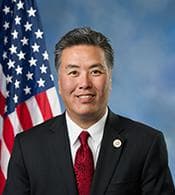
- Mark Takano
- Cosponsors
- - 35 - 0
- Introduced
- In Committee
What this bill would do
The Restoring Overtime Pay Act of 2026 aims to amend the Fair Labor Standards Act of 1938. It establishes a new minimum salary threshold for executive, administrative, and professional employees who are exempt from federal overtime pay. This threshold begins at $45,000 and increases annually through 2029 before moving to a system based on national earnings. After 2030, the threshold will be updated annually based on the 55th percentile of weekly earnings for full-time salaried workers. The bill also changes certain duty requirements for these employees.
Yes· 3 of 9
Would middle-income households be better off under this?+6
Directly benefits salaried middle-class workers by raising the minimum pay required for exemption from overtime.
Does this raise the lowest wage an employer may pay?+6
While not a minimum wage for all, it effectively raises the minimum salary required to be exempt from overtime pay.
Is this likely to lift people out of poverty?+5
Increasing the salary threshold for overtime exemptions likely increases earnings for many lower-to-middle management workers.
The opposite
Would business owners be better off under this?-6
Imposes higher payroll costs through either higher salaries or additional overtime payments.
Does this make it easier to run a small business?-5
Increases labor costs for small businesses by raising salary thresholds for exempt employees or requiring overtime pay.
Does this leave more decisions to the states?-3
Imposes a federal standard that may supersede more lenient state-level salary thresholds.
Who it would affect, and how
Potential Positive Impacts for People
-
Increased Minimum Earnings for Exempt Workers: The bill establishes specific, rising salary thresholds for employees to qualify as exempt from overtime. This means employees would need to earn at least $45,000 initially, increasing to $55,000 in 2027, $65,000 in 2028, and $75,000 in 2029 to remain exempt. (Section 2(a)(1)(A)(i-v))
-
Automatic Inflation/Earnings Adjustments: Starting in 2030, the salary threshold will be updated annually based on the 55th percentile of weekly earnings of full-time salaried workers nationally. This ensures the threshold keeps pace with national earnings data. (Section 2(a)(1)(A)(v) and Section 2(a)(1)(C)(i))
-
Transparency of Earnings Data: The Bureau of Labor Statistics is required to publish weekly earnings data for full-time salaried workers by census region on its public website every quarter. (Section 2(b))
Potential Negative Impacts for People
-
Increased Salary Requirements for Exemption: To be considered exempt from overtime compensation, employees must meet higher weekly rate requirements. (Section 2(a)(1)(A))
-
Changes to Duty Requirements: The bill amends requirements for what constitutes exempt duties, including striking certain language regarding activities and changing specific hour requirements. (Section 3)
Groups and Interests Ranking
Every group the model scored this bill for, from -10 to +10. Hover a score for the reason it gave.
- Demographic And Interest Groups
- Good For Middle Class Households+6Good For Middle Aged+4Good For Young Adults+4Good For Low Income Households+3Good For Union Workers+2Good For Business Owners-6
- Social Issues And Justice
- Improves Poverty Reduction+5
- Governance And Ideology
- Improves Government Transparency+4Increases Federal Power+3Increase States Rights-3
- Economy And Finance
- Increases Minimum Wage+6Improves Small Business Support-5
- 10/1/2026
- 1 Cosponsor added.
- 9/14/2026
- 1 Cosponsor added.
- 9/10/2026
- 1 Cosponsor added.
- 9/2/2026
- 1 Cosponsor added.
- 8/3/2026
- 1 Cosponsor added.
- 7/22/2026
- 1 Cosponsor added.
- 7/21/2026
- 1 Cosponsor added.
- 7/20/2026
- 1 Cosponsor added.
- 7/16/2026
- 5 Cosponsors added.
- 5/15/2026
- Referred to the House Committee on Education and Workforce.
- 22 Cosponsors added.
- Introduced in House
One bill Congress.gov lists as related to this one — companions in the other chamber, earlier versions, and bills this one absorbed or was folded into.
 Alma Adams
Democrat · North Carolina
 Yassamin Ansari
Democrat · Arizona
 Suzanne Bonamici
Democrat · Oregon
 Everton Blair
Democrat · Georgia
 Judy Chu
Democrat · California
 Troy Carter
Democrat · Louisiana
 Greg Casar
Democrat · Texas
 Rosa DeLauro
Democrat · Connecticut
 Christopher Deluzio
Democrat · Pennsylvania
 Debbie Dingell
Democrat · Michigan
 Dwight Evans
Democrat · Pennsylvania
 Maxwell Frost
Democrat · Florida
 Valerie Foushee
Democrat · North Carolina
 Jesús García
Democrat · Illinois
 Steven Horsford
Democrat · Nevada
 Jahana Hayes
Democrat · Connecticut
 Pramila Jayapal
Democrat · Washington
 Jonathan Jackson
Democrat · Illinois
 Summer Lee
Democrat · Pennsylvania
 Grace Meng
Democrat · New York
 Kevin Mullin
Democrat · California
 John Mannion
Democrat · New York
 Sarah McBride
Democrat · Delaware
 Dave Min
Democrat · California
 Eleanor Norton
Democrat · District of Columbia
 Ilhan Omar
Democrat · Minnesota
 Delia Ramirez
Democrat · Illinois
 Luz Rivas
Democrat · California
 Emily Randall
Democrat · Washington
 Janice Schakowsky
Democrat · Illinois
 Mary Gay Scanlon
Democrat · Pennsylvania
 Lateefah Simon
Democrat · California
 Rashida Tlaib
Democrat · Michigan
 Shri Thanedar
Democrat · Michigan
 Maxine Waters
Democrat · California