Bill · H.R. 8819· House(119-HR-8819)
Federal Artificial Intelligence Risk Management Act of 2026
- Introduced
- 5/14/2026
- Last activity
- 5/14/2026 — Referred to the House Committee on Science, Space, and Technology.
- Sponsored by
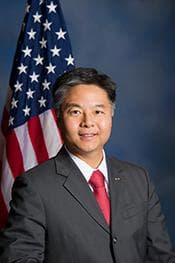
- Ted Lieu
- Cosponsors
- - 2 - 1
- Introduced
- In Committee
What this bill would do
This bill, known as the "Federal Artificial Intelligence Risk Management Act of 2026," directs the Director of NIST to create standards for artificial intelligence used by Federal agencies. It requires the development of guidelines regarding minimum requirements, risk management, and the labeling of synthetic content. These rules apply to agency operations and contractors but exclude national security systems. The Director is also tasked with conducting research, performing gap analyses, and working with stakeholders on testing and evaluation standards. Finally, the act establishes a process for submitting these standards to the Secretary of Commerce for official promulgation.
Yes· 3 of 12
Does this make what the government does easier for the public to see?+3
The bill requires standards for labeling and tracking the provenance of synthetic content generated by government agencies.
Does this give the federal government more power?+2
The act centralizes the development of mandatory AI standards and risk management requirements for all Federal agencies.
Does this better protect the country from computer attacks?+2
Establishing standards for AI risk management and provenance for synthetic content can enhance the integrity of agency operations against digital manipulation.
The opposite
No question was scored the opposite.
Who it would affect, and how
Potential Positive Impacts for People
-
Improved Transparency of Artificial Content: The bill requires the development of standards for authenticating, tracking provenance, and labeling synthetic content generated by agencies or their contractors (Section 2(a)(3)). This could help people identify when information, such as images or text, has been modified or generated by algorithms.
-
Enhanced Risk Management: The Director is tasked with creating standards for managing risks related to the trustworthiness of artificial intelligence systems (Section 2(a)(2)). This focus on managing risks for agency operations and assets could lead to more reliable use of AI in the public sector.
-
Standardized Testing and Verification: The bill mandates that the Director develop standards for the testing, evaluation, verification, and validation of AI systems during the acquisition process (Section 2(d)(2)). This could ensure that the AI tools used by the government meet specific quality and safety benchmarks.
-
Agency Readiness and Support: The Act provides for technical review and assistance to help Federal agencies implement these new standards effectively (Section 2(c)(2)). This support could ensure that the transition to new AI standards is handled competently across different government departments.
Potential Negative Impacts for People
- Exclusion of National Security Systems: The standards and guidelines developed under this act are specifically prohibited from applying to national security systems (Section 2(a)(1) and Section 2(a)(2)). This means there may be a gap in the oversight and risk management standards applied to AI used within those specific high-level systems.
Groups and Interests Ranking
Every group the model scored this bill for, from -10 to +10. Hover a score for the reason it gave.
- Demographic And Interest Groups
- Good For African Americans+1Good For Asian Americans+1Good For Hispanic Americans+1Good For Native Americans+1Good For Urban Residents+1Good For White Americans+1
- Governance And Ideology
- Improves Government Transparency+3Increases Federal Power+2Improves Privacy Rights+1
- National Security And Foreign Policy
- Improves Cybersecurity Defense+2
- Education And Technology
- Increases Scientific Research Funding+1
- Social Issues And Justice
- Improves Racial Equity+1
- 5/29/2026
- 1 Cosponsor added.
- 5/14/2026
- Referred to the House Committee on Science, Space, and Technology.
- 2 Cosponsors added.
- Introduced in House
 Donald Beyer
Democrat · Virginia
 Josh Gottheimer
Democrat · New Jersey
 Zachary Nunn
Republican · Iowa