Bill · H.R. 8813· House(119-HR-8813)
Supporting Survivors from Faith-based Communities Act
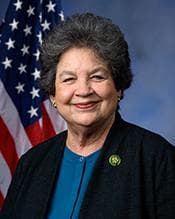
- Introduced
- 5/14/2026
- Last activity
- 5/14/2026 — Referred to the House Committee on the Judiciary.
- Sponsored by
- Lois Frankel
- Cosponsors
- - 5 - 3
- Introduced
- In Committee
What this bill would do
The Supporting Survivors from Faith-based Communities Act establishes a grant program to create a national faith-based resource center. This center focuses on issues involving domestic violence, dating violence, sexual assault, and stalking. The program aims to provide education, training, and technical assistance to faith communities and various service providers. It also seeks to improve how stakeholders respond to victims who identify with a faith or spiritual tradition. Additionally, the Attorney General is tasked with developing model State legislative language to address religious divorce denial.
Yes· 3 of 10
Would women be better off under this?+5
The bill targets domestic violence, dating violence, and sexual assault, which disproportionately impact women.
Would children be better off under this?+3
The bill explicitly mandates that training and prevention programs address the impact of violence on children.
Does this make mental health care easier to get?+3
The bill addresses trauma-informed responses to domestic violence, which is a key component of mental health and psychological well-being.
The opposite
No question was scored the opposite.
Who it would affect, and how
Potential Positive Impacts for People
-
Enhanced Support for Victims: The resource center will provide education and training to help faith communities and institutions better prevent and respond to violence (Section 3(c)).
-
Improved Professional Responses: The bill aims to improve the response of legal, law enforcement, and victim service providers to people with faith (Section 3(c)(1)).
-
Cultural and Religious Sensitivity: Training for service providers will include best practices for accommodating faith-based needs, such as dietary requirements, modesty norms, and daily prayer (Section 3(e)(2)(D)).
-
Addressing Religious Divorce Denial: The Attorney General will develop model State legislative language to help address issues where victims are prevented from exiting a marriage through religious processes (Section 4).
-
Empowering Victims through Representation: The establishment of a victim advisory working group ensures that survivors can help inform the activities of the resource center (Section 3(d)(6)).
Potential Negative Impacts for People
-
Exclusion of Certain Organizations: Organizations that prioritize family cohesion, marriage, or opposition to divorce over the safety and autonomy of victims are ineligible to serve as entities for this grant (Section 3(a)(2)(B)).
-
Restrictions on Fund Usage: Funds cannot be used for proselytizing or promoting any specific religion or religious viewpoint (Section 3(i)(1)).
Groups and Interests Ranking
Every group the model scored this bill for, from -10 to +10. Hover a score for the reason it gave.
- Demographic And Interest Groups
- Good For Women+5Good For Children+3Good For Native Americans+2Good For Low Income Households+1Good For People With Disabilities+1
- Social Issues And Justice
- Improves Racial Equity+2Improves Criminal Sentencing Reform+1Improves Poverty Reduction+1
- Healthcare
- Improves Mental Health Access+3
- Governance And Ideology
- Improves Government Transparency+1
- 6/3/2026
- 1 Cosponsor added.
- 5/14/2026
- Referred to the House Committee on the Judiciary.
- 7 Cosponsors added.
- Introduced in House
 Brian Fitzpatrick
Republican · Pennsylvania
 Josh Gottheimer
Democrat · New Jersey
 Raja Krishnamoorthi
Democrat · Illinois
 Young Kim
Republican · California
 Emily Randall
Democrat · Washington
 Maria Salazar
Republican · Florida
 Lateefah Simon
Democrat · California
 Frederica Wilson
Democrat · Florida