Bill · H.R. 8794· House(119-HR-8794)
FED UP with Bleeding Disorders Act of 2026
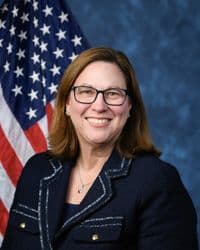
- Introduced
- 5/13/2026
- Last activity
- 5/13/2026 — Referred to the House Committee on Energy and Commerce.
- Sponsored by
- Julie Johnson
- Cosponsors
- - 2 - 1
- Introduced
- In Committee
What this bill would do
The FED UP with Bleeding Disorders Act of 2026 aims to increase research and initiatives for bleeding disorders in underserved populations. The bill directs the Secretary of Health and Human Services to lead a review of Federal programs, including the science of bleeding disorders in women and girls and their access to treatment. Following this review, a comprehensive report must be submitted to Congress and made public. The Act also mandates a national, evidence-based education and awareness campaign targeting women, girls, and healthcare providers. This campaign is intended to improve diagnosis and treatment through competitive grants or contracts. Finally, the bill authorizes specific appropriations to fund these awareness efforts over several years.
Yes· 3 of 10
Would women be better off under this?+7
The bill provides targeted research and awareness to address specific healthcare disparities and reproductive health concerns for women.
Does this make health care easier to get in general?+6
The bill funds a national campaign to improve diagnosis and access to specialized treatment for women and girls with bleeding disorders.
Does this narrow the gap between how men and women are treated?+6
The bill addresses specific medical diagnosis and treatment gaps faced by women and girls with bleeding disorders.
The opposite
No question was scored the opposite.
Who it would affect, and how
Potential Positive Impacts for People
-
Improved Diagnosis and Care for Women: The bill seeks to address delays in diagnosis that have lasted 16 years or more, which could lead to more timely treatment (Section 2).
-
Preservation of Fertility: Increased research into bleeding disorders may help women avoid unnecessary hysterectomies and preserve their ability to have children (Section 2).
-
Reduced Mortality and Hospitalization: By improving access to care at hemophilia treatment centers, the bill addresses a need where mortality and hospitalization rates are 40 percent lower (Section 2).
-
Enhanced Provider Education: The review process includes training and education for providers on issues specific to women and girls regarding bleeding disorders (Section 3).
-
Increased Awareness in Underserved Areas: The national campaign is required to use strategies to ensure that individuals living in rural and underserved areas are reached (Section 4).
-
Culturally Appropriate Resources: The education campaign will include resources that are culturally and linguistically appropriate (Section 4).
Potential Negative Impacts for People
- No specific negative impacts or burdens are explicitly mentioned in the provided text.
Groups and Interests Ranking
Every group the model scored this bill for, from -10 to +10. Hover a score for the reason it gave.
- Demographic And Interest Groups
- Good For Women+7Good For Children+5Good For Rural Residents+4Good For Low Income Households+3
- Healthcare
- Improves Healthcare Access+6Increases Research Funding+5
- Social Issues And Justice
- Improves Gender Equality+6
- Education And Technology
- Increases Scientific Research Funding+5
- Governance And Ideology
- Improves Government Transparency+3
- National Security And Foreign Policy
- Improves Veterans Benefits+2
- 6/8/2026
- 1 Cosponsor added.
- 5/13/2026
- Referred to the House Committee on Energy and Commerce.
- 2 Cosponsors added.
- Introduced in House
 Sarah McBride
Democrat · Delaware
 Eleanor Norton
Democrat · District of Columbia
 Joe Wilson
Republican · South Carolina