Bill · H.R. 8785· House(119-HR-8785)
Medium Transit Intensive Cities Authorization Act of 2026
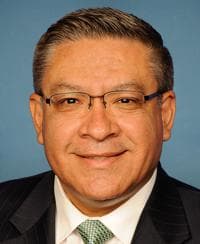
- Introduced
- 5/13/2026
- Last activity
- 5/13/2026 — Referred to the House Committee on Transportation and Infrastructure.
- Sponsored by
- Salud Carbajal
- Cosponsors
- - 1 - 2
- Introduced
- In Committee
What this bill would do
This bill, known as the "Medium Transit Intensive Cities Authorization Act of 2026," aims to amend section 5336 of title 49 of the United States Code. It seeks to provide specific funding apportionments to medium-sized, transit-intensive cities. Specifically, it establishes a formula to distribute 1.5 percent of certain unapportioned amounts to urbanized areas with populations between 200,000 and 999,999. The distribution is based on how these areas perform in specific categories compared to larger cities.
Yes· 3 of 6
Does this improve buses, trains and other public transport?+6
The bill provides specific funding apportionments to improve public transit in medium-sized urbanized areas.
Would people in cities be better off under this?+5
The bill specifically benefits residents of urbanized areas with populations between 200,000 and 999,999 through increased transit funding.
Would households on low incomes be better off under this?+3
Improved public transit access typically benefits low-income households by providing more affordable mobility options.
The opposite
No question was scored the opposite.
Who it would affect, and how
Potential Positive Impacts for People
-
Funding for Medium-Sized Cities: Urbanized areas with populations of at least 200,000 but not more than 999,999 can receive an apportionment of 1.5 percent of amounts not apportioned under other paragraphs (Section 2, subsection (h)(4)).
-
Reward for High Performance: Eligible areas can receive funding by meeting or exceeding the industry average in one or more performance categories relative to larger urbanized areas with populations of at least 1,000,000 (Section 2, subsection (k)(2)(A)).
-
Focus on Specific Transit Metrics: The bill identifies specific areas of transit activity that can determine eligibility, such as passenger miles traveled and vehicle revenue miles (Section 2, subsection (k)(2)(B)).
Potential Negative Impacts for People
- Limited Eligibility: To be considered an "eligible area," an urbanized area must have a population of at least 200,000 but no more than 999,999, and it must meet or exceed the industry average in at least one performance category (Section 2, subsection (k)(2)(A)).
Groups and Interests Ranking
Every group the model scored this bill for, from -10 to +10. Hover a score for the reason it gave.
- Demographic And Interest Groups
- Good For Urban Residents+5Good For Low Income Households+3
- Environment Energy And Infrastructure
- Improves Public Transit+6Reduces Carbon Emissions+2
- Economy And Finance
- Improves Economic Growth+2
- Social Issues And Justice
- Improves Affordable Housing+1
- 7/30/2026
- 2 Cosponsors added.
- 5/13/2026
- Referred to the House Committee on Transportation and Infrastructure.
- 1 Cosponsor added.
- Introduced in House
 Julia Brownley
Democrat · California
 Michael Lawler
Republican · New York
 Blake Moore
Republican · Utah