Bill · H.R. 8752· House(119-HR-8752)
Full-Service Community School Expansion Act of 2026
- Introduced
- 5/12/2026
- Last activity
- 5/12/2026 — Referred to the House Committee on Education and Workforce.
- Sponsored by
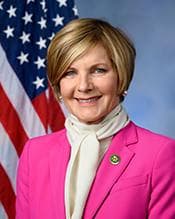
- Susie Lee
- Cosponsors
- - 3 - 0
- Introduced
- In Committee
What this bill would do
This bill, titled the "Full-Service Community School Expansion Act of 2026," aims to improve and expand the full-service community school program. It authorizes significant annual appropriations increasing from $500 million in 2027 to $1 billion by 2031. The legislation establishes new definitions for roles like community school coordinators and initiative directors to manage school success. It creates a framework for planning, implementation, and expansion grants for eligible schools. Additionally, it provides for State-level grants and specific support for Bureau-funded schools. The ultimate goal is to integrate student supports, enriched learning, and community engagement within the school environment.
Yes· 3 of 44
Does this put more money into public schools?+10
The legislation authorizes massive federal funding increases ranging from $500 million to $1 billion annually for community schools.
Would children be better off under this?+9
The primary goal of the bill is to improve health, well-being, and academic outcomes for children and students.
Would households on low incomes be better off under this?+9
Grants are specifically targeted toward high-poverty schools and communities needing comprehensive social and economic support.
The opposite
Does this reduce what the federal government spends?-5
The bill authorizes significant new federal spending, scaling up to $1,000,000,000 annually by fiscal year 2031.
Does this make the government pay for what it commits to?-2
Substantial increases in federal authorizations without offsetting revenue measures weigh negatively on fiscal discipline.
Who it would affect, and how
Potential Positive Impacts for People
-
Increased Funding for Schools: The bill authorizes specific, growing amounts of money for fiscal years 2027 through 2031 to carry out the full-service community school program (Section 2(a)(3)).
-
Integrated Student Supports: Students can benefit from in- and out-of-school support addressing well-being, such as medical, dental, vision, and mental health services (Section 2(b)(8)(A)).
-
Expanded Learning Opportunities: Students may have access to expanded learning time, including before-school, after-school, and summer programs that offer academic instruction and enrichment (Section 2(b)(8)(B)).
-
Family and Community Assistance: Families may receive access to support services such as assistance with housing stability, nutrition, and citizenship preparation (Section 2(b)(8)(A)(ii)).
-
Enhanced Student Safety and Culture: The bill promotes a culture of belonging and safety through restorative discipline practices instead of zero-tolerance practices (Section 2(b)(8)(F)).
-
Support for Specific Populations: The bill provides priority and specific programs for high-need local educational agencies, rural areas, and Indian Tribes or Tribal organizations (Section 2(a)(3)).
Potential Negative Impacts for People
-
Increased Administrative Requirements: Eligible entities must navigate complex requirements, including conducting needs and assets assessments, creating comprehensive planning reports, and submitting implementation and expansion reports (Section 2(b)(2) and Section s 2(c)(1)).
-
Mandatory Data Sharing: To receive grants, entities must enter into data-sharing agreements between local educational agencies and partner entities (Section 2(b)(1)(H) and Section 2(c)(1)(C)).
-
Public Disclosure of Records: Schools receiving grant funds are required to make records related to finances, personnel, and other decisionmaking processes available for public review (Section 2(b)(1)(J) and Section 2(c)(1)(E)).
Groups and Interests Ranking
Every group the model scored this bill for, from -10 to +10. Hover a score for the reason it gave.
- Demographic And Interest Groups
- Good For Children+9Good For Low Income Households+9Good For Students+9Good For Native Americans+8Good For Rural Residents+8Good For African Americans+7Good For Hispanic Americans+7Good For Immigrants+7Good For People With Disabilities+7Good For Urban Residents+7Good For L G B T Q Community+6Good For Women+6Good For Young Adults+6Good For Asian Americans+5Good For Middle Aged+5Good For Middle Class Households+5Good For Union Workers+5Good For White Americans+5Good For Men+4Good For Farmers+3Good For Business Owners+2
- Social Issues And Justice
- Improves Poverty Reduction+8Improves Affordable Housing+7Improves Childcare Affordability+7Improves Racial Equity+7Reduces Homelessness+7Improves Disability Rights+6Improves Gender Equality+6Improves L G B T Q Rights+6Improves Pathway To Citizenship+3
- Healthcare
- Improves Healthcare Access+8Improves Mental Health Access+8Improves Opioid Crisis Response+4
- Education And Technology
- Increases Public School Funding+10Improves College Affordability+5Improves Internet Access+4
- Governance And Ideology
- Improves Government Transparency+8Increase States Rights+3Increases Federal Power+3
- Environment Energy And Infrastructure
- Improves Rural Development+7
- Economy And Finance
- Increases Job Creation+4Improves Economic Growth+3Improves Small Business Support+2Improves Union Protections+2Reduces Government Spending-5Improves Fiscal Responsibility-2
- 5/12/2026
- Referred to the House Committee on Education and Workforce.
- 3 Cosponsors added.
- Introduced in House
2 bills Congress.gov lists as related to this one — companions in the other chamber, earlier versions, and bills this one absorbed or was folded into.
 Suzanne Bonamici
Democrat · Oregon
 Becca Balint
Democrat · Vermont
 Eleanor Norton
Democrat · District of Columbia