Bill · H.R. 8717· House(119-HR-8717)
Negating Neighborhood Noise Act of 2026
- Introduced
- 5/7/2026
- Last activity
- 5/7/2026 — Referred to the House Committee on Transportation and Infrastructure.
- Sponsored by
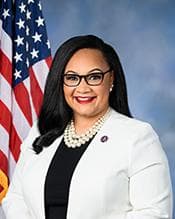
- Nikema Williams
- Cosponsors
- - 3 - 0
- Introduced
- In Committee
What this bill would do
This bill, known as the "Negating Neighborhood Noise Act of 2026," seeks to amend the National Highway System Designation Act of 1995. It aims to allow the use of Highway Trust Fund money for the construction or preservation of certain Type II noise barriers. These exceptions apply to specific scenarios, such as older residential areas or lands developed before existing highway construction. Additionally, the bill expands eligibility for Surface Transportation Block Grant funds to include these barriers. Finally, it allows for noise barriers to serve multiple purposes, such as hosting infrastructure, and encourages consideration of aesthetics.
Yes· 3 of 6
Does this put more money into wind, solar and other renewable power?+3
The bill specifically allows noise barriers to host or accommodate renewable energy generation facilities.
Would middle-income households be better off under this?+2
The bill provides noise mitigation benefits for older residential neighborhoods.
Would people in cities be better off under this?+2
The bill helps mitigate highway noise in established residential areas.
The opposite
No question was scored the opposite.
Who it would affect, and how
Potential Positive Impacts for People
-
Noise Mitigation for Residential Areas: The bill allows for the construction or preservation of Type II noise barriers in areas where the majority of structures are residential and at least 10 years old, providing protection from highway noise (Section 2).
-
Infrastructure and Energy Benefits: By allowing "multipurpose noise barriers," the bill enables barriers to host or accommodate renewable energy generation, electrical transmission and distribution infrastructure, or broadband infrastructure and conduit (Section 4).
-
Economic, Social, or Environmental Benefits: The definition of "secondary beneficial use" includes providing environmental, economic, or social benefits in addition to noise mitigation (Section 4).
-
Improved Visual Appeal: Project sponsors are required to consider the aesthetics of proposed noise barriers consistent with the Noise Barrier Design Handbook (Section 5).
Potential Negative Impacts for People
- No specific negative impacts or burdens are explicitly identified within the provided text.
Groups and Interests Ranking
Every group the model scored this bill for, from -10 to +10. Hover a score for the reason it gave.
- Demographic And Interest Groups
- Good For Middle Class Households+2Good For Urban Residents+2
- Environment Energy And Infrastructure
- Increases Renewable Energy Investment+3Improves Public Transit+1
- Education And Technology
- Improves Internet Access+2
- Social Issues And Justice
- Improves Affordable Housing+1
- 5/7/2026
- Referred to the House Committee on Transportation and Infrastructure.
- 3 Cosponsors added.
- Introduced in House
 Sean Casten
Democrat · Illinois
 James Himes
Democrat · Connecticut
 Eleanor Norton
Democrat · District of Columbia