Bill · H.R. 8712· House(119-HR-8712)
Uyghur Forced Labor Disclosure Act
- Introduced
- 5/7/2026
- Last activity
- 5/14/2026 — Sponsor introductory remarks on measure. (CR H3461)
- Sponsored by
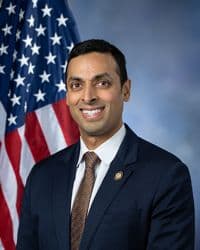
- Suhas Subramanyam
- Cosponsors
- - 12 - 1
- Introduced
What this bill would do
The Uyghur Forced Labor Disclosure Act seeks to amend the Securities Exchange Act of 1934. It requires issuers to disclose information regarding whether their supply chains include goods or merchandise from the Xinjiang Uyghur Autonomous Region (XUAR) produced via forced labor. This includes documentation for registration applications, mergers, and registration statements. The bill mandates that the Commission establish rules for these disclosures, including requirements for independent third-party verification. Furthermore, it requires issuers to disclose involvement in the development of surveillance technologies used for human rights abuses. These requirements remain in place for eight years or until the President determines that gross human rights violations in the XUAR have ended.
Yes· 3 of 5
Does this make what the government does easier for the public to see?+7
The bill mandates that the SEC make detailed supply chain and surveillance technology documentation available to the public.
Does this narrow racial gaps in how people are treated?+6
The bill targets human rights abuses against ethnic minorities in the Xinjiang region through mandatory supply chain disclosures.
Does this give people more protection from unfair business practices?+5
The bill enhances consumer protection by requiring public disclosure of whether products in supply chains are linked to forced labor.
The opposite
Would business owners be better off under this?-4
The bill imposes significant new compliance costs and documentation burdens on companies.
Who it would affect, and how
Potential Positive Impacts for People
-
Increased Transparency for Consumers and Investors: The bill requires the Commission to make all documentation and disclosed information available to the public (Section 2(a)(5) and Section 3(a)(2)). This allows people to see if the goods they buy or the companies they invest in are linked to forced labor.
-
Verification of Supply Chain Integrity: Issuers must obtain independent verification of their documentation from a third-party auditor approved by the Commission (Section 2(a)(4)(A)). This adds a layer of accountability to ensure the information provided is accurate.
-
Protection Against Reprisals: The bill requires companies to establish policies to respond to any reprisals against third-party auditors (Section 2(a)(4)(C)).
-
Accountability for Human Rights Abuses: The bill requires disclosure regarding whether an issuer was involved in providing surveillance goods or services used to facilitate gross human rights abuses (Section 3(a)(1)(D)).
Potential Negative Impacts for People
-
Penalties for Non-Compliance: If an issuer fails to comply with the requirements or misrepresents information, the national securities exchange may not approve their application, and the issuer may be barred from re-filing for one year (Section 2(a)(6)).
-
Increased Burden on Issuers: Companies are required to provide detailed documentation, including names, addresses, and sourcing quantities for every smelter, refinery, farm, or manufacturing facility in their chain (Section 2(a)(3)).
-
Compliance Costs: Companies must pay for independent verification by a third-party auditor (Section 2(a)(4)(A)).
Groups and Interests Ranking
Every group the model scored this bill for, from -10 to +10. Hover a score for the reason it gave.
- Governance And Ideology
- Improves Government Transparency+7
- Social Issues And Justice
- Improves Racial Equity+6
- Economy And Finance
- Improves Consumer Protection+5
- Education And Technology
- Increases Big Tech Regulation+4
- Demographic And Interest Groups
- Good For Asian Americans+5Good For Business Owners-4
- 5/14/2026
- Sponsor introductory remarks on measure. (CR H3461)
- 5/12/2026
- 1 Cosponsor added.
- 5/7/2026
- Referred to the House Committee on Financial Services.
- 12 Cosponsors added.
- Introduced in House
 André Carson
Democrat · Indiana
 Adriano Espaillat
Democrat · New York
 Raja Krishnamoorthi
Democrat · Illinois
 James McGovern
Democrat · Massachusetts
 Seth Moulton
Democrat · Massachusetts
 Nathaniel Moran
Republican · Texas
 Eleanor Norton
Democrat · District of Columbia
 Nancy Pelosi
Democrat · California
 Jamie Raskin
Democrat · Maryland
 Thomas Suozzi
Democrat · New York
 Dina Titus
Democrat · Nevada
 Jill Tokuda
Democrat · Hawaii
 James Walkinshaw
Democrat · Virginia