
Troy Carter (D-LA)
Medicaid Outreach and Assistance for Communities Act of 2026
A Democratic bill with 1 Democratic cosponsor · See the cosponsor
Last activity — Referred to the House Committee on Energy and Commerce.
In committee
Introduced and handed to a committee in the chamber it started in.
The committee holds it, and most bills are never heard from again. A hearing or a committee vote would be news; silence is the usual outcome, and it kills the bill without anyone voting against it.
Its path through Congress
- Introduced
- In Committee
What this bill would do
This bill, titled the "Medicaid Outreach and Assistance for Communities Act of 2026," aims to amend title XIX of the Social Security Act. The primary purpose is to increase payments to States regarding outreach and enrollment under the Medicaid program. It seeks to provide States with additional financial support to help individuals navigate new administrative requirements and systems. Specifically, it proposes that the federal government pay 100 percent of certain sums expended for these outreach and enrollment costs. This change would apply to calendar quarters beginning on or after the date the act is enacted.
Yes· 3 of 10
- Scored +7
Does this put more money into Medicaid, the health coverage for people on low incomes?
The bill directs the federal government to pay 100 percent of costs related to Medicaid outreach and enrollment assistance to states.
- Scored +6
Would households on low incomes be better off under this?
Increased outreach and navigation help low-income individuals maintain essential Medicaid coverage.
- Scored +6
Does this make health care easier to get in general?
Increased funding for outreach and navigation support is intended to help eligible individuals enroll and retain their insurance coverage.
The opposite
No question was scored the opposite.
Who it would affect, and how
Potential Positive Impacts for People
-
Increased Financial and Health Support: The bill notes that access to health insurance coverage can reduce financial hardship and improve health outcomes, specifically through the use of preventive and primary care services (Section 2).
-
Improved Navigation of Complex Systems: The act provides for increased payments to help individuals navigate new systems that have been made more complex by previous laws, such as work reporting requirements and frequent eligibility redeterminations (Section 2).
-
Support for Vulnerable Groups: Increased support is intended to help ensure that children, working families, and older adults do not go without insurance coverage, which protects their health, well-being, and financial security (Section 2).
-
Enhanced Enrollment and Retention: By providing additional support to States, the bill aims to increase enrollment and retention among eligible individuals who might otherwise lose coverage due to administrative complexity (Section 2).
Potential Negative Impacts for People
- No negative impacts or burdens are explicitly identified within the provided text.
Groups and Interests Ranking
Every group the model scored this bill for, from -10 to +10. Tap or hover a score for the reason it gave.
- Demographic And Interest Groups
- Would households on low incomes be better off under this? — Increased outreach and navigation help low-income individuals maintain essential Medicaid coverage. Would children be better off under this? — The bill provides support to ensure children do not lose insurance coverage due to administrative complexities. Would retired people be better off under this? — The bill protects older adults' access to healthcare coverage during redetermination processes. Would people over 65 be better off under this? — The bill aims to protect older adults from losing coverage due to frequent eligibility redeterminations. Would people in middle age be better off under this? — The bill helps working families maintain coverage amidst new administrative requirements. Would middle-income households be better off under this? — The bill supports working families in navigating new system requirements to keep their health coverage.
- Healthcare
- Does this put more money into Medicaid, the health coverage for people on low incomes? — The bill directs the federal government to pay 100 percent of costs related to Medicaid outreach and enrollment assistance to states. Does this make health care easier to get in general? — Increased funding for outreach and navigation support is intended to help eligible individuals enroll and retain their insurance coverage.
- Social Issues And Justice
- Is this likely to lift people out of poverty? — By assisting with Medicaid enrollment, the bill aims to protect the financial security of vulnerable populations.
- Governance And Ideology
- Does this give the federal government more power? — The federal government assumes full responsibility for 100 percent of the costs for specific state outreach and enrollment activities.
- 5/4/2026
- Referred to the House Committee on Energy and Commerce.
- 1 Cosponsor added.
- Introduced in House
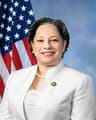 Jennifer McClellan
Democrat · Virginia