Bill · H.R. 8648· House(119-HR-8648)
FORGE Act
- Introduced
- 5/4/2026
- Last activity
- 5/4/2026 — Referred to the House Committee on Foreign Affairs.
- Sponsored by
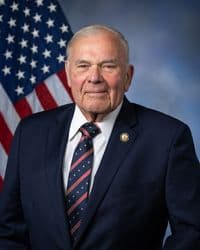
- James Baird
- Cosponsors
- - 3 - 1
- Introduced
- In Committee
What this bill would do
This bill creates a program in the Department of State called the Foundational Infrastructure for Responsible Use of Small Modular Reactor Technology program, also known as the FIRST program. The program is managed by the Under Secretary for Arms Control and International Security or their designee. Its job is to promote the responsible use of civil nuclear energy internationally while helping United States economic and national security interests. It also works to advocate for United States civil nuclear projects and technology through diplomacy and provides consultation to partner countries on safety, security, licensing, and legal frameworks. Additionally, the program offers early-stage commercial project development support and cooperates with partner countries on training and technical resource sharing. Finally, the bill requires reports and briefings to specific congressional committees and has a sunset date of June 8, 2034.
Yes· 3 of 11
Does this make trade with other countries easier?+4
The bill specifically mandates diplomatic engagement to advocate for the export of United States nuclear technology and products.
Does this put more money into wind, solar and other renewable power?+4
The bill promotes the international deployment of civil nuclear energy through small modular reactors.
Does this strengthen ties with allied countries?+3
The bill utilizes bilateral and multilateral diplomatic engagements to build partnerships around nuclear technology deployment.
The opposite
No question was scored the opposite.
Who it would affect, and how
Potential Positive Impacts for People
-
Section 2(b)(1) and Section 2(b)(2): These provisions promote the deployment of civil nuclear energy internationally and advocate for U.S. businesses. This could benefit people by supporting United States economic and national security interests.
-
Section 2(b)(3) and Section 2(b)(4): These sections engage in diplomacy regarding safety, security, and nonproliferation standards and provide consultation to partner countries on regulatory frameworks. This is positive because it encourages high safety standards for nuclear reactor deployment and the adoption of U.S. nuclear technology.
-
Section 2(b)(5) and Section 2(b)(6): These provisions provide early-stage commercial project development support and cooperate with partner countries on training programs and technical resource sharing. This could benefit individuals by ensuring fair market access for U.S. businesses and supporting small modular reactor fleet deployment.
-
Section 2(c) and Section 2(d): These sections require the Under Secretary to provide reports and briefings to appropriate congressional committees detailing program implementation, outreach, partners, and funds expended. This is positive for holding officials accountable to Congress and the people.
Potential Negative Impacts for People
- Based on the provided text, there are no specific sections or provisions identified that create negative consequences or burdens for individuals or groups of people in the United States.
Groups and Interests Ranking
Every group the model scored this bill for, from -10 to +10. Hover a score for the reason it gave.
- National Security And Foreign Policy
- Improves International Trade+4Improves International Alliances+3Increases Foreign Aid+2Improves Veterans Benefits+1
- Demographic And Interest Groups
- Good For Business Owners+3Good For Union Workers+2
- Economy And Finance
- Increases Job Creation+3Improves Small Business Support+2
- Environment Energy And Infrastructure
- Increases Renewable Energy Investment+4
- Education And Technology
- Increases Scientific Research Funding+2
- Governance And Ideology
- Improves Government Transparency+2
- 8/31/2026
- 1 Cosponsor added.
- 5/13/2026
- 2 Cosponsors added.
- 5/4/2026
- Referred to the House Committee on Foreign Affairs.
- 1 Cosponsor added.
- Introduced in House
One bill Congress.gov lists as related to this one — companions in the other chamber, earlier versions, and bills this one absorbed or was folded into.
 Pat Harrigan
Republican · North Carolina
 William Keating
Democrat · Massachusetts
 Young Kim
Republican · California
 Derek Schmidt
Republican · Kansas