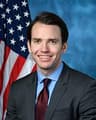
Kevin Kiley (I-CA)
National Human Trafficking Database Act
A bill from an independent · See all 8 cosponsors
Last activity — Referred to the House Committee on the Judiciary.
In committee
Introduced and handed to a committee in the chamber it started in.
The committee holds it, and most bills are never heard from again. A hearing or a committee vote would be news; silence is the usual outcome, and it kills the bill without anyone voting against it.
Its path through Congress
- Introduced
- In Committee
What this bill would do
The National Human Trafficking Database Act aims to establish a national human trafficking database at the Office for Victims of Crime within the Department of Justice. The bill provides for grants to be awarded to certain State agencies to assist in the collection and reporting of human trafficking data. This data includes information on prosecutions, arrests, convictions, and details regarding anti-human trafficking organizations. The Director of the Office for Victims of Crime will be responsible for establishing and maintaining this database on the Department of Justice website. Additionally, the Director must report the database contents to Congress annually.
Yes· 3 of 13
- Scored +2
Would children be better off under this?
The bill includes the collection of data from state-level children's services agencies to better identify child trafficking.
- Scored +2
Would households on low incomes be better off under this?
The bill targets the identification and prevention of labor trafficking, which often targets economically vulnerable populations.
- Scored +2
Would Native Americans be better off under this?
The bill specifically incorporates data collection from the Bureau of Indian Affairs' Missing and Murdered Unit.
The opposite
- Scored -1
Does this reduce what the federal government spends?
The bill authorizes $51 million in new spending for the establishment and maintenance of a national database.
Who it would affect, and how
Potential Positive Impacts for People
-
Support for State Law Enforcement and Agencies: The bill provides grants to covered State agencies to facilitate the collection and reporting of human trafficking data (Section 2, subsection b(1)(A)).
-
Resource Identification for Communities: The database will include the name and primary service of anti-human trafficking organizations operating in each county (Section 2, subsection c(1)(A)(i)(II)).
-
Improved Data Visibility: The database will identify the 10 counties in a State with the highest and lowest rates of human trafficking, or rank all counties if the State has fewer than 20 (Section 2, subsection c(1)(B)(v)).
-
Protection of Victim Safety: The bill requires covered State agencies to protect the confidentiality and privacy of human trafficking survivors and their families (Section 2, subsection d).
Potential Negative Impacts for People
- Privacy Risks: While the bill mandates confidentiality, it acknowledges the collection of data related to survivors, which requires strict protections to ensure safety (Section 2, subsection d).
Groups and Interests Ranking
Every group the model scored this bill for, from -10 to +10. Tap or hover a score for the reason it gave.
- Demographic And Interest Groups
- Would children be better off under this? — The bill includes the collection of data from state-level children's services agencies to better identify child trafficking. Would households on low incomes be better off under this? — The bill targets the identification and prevention of labor trafficking, which often targets economically vulnerable populations. Would Native Americans be better off under this? — The bill specifically incorporates data collection from the Bureau of Indian Affairs' Missing and Murdered Unit. Would women be better off under this? — The bill tracks sex trafficking data, which disproportionately affects women, to improve identification and service provision. Would people with disabilities be better off under this? — Better data collection on trafficking may improve the protection of vulnerable individuals, including those with disabilities.
- Social Issues And Justice
- Does this change how police departments operate? — The bill provides grants and data-sharing mechanisms to help state law enforcement better identify and combat human trafficking. Does this narrow racial gaps in how people are treated? — The bill requires the collection of prosecution data categorized by race to better understand trafficking trends among different populations. Is this likely to lift people out of poverty? — By identifying and combating labor trafficking, the bill seeks to protect vulnerable populations from exploitative economic conditions.
- Governance And Ideology
- Does this make what the government does easier for the public to see? — The bill establishes a public database to provide transparency regarding human trafficking rates and anti-trafficking resources across the country. Does this protect people from being watched or searched? — The bill includes strict provisions to ensure that personally identifying information of survivors is not publicized or demanded.
- Economy And Finance
- Does this reduce what the federal government spends? — The bill authorizes $51 million in new spending for the establishment and maintenance of a national database.
- Education And Technology
- Does this give people more control over their personal data? — The bill explicitly mandates that covered state agencies protect the confidentiality and privacy of human trafficking survivors and their families.
- Healthcare
- Does this do more about addiction and overdose deaths? — By tracking data related to drug distribution in connection to human trafficking, it may indirectly aid in identifying trafficking-related drug crime patterns.
- National Security And Foreign Policy
- Does this better protect the country from computer attacks? — The creation of a national database on the Department of Justice website centralizes critical information for law enforcement use.
- 12/18/2025
- 1 Cosponsor added.
- 9/30/2025
- 1 Cosponsor added.
- 9/11/2025
- 1 Cosponsor added.
- 9/3/2025
- 1 Cosponsor added.
- 4/8/2025
- 1 Cosponsor added.
- 2/5/2025
- 1 Cosponsor added.
- 1/31/2025
- Referred to the House Committee on the Judiciary.
- 2 Cosponsors added.
- Introduced in House
One bill Congress.gov lists as related to this one — companions in the other chamber, earlier versions, and bills this one absorbed or was folded into.
 Daniel Goldman
Democrat · New York
 Laura Gillen
Democrat · New York
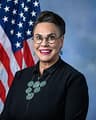 Harriet Hageman
Republican · Wyoming
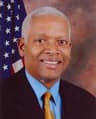 Henry Johnson
Democrat · Georgia
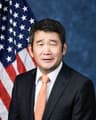 Dave Min
Democrat · California
 Troy Nehls
Republican · Texas
 Joe Neguse
Democrat · Colorado
 Eugene Vindman
Democrat · Virginia