Bill · H.R. 8621· House(119-HR-8621)
China-Africa Mining Transparency Act
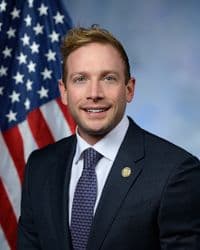
- Introduced
- 4/30/2026
- Last activity
- 4/30/2026 — Referred to the House Committee on Foreign Affairs.
- Sponsored by
- Max Miller
- Cosponsors
- - 1 - 1
- Introduced
- In Committee
What this bill would do
The China-Africa Mining Transparency Act requires the Secretary of State to create and publish an annual list of specific entities. This list focuses on People's Republic of China-origin entities conducting mining in certain African countries. The bill targets mining activities involving forced labor or those causing environmental harm to protected areas. These activities include mining for critical minerals, gold, or iron in nations like the Democratic Republic of the Congo, Nigeria, Guinea, Zambia, South Africa, or Zimbabwe. The Secretary must submit these lists to relevant congressional committees and make them available to the public online. This requirement is set to last for a 5-year period starting from the date of enactment.
Yes· 3 of 7
Does this make what the government does easier for the public to see?+5
The bill mandates the public disclosure of specific entities and mining locations through an annual report made available online.
Does this better protect air, water and wildlife?+3
The bill targets and identifies mining activities that cause environmental harm to protected areas, such as water contamination and soil degradation.
Would households on low incomes be better off under this?+2
The bill aims to identify and curb the use of forced labor, which disproportionately affects low-income and vulnerable workers.
The opposite
No question was scored the opposite.
Who it would affect, and how
Potential Positive Impacts for People
-
Increased Transparency: The bill requires the Secretary of State to make a list of PRC entities and their mining locations publicly available on the internet (Section 2(b)(1) and Section 2(d)). This provides the public with information regarding mining practices in specific African countries.
-
Addressing Labor Abuses: By identifying entities using forced labor, the bill targets practices defined by the Tariff Act of 1930 (Section 2(a)(4)). This aims to highlight mining that uses forced labor for critical minerals, gold, or iron (Section 2(b)(1)).
-
Environmental Protection: The bill seeks to identify mining that causes environmental harm to protected areas, such as the contamination of water resources or soil degradation (Section 2(a)(3)). This provides a mechanism to track damage to ecosystems, national parks, or nature preserves (Section 2(a)(7)).
Potential Negative Impacts for People
- No specific negative impacts are explicitly stated in the provided text.
Groups and Interests Ranking
Every group the model scored this bill for, from -10 to +10. Hover a score for the reason it gave.
- Governance And Ideology
- Improves Government Transparency+5
- Demographic And Interest Groups
- Good For Low Income Households+2Good For Urban Residents+1
- Environment Energy And Infrastructure
- Improves Environmental Protections+3
- Economy And Finance
- Improves Consumer Protection+2
- National Security And Foreign Policy
- Improves International Trade+2
- Social Issues And Justice
- Improves Racial Equity+2
- 4/30/2026
- Referred to the House Committee on Foreign Affairs.
- 2 Cosponsors added.
- Introduced in House
One bill Congress.gov lists as related to this one — companions in the other chamber, earlier versions, and bills this one absorbed or was folded into.
 Young Kim
Republican · California
 Jared Moskowitz
Democrat · Florida