Bill · H.R. 8517· House(119-HR-8517)
Clean Energy Workforce Act
- Introduced
- 4/27/2026
- Last activity
- 4/27/2026 — Referred to the House Committee on Education and Workforce.
- Sponsored by
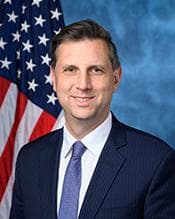
- Seth Magaziner
- Cosponsors
- - 22 - 1
- Introduced
- In Committee
What this bill would do
The Clean Energy Workforce Act aims to develop career and technical education programs and facilities focused on renewable energy. The bill authorizes the Secretary of Energy to award competitive grants to eligible partnerships to create or expand programs of study in fields like clean energy and climate change mitigation. It also provides for grants to promote energy-efficient career and technical education facilities and the use of renewable energy practices. These grants involve collaboration between educational agencies, postsecondary institutions, and community representatives. A peer review committee of educators and industry experts will assist in evaluating applications. The act authorizes up to $100,000,000 for these purposes.
Yes· 3 of 12
Does this put more money into wind, solar and other renewable power?+6
The bill authorizes $100,000,000 to develop renewable energy curricula and energy-efficient educational facilities.
Would people in their twenties and thirties be better off under this?+5
The bill focuses on career and technical education for students entering the workforce.
Does this put more money into public schools?+5
The bill provides competitive grants specifically for local educational agencies and career/technical schools.
The opposite
Does this improve buses, trains and other public transport?-1
While focusing on energy efficiency, the bill does not specifically fund transit infrastructure.
Who it would affect, and how
Potential Positive Impacts for People
-
Expanded Educational Opportunities: Grants can be used to develop or expand programs of study focused on emerging careers in fields such as clean energy, renewable energy, energy efficiency, climate change mitigation, or climate change adaptation (Section 2(a), Section 5(2)).
-
Increased Accessibility for Underserved Students: The bill encourages programs of study that are accessible to students from various backgrounds, specifically including those who are economically disadvantaged, low-succeeding, or living in urban or rural areas (Section 2(c)(2)(C)(iii)).
-
Job Readiness and Placement: The program of study aims to prepare students for employment in specific industries or occupations within a covered field and can include provisions for student placement in non-traditional fields (Section 2(c)(2)(C)(iii-iv) and Section 2(c)(2)(D)).
-
Modernized Learning Facilities: Grants allow for the development of energy-efficient career and technical education facilities and the purchase of energy-efficient machinery or technology to be used as educational tools (Section 3(a)(1) and Section 3(c)(4)).
-
Scalable Educational Models: The bill prioritizes programs that are replicable and can be shared with other postsecondary institutions or schools that were not part of the original partnership (Section 2(d)(1) and Section 2(e)(1)(A)).
Potential Negative Impacts for People
- Competitive Limitations: Because the grants are awarded on a competitive basis, not all eligible partnerships or entities will receive funding (Section 2(a) and Section 3(a)).
Groups and Interests Ranking
Every group the model scored this bill for, from -10 to +10. Hover a score for the reason it gave.
- Demographic And Interest Groups
- Good For Young Adults+5Good For Low Income Households+4Good For Union Workers+4Good For Rural Residents+3Good For Urban Residents+3
- Education And Technology
- Increases Public School Funding+5Improves College Affordability+2Increases Scientific Research Funding+2
- Economy And Finance
- Increases Job Creation+5Improves Economic Growth+3
- Environment Energy And Infrastructure
- Increases Renewable Energy Investment+6Improves Public Transit-1
- Social Issues And Justice
- Improves Poverty Reduction+3
- 5/14/2026
- 1 Cosponsor added.
- 4/27/2026
- Referred to the House Committee on Education and Workforce.
- 22 Cosponsors added.
- Introduced in House
 Yassamin Ansari
Democrat · Arizona
 Julia Brownley
Democrat · California
 Ed Case
Democrat · Hawaii
 André Carson
Democrat · Indiana
 Judy Chu
Democrat · California
 Troy Carter
Democrat · Louisiana
 Christopher Deluzio
Democrat · Pennsylvania
 John Garamendi
Democrat · California
 Jahana Hayes
Democrat · Connecticut
 Pablo Hernández
Democrat · Puerto Rico
 William Keating
Democrat · Massachusetts
 Stephen Lynch
Democrat · Massachusetts
 James Moylan
Republican · Guam
 Eleanor Norton
Democrat · District of Columbia
 Scott Peters
Democrat · California
 Raul Ruiz
Democrat · California
 Delia Ramirez
Democrat · Illinois
 Eric Sorensen
Democrat · Illinois
 Lateefah Simon
Democrat · California
 Dina Titus
Democrat · Nevada
 Mark Takano
Democrat · California
 Jill Tokuda
Democrat · Hawaii
 Shri Thanedar
Democrat · Michigan