Bill · H.R. 8496· House(119-HR-8496)
Marine Mammal Climate Change Protection Act of 2026
- Introduced
- 4/27/2026
- Last activity
- 4/27/2026 — Referred to the House Committee on Natural Resources.
- Sponsored by
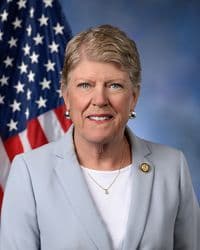
- Julia Brownley
- Cosponsors
- - 8 - 0
- Introduced
- In Committee
What this bill would do
This bill, known as the "Marine Mammal Climate Change Protection Act of 2026," seeks to amend the Marine Mammal Protection Act of 1972. It directs the Secretary of Commerce to create and implement climate impact management plans for specific marine mammal species and populations. These plans aim to address species likely to decline due to climate change. The legislation also mandates a monitoring program through NOAA to track climate impacts and species abundance. Additionally, it establishes specific timelines for publishing species lists and draft management plans.
Yes· 3 of 8
Does this better protect air, water and wildlife?+8
The bill mandates the creation of climate impact management plans to conserve and recover species facing decline from climate change.
Does this make what the government does easier for the public to see?+5
The bill requires several stages of public notice and opportunities for public comment regarding species lists and management plans.
Does this cut the pollution that drives climate change?+2
The bill directs NOAA to assess the contributions of marine mammals to carbon reduction through sequestration and nutrient cycling.
The opposite
No question was scored the opposite.
Who it would affect, and how
Potential Positive Impacts for People
-
Species Conservation: The bill requires the creation of comprehensive strategies to conserve and recover marine mammal species and stocks by addressing the effects of climate change and increasing resiliency (Section 2(a)(3)(B)).
-
Improved Environmental Monitoring: The Secretary must establish a program within NOAA to monitor adverse impacts of climate change, improve models of future changes in distribution, and assess contributions to carbon reduction (Section 2(b)).
-
Public Involvement: The bill ensures transparency by requiring notice and opportunities for public comment regarding species lists, draft management plans, and new regulations (Section 2(a)(1), 2(a)(2), and 2(a)(3)(ii)).
-
Inter-Agency Coordination: Federal agencies are directed to use their authorities to further the conservation strategies and ensure their actions do not conflict with the management plans (Section 2(a)(3)(D)).
Potential Negative Impacts for People
-
Regulatory Burdens on Agencies: Federal agencies must ensure their authorized or funded actions are consistent with climate impact management plans, and if a conflict is found, they must adopt measures required by the Secretary to minimize such conflicts (Section 2(a)(3)(D)(ii)).
-
Impacts from Insufficient Funding: If there is not enough money to develop or implement a plan, certain species or stocks will be deemed "depleted" and "strategic stocks," which may trigger different regulatory requirements (Section 2(a)(3)(A)(iv)(II)).
Groups and Interests Ranking
Every group the model scored this bill for, from -10 to +10. Hover a score for the reason it gave.
- Environment Energy And Infrastructure
- Improves Environmental Protections+8Reduces Carbon Emissions+2
- Governance And Ideology
- Improves Government Transparency+5
- Demographic And Interest Groups
- Good For Rural Residents+1Good For Urban Residents+1
- National Security And Foreign Policy
- Improves International Alliances+2
- Economy And Finance
- Improves Fiscal Responsibility+1
- Social Issues And Justice
- Improves Poverty Reduction+1
- 9/1/2026
- 1 Cosponsor added.
- 6/15/2026
- 1 Cosponsor added.
- 4/27/2026
- Referred to the House Committee on Natural Resources.
- 6 Cosponsors added.
- Introduced in House
 Suzanne Bonamici
Democrat · Oregon
 Ed Case
Democrat · Hawaii
 Steve Cohen
Democrat · Tennessee
 Raja Krishnamoorthi
Democrat · Illinois
 Ted Lieu
Democrat · California
 Doris Matsui
Democrat · California
 Seth Magaziner
Democrat · Rhode Island
 Dave Min
Democrat · California