
Michael Cloud (R-TX)
No Regulation Through Litigation Act of 2025
A Republican bill with 7 Republican cosponsors · See all 7 cosponsors
Last activity — Referred to the House Committee on the Judiciary.
In committee
Introduced and handed to a committee in the chamber it started in.
The committee holds it, and most bills are never heard from again. A hearing or a committee vote would be news; silence is the usual outcome, and it kills the bill without anyone voting against it.
Its path through Congress
- Introduced
- In Committee
What this bill would do
The "No Regulation Through Litigation Act of 2025" aims to place specific limitations on how Federal agencies handle settlement agreements and consent decrees. Under this bill, agency heads would be prohibited from entering into consent decrees that go beyond the actual authority of the court issuing the order. Additionally, the act forbids settlement agreements or consent decrees that result in a regulation or guidance document from including the payment of attorneys' fees or litigation costs. The legislation also provides specific definitions for "guidance document" and "regulation" to clarify its scope. Finally, it includes a severability clause to ensure that if one part of the law is found invalid, the rest remains in effect.
Yes
- Scored +5
Does this reduce what the federal government spends?
The bill reduces government spending by prohibiting agencies from paying attorneys' fees and litigation costs through settlement agreements or consent decrees.
- Scored +2
Does this make what the government does easier for the public to see?
The bill restricts agencies from using settlements to bypass formal rulemaking processes.
The opposite
- Scored -4
Does this give the federal government more power?
The bill curtails the ability of federal agencies to implement new regulations or guidance through the settlement process.
- Scored -3
Would households on low incomes be better off under this?
The prohibition on paying attorneys' fees may reduce the incentive or ability for advocacy groups to litigate on behalf of low-income interests.
Who it would affect, and how
Potential Positive Impacts for People
-
Limitation on Consent Decrees: This provision prevents the head of a Federal agency from entering into a consent decree that exceeds the authority of the court entering the order (Section 2(a)). This could prevent agencies from committing to actions that a court does not have the power to mandate.
-
Limitation on Attorneys' Fees and Litigation Costs: Settlement agreements or consent decrees that result in a regulation or guidance document may not include the payment of attorneys' fees or litigation costs (Section 2(b)). This limits the requirement for an agency to pay for legal costs as part of a settlement.
Potential Negative Impacts for People
- Limitation on Attorneys' Fees and Litigation Costs: Because settlement agreements or consent decrees resulting in a regulation or guidance document may not include the payment of attorneys' fees or litigation costs (Section 2(b)), this could impact the ability to recover those specific costs through a settlement.
Groups and Interests Ranking
Every group the model scored this bill for, from -10 to +10. Tap or hover a score for the reason it gave.
- Economy And Finance
- Does this reduce what the federal government spends? — The bill reduces government spending by prohibiting agencies from paying attorneys' fees and litigation costs through settlement agreements or consent decrees.
- Demographic And Interest Groups
- Would households on low incomes be better off under this? — The prohibition on paying attorneys' fees may reduce the incentive or ability for advocacy groups to litigate on behalf of low-income interests.
- Governance And Ideology
- Does this make what the government does easier for the public to see? — The bill restricts agencies from using settlements to bypass formal rulemaking processes. Does this give the federal government more power? — The bill curtails the ability of federal agencies to implement new regulations or guidance through the settlement process.
- 8/26/2025
- 1 Cosponsor added.
- 2/14/2025
- 1 Cosponsor added.
- 1/31/2025
- Referred to the House Committee on the Judiciary.
- 5 Cosponsors added.
- Introduced in House
 Elijah Crane
Republican · Arizona
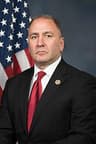 Clay Higgins
Republican · Louisiana
 Mark Harris
Republican · North Carolina
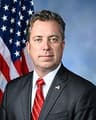 Andrew Ogles
Republican · Tennessee
 Scott Perry
Republican · Pennsylvania
 Gary Palmer
Republican · Alabama
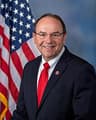 Thomas Tiffany
Republican · Wisconsin