Bill · H.R. 8479· House(119-HR-8479)
Protecting Consumers from Deceptive AI Act
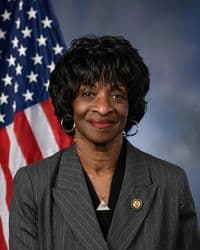
- Introduced
- 4/23/2026
- Last activity
- 4/23/2026 — Referred to the Committee on Energy and Commerce, and in addition to the Committee on Science, Space, and Technology, for a period to be subsequently determined by the Speaker, in each case for consideration of such provisions as fall within the jurisdiction of the committee concerned.
- Sponsored by
- Valerie Foushee
- Cosponsors
- - 1 - 2
- Introduced
- In Committee
What this bill would do
The Protecting Consumers from Deceptive AI Act requires the National Institute of Standards and Technology to create task forces to develop technical standards for identifying AI-generated content. These standards aim to use tools like watermarking and digital fingerprinting to provide content provenance. The bill mandates that generative AI application providers include machine-readable disclosures in audio or visual content they create or modify. It also requires online platforms to display this disclosure information clearly to users. Finally, the Federal Trade Commission will be responsible for regulating these requirements and enforcing them against violators.
Yes· 3 of 6
Does this give people more protection from unfair business practices?+7
The bill requires AI-generated content to include disclosures to prevent consumer deception from deepfakes.
Does this make casting a ballot easier in practice?+5
The bill aims to prevent deceptive AI robocalls and digital disinformation intended to discourage voting.
Does this make what the government does easier for the public to see?+5
The bill mandates clear disclosures for AI-generated content to ensure an informed electorate.
The opposite
Does this protect people from being watched or searched?-2
The collection of content provenance and metadata may have inherent privacy implications for users.
Does this give people more control over their personal data?-2
The mandate to track content provenance and metadata may create new privacy risks for users.
Who it would affect, and how
Potential Positive Impacts for People
-
Protection from Consumer Deception: The bill seeks to prevent "deepfakes" from being used to fool people regarding products they might purchase, such as fake celebrity endorsements (Section 2, Paragraph 3).
-
National Security: By requiring labels on AI content, the bill aims to address security issues caused by deepfakes, such as fake images of events that can cause market confusion (Section 2, Paragraph 4).
-
Maintaining an Informed Electorate: The bill intends to reduce confusion in political advertising by providing a way to identify AI-generated content, such as deceptive robocalls (Section 2, Paragraph 5 and 6).
-
Improved Content Identification: Task forces will work on technical standards like watermarking and digital fingerprinting to help people distinguish real content from AI-generated content (Section 3, Paragraph (a)(1)(A)).
-
Privacy Protections: Task forces are directed to consider how to store and display content provenance data in a privacy-preserving manner, giving users options to limit shared data (Section 3, Paragraph (a)(5)).
Potential Negative Impacts for People
- Privacy Implications of Metadata: While the bill discusses privacy-preserving methods, the collection and display of content provenance data and metadata may have inherent privacy implications for users (Section 3, Paragraph (a)(5)).
Groups and Interests Ranking
Every group the model scored this bill for, from -10 to +10. Hover a score for the reason it gave.
- Economy And Finance
- Improves Consumer Protection+7
- Social Issues And Justice
- Improves Voting Access+5
- Demographic And Interest Groups
- Good For Low Income Households+3Good For Urban Residents+1
- National Security And Foreign Policy
- Improves Cybersecurity Defense+4
- Governance And Ideology
- Improves Government Transparency+5Improves Privacy Rights-2
- Education And Technology
- Improves Data Privacy-2
- 5/12/2026
- 1 Cosponsor added.
- 4/23/2026
- Referred to the Committee on Energy and Commerce, and in addition to the Committee on Science, Space, and Technology, for a period to be subsequently determined by the Speaker, in each case for consideration of such provisions as fall within the jurisdiction of the committee concerned.
- 2 Cosponsors added.
- Introduced in House
One bill Congress.gov lists as related to this one — companions in the other chamber, earlier versions, and bills this one absorbed or was folded into.
 Donald Beyer
Democrat · Virginia
 Brian Fitzpatrick
Republican · Pennsylvania
 James Moylan
Republican · Guam