Bill · H.R. 8453· House(119-HR-8453)
Rural Child Care Facility Expansion Act
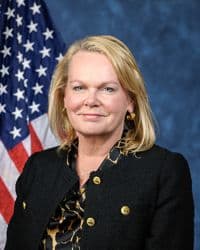
- Introduced
- 4/22/2026
- Last activity
- 4/22/2026 — Referred to the House Committee on Agriculture.
- Sponsored by
- April McClain Delaney
- Cosponsors
- - 4 - 1
- Introduced
- In Committee
What this bill would do
This bill, known as the ``Rural Child Care Facility Expansion Act'', aims to create a low-interest loan program. The program is designed to support the renovation, expansion, and adaptation of buildings to increase child care availability in rural communities. These loans are intended for "covered child care providers" to help address "child care deserts." The Secretary of Agriculture oversees the program and the administration of the loans. This initiative begins one year after the Act is enacted.
Yes· 3 of 8
Would people in rural areas be better off under this?+7
The bill provides specific financial support to expand essential child care services in rural communities.
Would children be better off under this?+6
The bill increases the availability of child care services for children in rural areas.
Does this invest in rural communities?+6
The bill specifically targets rural communities to improve their infrastructure through child care facility expansion.
The opposite
No question was scored the opposite.
Who it would affect, and how
Potential Positive Impacts for People
-
Increased Child Care Availability: The program provides loans to facilitate the renovation, retrofits, expansion, and adaptation of structures to increase the availability of child care services in rural communities. (Section 2(a) and Section 2(f)(1))
-
Support for Rural Communities: The bill specifically targets "child care deserts," which are areas where the number of children is at least three times the number of available child care slots, or where no licensed providers exist. (Section 2(b)(2) and Section 2(e)(2))
-
Financial Assistance for Providers: "Covered child care providers" can access low-interest loans, which are defined as a rate equal to the Treasury constant maturity rate plus 1/8 of 1 percent. (Section 2(b)(1) and Section 2(b)(4))
-
Flexibility for Planning: Entities can use up to 10 percent of their loan to cover pre-development activities, such as planning and design for new facilities. (Section 2(f)(2))
Potential Negative Impacts for People
-
Limited Funding Use: An entity is restricted from using more than 10 percent of a loan for any pre-development activities, including planning and design. (Section 2(f)(2))
-
Loan Repayment Obligations: Recipients of the loans must follow a repayment schedule established by the Secretary. (Section 2(g)(2))
Groups and Interests Ranking
Every group the model scored this bill for, from -10 to +10. Hover a score for the reason it gave.
- Demographic And Interest Groups
- Good For Rural Residents+7Good For Children+6Good For Low Income Households+3
- Economy And Finance
- Improves Small Business Support+5Increases Job Creation+3
- Environment Energy And Infrastructure
- Improves Rural Development+6
- Social Issues And Justice
- Improves Childcare Affordability+4
- Education And Technology
- Improves School Choice+1
- 5/21/2026
- 1 Cosponsor added.
- 5/11/2026
- 1 Cosponsor added.
- 4/27/2026
- 1 Cosponsor added.
- 4/22/2026
- Referred to the House Committee on Agriculture.
- 2 Cosponsors added.
- Introduced in House
 Jahana Hayes
Democrat · Connecticut
 Mariannette Miller-Meeks
Republican · Iowa
 Eleanor Norton
Democrat · District of Columbia
 Josh Riley
Democrat · New York
 Eric Sorensen
Democrat · Illinois