Bill · H.R. 8450· House(119-HR-8450)
Save Willy Act of 2026
- Introduced
- 4/22/2026
- Last activity
- 4/22/2026 — Referred to the House Committee on Transportation and Infrastructure.
- Sponsored by
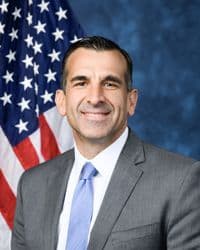
- Sam Liccardo
- Cosponsors
- - 9 - 0
- Introduced
- In Committee
What this bill would do
The "Save Willy Act of 2026" establishes a four-year pilot program to protect large cetaceans in the San Francisco Bay and the Golden Gate strait. This program creates a "Cetacean Desk" within the San Francisco Vessel Traffic Service to monitor whale presence and coordinate with the maritime industry. The initiative aims to reduce vessel strikes, disturbances, and other impacts on these animals. Personnel will engage with vessel operators to share sighting locations and ensure compliance with regulations. The program will also explore the use of emerging technologies, such as artificial intelligence, to track and identify cetaceans. Finally, the program includes provisions for training and local variances to improve safety and coordination.
Yes· 3 of 4
Does this better protect air, water and wildlife?+8
The bill establishes a pilot program to reduce vessel strikes and disturbances to large cetaceans in the San Francisco Bay region.
Does this put more money into scientific research?+3
The bill encourages the evaluation and adoption of emerging technologies like AI for tracking cetaceans.
Does this make what the government does easier for the public to see?+3
The bill requires annual reports to congressional committees regarding the program's progress and functionality.
The opposite· 3 of 4
Does this make it easier to run a small business?-2
The bill may impose operational restrictions on vessels through buffer zones, speed limits, and seasonal no-go zones.
Would business owners be better off under this?-2
Maritime business owners may face new operational requirements such as seasonal no-go zones and speed restrictions.
Does this improve buses, trains and other public transport?-1
The bill may require maritime operators to adhere to new speed and buffer zone regulations.
Who it would affect, and how
Potential Positive Impacts for People
-
Improved coordination and safety for the maritime industry: The Cetacean Desk is designed to improve coordination with the maritime industry to reduce the risk of vessel impacts, such as strikes and disturbances (Section 2(a)(1)(B)(i)).
-
Enhanced tracking of large cetaceans: The program will monitor the presence and location of large cetaceans in the San Francisco Bay and the strait of Golden Gate (Section 2(a)(1)(B)(ii)).
-
Use of advanced technology for better data: The program will evaluate and adopt new and emerging technologies, including automated or artificial intelligence-enabled tools, to improve the detection, identification, and tracking of large cetaceans (Section 2(e)(1)(A)).
-
Better information sharing: The Secretary may enter into a memorandum of understanding to facilitate the real-time sharing of data regarding large cetaceans between the State of California, NOAA, and the San Francisco Vessel Traffic Service (Section 2(c)).
-
Training and guidance for vessel operators: The program may include training for vessel operators regarding marine mammal protection, such as vessel buffer zones, vessel speed, and seasonal no-go zones (Section 2(g)(3)(B)).
Potential Negative Impacts for People
-
Workload increases for existing staff: The two full-time equivalent positions required for the Cetacean Desk may include responsibilities that contribute to other necessary San Francisco Vessel Traffic Service duties as needed (Section 2(a)(2)(A)(i)).
-
Potential operational restrictions for vessels: Through local variances and cooperative agreements, vessel operators may face requirements related to vessel buffer zones, vessel speed, and seasonal no-go zones (Section 2(g)(3)(B)).
Groups and Interests Ranking
Every group the model scored this bill for, from -10 to +10. Hover a score for the reason it gave.
- Environment Energy And Infrastructure
- Improves Environmental Protections+8Improves Public Transit-1
- Education And Technology
- Increases Scientific Research Funding+3
- Governance And Ideology
- Improves Government Transparency+3
- Economy And Finance
- Improves Small Business Support-2
- National Security And Foreign Policy
- Improves Veterans Benefits-1
- Demographic And Interest Groups
- Good For Urban Residents+2Good For Business Owners-2
- 4/22/2026
- Referred to the House Committee on Transportation and Infrastructure.
- 9 Cosponsors added.
- Introduced in House
 John Garamendi
Democrat · California
 Robert Garcia
Democrat · California
 Pablo Hernández
Democrat · Puerto Rico
 Ro Khanna
Democrat · California
 Zoe Lofgren
Democrat · California
 Ted Lieu
Democrat · California
 Mike Levin
Democrat · California
 Kevin Mullin
Democrat · California
 Jimmy Panetta
Democrat · California