Bill · H.R. 8295· House(119-HR-8295)
Protecting Families from Fertility Fraud Act of 2026
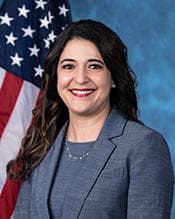
- Introduced
- 4/15/2026
- Last activity
- 4/15/2026 — Referred to the House Committee on the Judiciary.
- Sponsored by
- Stephanie Bice
- Cosponsors
- - 9 - 5
- Introduced
- In Committee
What this bill would do
The Protecting Families from Fertility Fraud Act of 2026 aims to amend title 18 of the United States Code. It seeks to criminalize the knowing misrepresentation of the nature or source of DNA used in assisted reproductive technology or assisted insemination. This includes procedures such as in vitro fertilization and intrauterine insemination. The bill establishes penalties including fines and imprisonment for up to 10 years. It also expands the definition of racketeering activity to include these offenses.
Yes· 3 of 4
Would women be better off under this?+2
The bill provides legal protections against fraudulent reproductive practices that may impact women's family planning.
Does this make health care easier to get in general?+2
The bill may increase trust in reproductive healthcare services by criminalizing DNA misrepresentation.
Does this make what the government does easier for the public to see?+1
The bill establishes legal accountability for the integrity of genetic information in medical procedures.
The opposite
Does this shorten or soften prison sentences?-2
The bill introduces new criminal penalties and expands the definition of racketeering activity.
Who it would affect, and how
Potential Positive Impacts for People
-
Criminal Penalties for Misrepresentation: The bill establishes that anyone who knowingly misrepresents the nature or source of DNA during assisted reproductive technology or assisted insemination can be fined or imprisoned for up to 10 years (Section 2, subsection a). This provides a legal consequence for fraud in fertility treatments.
-
Extended Statute of Limitations: In cases where DNA testing leads to the identification of a violator, the statute of limitations is extended until 10 years after the person is identified (Section 2, subsection c). This allows for prosecution even if significant time has passed since the original act.
Potential Negative Impacts for People
-
Criminal Charges for Specific Conduct: Individuals involved in procedures such as in vitro fertilization, gamete intrafallopian transfer, zygote intrafallopian transfer, or intrauterine insemination may face criminal penalties if they are found to have knowingly misrepresented the nature or source of DNA (Section 2, subsection a).
-
Legal Burdens Based on Commerce: The law applies to conduct involving interstate or foreign commerce, including travel, payments, or communications via computer, mail, or wire (Section 2, subsection b).
Groups and Interests Ranking
Every group the model scored this bill for, from -10 to +10. Hover a score for the reason it gave.
- Demographic And Interest Groups
- Good For Women+2
- Governance And Ideology
- Improves Due Process+1Improves Government Transparency+1
- Healthcare
- Improves Healthcare Access+2
- Social Issues And Justice
- Improves Criminal Sentencing Reform-2
- 6/18/2026
- 1 Cosponsor added.
- 4/29/2026
- 1 Cosponsor added.
- 4/28/2026
- 1 Cosponsor added.
- 4/27/2026
- 2 Cosponsors added.
- 4/23/2026
- 2 Cosponsors added.
- 4/20/2026
- 4 Cosponsors added.
- 4/16/2026
- 1 Cosponsor added.
- 4/15/2026
- Referred to the House Committee on the Judiciary.
- 2 Cosponsors added.
- Introduced in House
 Donald Davis
Democrat · North Carolina
 Sharice Davids
Democrat · Kansas
 Randy Feenstra
Republican · Iowa
 Brian Fitzpatrick
Republican · Pennsylvania
 Josh Gottheimer
Democrat · New Jersey
 Chrissy Houlahan
Democrat · Pennsylvania
 Erin Houchin
Republican · Indiana
 Harriet Hageman
Republican · Wyoming
 Darin LaHood
Republican · Illinois
 Julia Letlow
Republican · Louisiana
 Nancy Mace
Republican · South Carolina
 Joseph Morelle
Democrat · New York
 W. Steube
Republican · Florida
 Beth Van Duyne
Republican · Texas