Bill · H.R. 8254· House(119-HR-8254)
Water Access and Affordability Act
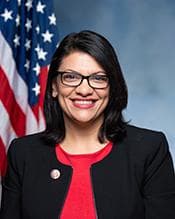
- Introduced
- 4/13/2026
- Last activity
- 4/13/2026 — Referred to the Committee on Transportation and Infrastructure, and in addition to the Committees on Energy and Commerce, Oversight and Government Reform, and Ways and Means, for a period to be subsequently determined by the Speaker, in each case for consideration of such provisions as fall within the jurisdiction of the committee concerned.
- Sponsored by
- Rashida Tlaib
- Cosponsors
- - 22 - 0
- Introduced
- In Committee
What this bill would do
The Water Access and Affordability Act aims to establish a Federal low-income water assistance program. This program is designed to help low-income households maintain access to affordable drinking water and sanitary sewer services. The Act authorizes significant funding to assist these households through various forms of financial support and technical assistance. It also mandates the development of water service access programs in every State. Additionally, the bill amends existing laws to increase transparency and evaluation of State revolving loan funds.
Yes· 3 of 35
Would households on low incomes be better off under this?+10
The primary target of the bill, providing extensive financial aid and service protections.
Would Native Americans be better off under this?+9
Explicitly mentions commitment to water access for all Native American Tribes and reserves funds for Tribal areas.
Would immigrants be better off under this?+9
Assistance is provided regardless of citizenship or legal residency status.
The opposite· 3 of 5
Does this reduce what the federal government spends?-8
The bill significantly increases government spending via a new multi-billion dollar assistance program.
Does this reduce what the federal government owes?-3
The bill authorizes $20 billion in annual spending from 2027 through 2037.
Does this make the government pay for what it commits to?-3
The bill creates a substantial long-term financial commitment without an identified revenue offset.
Who it would affect, and how
Potential Positive Impacts for People
-
Direct Financial Support for Households: The bill allows for various forms of assistance including direct financial assistance, debt reduction, and water efficiency assistance like subsidizing water-efficient appliances or plumbing repairs (Section 3(c)(3)(A)(ii)).
-
Protection Against Disconnection: The program includes provisions that prohibit households from being disconnected from water service or losing access to water due to an inability to pay bills (Section 3(c)(3)(A)(iv)).
-
Simplified Enrollment Processes: To help people get help more easily, the bill allows for automatic enrollment for those participating in other Federal or State assistance programs and permits the use of self-attestation for eligibility (Section 3(c)(3)(A)(i)).
-
Elimination of Barriers to Assistance: The Act prohibits requirements for asset tests, in-person enrollment appointments, or citizenship/legal residency requirements to receive assistance (Section 3(c)(3)(A)(i)).
-
Support for Water Security: The bill includes provisions for "water crisis assistance" to help during emergencies like weather-related shortages or service disconnections (Section 3(c)(3)(A)(ii)).
-
Increased Transparency for State Funds: The bill amends existing laws to require States to provide more data regarding funded and unfunded projects, specifically highlighting assistance for disadvantaged communities (Section 4(a)(1)(A)(ii) and Section 4(b)(2)(A)(i)).
Potential Negative Impacts for People
-
Restrictions on Private Utility Use of Funds: Community water systems or treatment works that are not wholly owned by a government entity are prohibited from using these funds to provide financial benefits to owners, such as dividends or increased rates of return (Section 3(f)(3)).
-
Limitations on Grant Usage: Grants awarded to implement water service access programs cannot be used to replace existing similar programs within a State or local system, though they can supplement them (Section 3(c)(2)(C)(ii)).
Groups and Interests Ranking
Every group the model scored this bill for, from -10 to +10. Hover a score for the reason it gave.
- Demographic And Interest Groups
- Good For Low Income Households+10Good For Immigrants+9Good For Native Americans+9Good For African Americans+7Good For Hispanic Americans+7Good For People With Disabilities+7Good For Rural Residents+7Good For Urban Residents+7Good For Veterans+7Good For Asian Americans+6Good For Children+6Good For Men+6Good For Middle Aged+6Good For Retirees+6Good For Seniors+6Good For Women+6Good For Young Adults+6Good For White Americans+5Good For Farmers+3Good For Business Owners-2
- Social Issues And Justice
- Improves Poverty Reduction+8Improves Racial Equity+6Improves Affordable Housing+5Improves Disability Rights+4Reduces Homelessness+4
- Governance And Ideology
- Improves Government Transparency+8Improves Due Process+6Increases Federal Power+5Increase States Rights-2
- Environment Energy And Infrastructure
- Improves Rural Development+5Improves Environmental Protections+4Improves Disaster Relief And F E M A+3
- Healthcare
- Improves Healthcare Access+5
- Economy And Finance
- Improves Consumer Protection+7Improves Economic Growth+2Increases Job Creation+2Reduces Government Spending-8Improves Fiscal Responsibility-3Reduces National Debt-3
- National Security And Foreign Policy
- Improves Veterans Benefits+3
- 10/6/2026
- 1 Cosponsor added.
- 9/10/2026
- 1 Cosponsor added.
- 9/1/2026
- 1 Cosponsor added.
- 8/3/2026
- 2 Cosponsors added.
- 7/22/2026
- 2 Cosponsors added.
- 5/20/2026
- 1 Cosponsor added.
- 4/16/2026
- 1 Cosponsor added.
- 4/13/2026
- Referred to the Committee on Transportation and Infrastructure, and in addition to the Committees on Energy and Commerce, Oversight and Government Reform, and Ways and Means, for a period to be subsequently determined by the Speaker, in each case for consideration of such provisions as fall within the jurisdiction of the committee concerned.
- 13 Cosponsors added.
- Introduced in House
 Yassamin Ansari
Democrat · Arizona
 Emanuel Cleaver
Democrat · Missouri
 Judy Chu
Democrat · California
 Troy Carter
Democrat · Louisiana
 Greg Casar
Democrat · Texas
 Christopher Deluzio
Democrat · Pennsylvania
 Debbie Dingell
Democrat · Michigan
 Veronica Escobar
Democrat · Texas
 Maxwell Frost
Democrat · Florida
 Jimmy Gomez
Democrat · California
 Jesús García
Democrat · Illinois
 Jared Huffman
Democrat · California
 Pramila Jayapal
Democrat · Washington
 Sara Jacobs
Democrat · California
 Summer Lee
Democrat · Pennsylvania
 Gwen Moore
Democrat · Wisconsin
 Kevin Mullin
Democrat · California
 Eleanor Norton
Democrat · District of Columbia
 Delia Ramirez
Democrat · Illinois
 Emily Randall
Democrat · Washington
 Shri Thanedar
Democrat · Michigan
 Nydia Velázquez
Democrat · New York