Bill · H.R. 8200· House(119-HR-8200)
Interstate Ferry Fairness Act
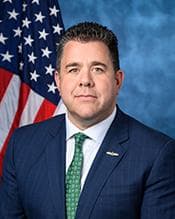
- Introduced
- 4/6/2026
- Last activity
- 4/7/2026 — Referred to the Subcommittee on Highways and Transit.
- Sponsored by
- Nick LaLota
- Cosponsors
- - 5 - 6
- Introduced
- In Committee
What this bill would do
The Interstate Ferry Fairness Act seeks to amend title 23 of the United States Code. The bill aims to allow privately or majority-privately owned ferries and terminal facilities to participate in the Ferry Boat Program. It expands eligibility for federal participation in construction for ferries on specific public road routes or those connecting two adjoining States. Under these changes, the Secretary can determine if these private entities provide substantial public benefits. The act also establishes rules for how such ferries may charge fares.
Yes· 3 of 12
Would business owners be better off under this?+4
Provides private ferry owners and terminal operators access to federal funding and infrastructure support.
Does this make it easier to run a small business?+4
Allows private ferry operators and small transportation businesses to qualify for federal ferry program funding.
Does this make it easier to do business across state lines?+4
Supports smooth transit and economic linkage for ferries operating between adjoining states.
The opposite
No question was scored the opposite.
Who it would affect, and how
Potential Positive Impacts for People
-
Expanded Ferry Options: Federal participation may involve the construction or purchase of ferry boats that operate between two adjoining States, which can include boats carrying both cars and passengers (Section 2(a)(1)(B) and Section 2(a)(2)(B)(ii)).
-
Increased Infrastructure Support: The bill allows for federal participation in the construction or purchase of ferry terminal facilities that support private ferries operating between two adjoining States (Section 2(a)(2)(B)(ii)).
-
Meeting Transportation Needs: The Secretary may determine that a privately owned or majority-privately owned ferry or terminal provides substantial public benefits or meets the foremost needs of the surface transportation system (Section 2(a)(2)(A)(ii) and (iii)).
Potential Negative Impacts for People
- Fare Requirements: A privately owned or majority-privately owned ferry operating between two adjoining States may charge a fare based on the costs of operation, maintenance, repair, and debt service, plus an amount the Secretary determines is a reasonable rate of return (Section 2(a)(3)(A)(B)).
Groups and Interests Ranking
Every group the model scored this bill for, from -10 to +10. Hover a score for the reason it gave.
- Demographic And Interest Groups
- Good For Business Owners+4Good For Low Income Households+2Good For Middle Class Households+2Good For Rural Residents+2Good For Urban Residents+2
- Economy And Finance
- Improves Small Business Support+4Improves Consumer Protection+3Improves Economic Growth+3Increases Job Creation+2
- Governance And Ideology
- Improves Interstate Commerce+4Increases Federal Power+1
- Environment Energy And Infrastructure
- Improves Public Transit+4
- 9/16/2026
- 1 Cosponsor added.
- 9/2/2026
- 1 Cosponsor added.
- 8/31/2026
- 1 Cosponsor added.
- 7/9/2026
- 1 Cosponsor added.
- 6/30/2026
- 2 Cosponsors added.
- 6/24/2026
- 3 Cosponsors added.
- 6/15/2026
- 1 Cosponsor added.
- 4/7/2026
- Referred to the Subcommittee on Highways and Transit.
- 4/6/2026
- Referred to the House Committee on Transportation and Infrastructure.
- 1 Cosponsor added.
- Introduced in House
 Mike Bost
Republican · Illinois
 Joe Courtney
Democrat · Connecticut
 James Comer
Republican · Kentucky
 Rosa DeLauro
Democrat · Connecticut
 Andrew Garbarino
Republican · New York
 Laura Gillen
Democrat · New York
 James Himes
Democrat · Connecticut
 John Larson
Democrat · Connecticut
 Michael Lawler
Republican · New York
 John Moolenaar
Republican · Michigan
 Thomas Suozzi
Democrat · New York