Bill · H.R. 8178· House(119-HR-8178)
Protecting Americans from Unauthorized Surveillance Act
- Introduced
- 4/2/2026
- Last activity
- 4/2/2026 — Referred to the Committee on the Judiciary, and in addition to the Committee on Intelligence (Permanent Select), for a period to be subsequently determined by the Speaker, in each case for consideration of such provisions as fall within the jurisdiction of the committee concerned.
- Sponsored by
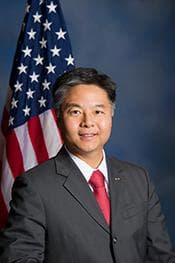
- Ted Lieu
- Cosponsors
- None
- Introduced
- In Committee
What this bill would do
This bill, known as the "Protecting Americans from Unauthorized Surveillance Act," aims to protect Americans from unauthorized surveillance. It proposes the creation of a FISA Oversight Office within the Department of Justice to evaluate surveillance applications. This Office can petition to join cases or file motions if it determines that probable cause standards are not met. For applications involving a United States person, the Office must take action if the probable cause standard is not clearly met. Additionally, the bill changes requirements for the Foreign Intelligence Surveillance Court regarding the appointment of an amicus curiae.
Yes
Does this protect people from being watched or searched?+6
The bill creates a FISA Oversight Office to challenge surveillance applications that do not clearly meet probable cause standards for U.S. persons.
Does this make what the government does easier for the public to see?+5
The bill requires a report to Congress detailing the number of challenged surveillance applications and their subjects.
Does this change how police departments operate?+4
The bill implements new oversight mechanisms for surveillance applications to ensure probable cause standards are met.
The opposite
Does this give the government more power to monitor people inside the country?-5
The bill establishes stricter scrutiny and mandatory amicus curiae involvement for domestic surveillance applications.
Who it would affect, and how
Potential Positive Impacts for People
-
Establishment of a FISA Oversight Office: This new office within the Department of Justice will evaluate each application under Title I of the Foreign Intelligence Surveillance Act of 1978 (Section 2). This could provide a layer of review to ensure surveillance applications meet legal standards.
-
Protection for United States Persons: If the Office determines that the probable cause standard has not been clearly met for an application involving a United States person, it shall petition to be joined as a party and file a motion with the court (Section 2(a)(3)). This provides a specific safeguard for individuals within the country.
-
Mandatory Information Sharing: The Federal office filing an application is required to provide the Oversight Office with all available evidence pertaining to an investigation into a United States person (Section 2(b)). This ensures the oversight office has the necessary information to perform its evaluation.
-
Increased Transparency through Reporting: The Attorney General and the Director must submit a report to Congress detailing the number of applications challenged or declined by the Oversight Office, including information regarding the subjects and the information sought (Section 2(c)).
-
Mandatory Amicus Curiae Appointment: The bill amends the law to require the court to appoint an individual to serve as amicus curiae to assist the court in the consideration of each application (Section 3).
Potential Negative Impacts for People
- No specific negative impacts are mentioned in the text.
Groups and Interests Ranking
Every group the model scored this bill for, from -10 to +10. Hover a score for the reason it gave.
- Governance And Ideology
- Improves Privacy Rights+6Improves Government Transparency+5
- National Security And Foreign Policy
- Increases Domestic Surveillance-5
- Social Issues And Justice
- Improves Policing Reform+4
- 4/2/2026
- Referred to the Committee on the Judiciary, and in addition to the Committee on Intelligence (Permanent Select), for a period to be subsequently determined by the Speaker, in each case for consideration of such provisions as fall within the jurisdiction of the committee concerned.
- Introduced in House