Bill · H.R. 8160· House(119-HR-8160)
Premenstrual Dysphoric Disorder Awareness and Research Act of 2026
- Introduced
- 3/30/2026
- Last activity
- 3/30/2026 — Referred to the House Committee on Energy and Commerce.
- Sponsored by
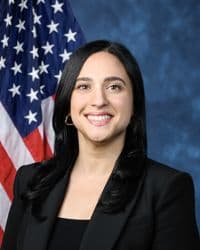
- Yassamin Ansari
- Cosponsors
- - 29 - 0
- Introduced
- In Committee
What this bill would do
The Premenstrual Dysphoric Disorder Awareness and Research Act of 2026 aims to expand research, improve awareness, and increase access to treatment for those affected by PMDD. The bill directs the Secretary of Health and Human Services to intensify research regarding causes, risks, and treatments while supporting clinical trials. It also mandates a public health awareness campaign to raise awareness and reduce stigma. Additionally, the act provides for the development of medical education materials and the awarding of grants to train various health care professionals. Finally, the Secretary is required to submit a report to Congress on the progress of these initiatives.
Yes· 3 of 16
Would women be better off under this?+7
The bill directly addresses Premenstrual Dysphoric Disorder, a condition primarily affecting women and individuals assigned female at birth.
Does this make health care easier to get in general?+7
The legislation expands clinical research, public health awareness, and training grants to improve diagnosis and treatment for PMDD.
Does this put more money into medical research?+7
The bill directs the NIH to expand and intensify research and clinical trials on Premenstrual Dysphoric Disorder.
The opposite
No question was scored the opposite.
Who it would affect, and how
Potential Positive Impacts for People
-
Expanded Research and Treatment: The bill directs the NIH to intensify research into the causes, diagnosis, and treatment of PMDD, and supports clinical trials to develop better treatment options (Section 3(a)).
-
Increased Representation: Research efforts are directed to ensure that diverse racial, ethnic, and socioeconomic populations are adequately represented (Section 3(a)).
-
Better Data Collection: The Secretary is tasked with collecting and publishing data regarding the prevalence of PMDD and its economic and workforce impacts (Section 3(b)).
-
Public Awareness and Stigma Reduction: A public health campaign will be used to raise awareness among patients and providers, which aims to reduce the stigma of menstrual health conditions (Section 4(a)).
-
Improved Provider Knowledge: The bill mandates the development of education materials so that health care providers can more accurately diagnose PMDD and provide evidence-based care (Section 4(b)).
-
Professional Training Programs: Through grants, the Secretary can expand or establish training programs for various health care professionals, including physicians, nurses, and pharmacists, to improve PMDD management (Section 5(c)).
-
Expanded Health Services: Training opportunities may be expanded to support primary and specialty care services for mid-life women's health and related chronic conditions (Section 5(e)).
Potential Negative Impacts for People
- No negative impacts or burdens are explicitly mentioned in the text.
Groups and Interests Ranking
Every group the model scored this bill for, from -10 to +10. Hover a score for the reason it gave.
- Demographic And Interest Groups
- Good For Women+7Good For Middle Aged+4Good For Students+4Good For Young Adults+4Good For African Americans+3Good For Asian Americans+3Good For Hispanic Americans+3Good For Low Income Households+3Good For Native Americans+3
- Healthcare
- Improves Healthcare Access+7Increases Research Funding+7Improves Mental Health Access+5
- Social Issues And Justice
- Improves Gender Equality+6Improves Racial Equity+3
- Education And Technology
- Increases Scientific Research Funding+6
- Governance And Ideology
- Improves Government Transparency+3
- 6/24/2026
- 1 Cosponsor added.
- 6/3/2026
- 1 Cosponsor added.
- 5/7/2026
- 1 Cosponsor added.
- 4/13/2026
- 1 Cosponsor added.
- 4/2/2026
- 2 Cosponsors added.
- 3/30/2026
- Referred to the House Committee on Energy and Commerce.
- 23 Cosponsors added.
- Introduced in House
 Suzanne Bonamici
Democrat · Oregon
 Joyce Beatty
Democrat · Ohio
 Julia Brownley
Democrat · California
 Wesley Bell
Democrat · Missouri
 Yvette Clarke
Democrat · New York
 Troy Carter
Democrat · Louisiana
 Herbert Conaway
Democrat · New Jersey
 Lizzie Fletcher
Democrat · Texas
 Daniel Goldman
Democrat · New York
 Adelita Grijalva
Democrat · Arizona
 Henry Johnson
Democrat · Georgia
 Pramila Jayapal
Democrat · Washington
 Jonathan Jackson
Democrat · Illinois
 Raja Krishnamoorthi
Democrat · Illinois
 Timothy Kennedy
Democrat · New York
 Morgan McGarvey
Democrat · Kentucky
 April McClain Delaney
Democrat · Maryland
 Sarah McBride
Democrat · Delaware
 Eleanor Norton
Democrat · District of Columbia
 Ayanna Pressley
Democrat · Massachusetts
 Deborah Ross
Democrat · North Carolina
 Paul Tonko
Democrat · New York
 Rashida Tlaib
Democrat · Michigan
 Lori Trahan
Democrat · Massachusetts
 Shri Thanedar
Democrat · Michigan
 Lauren Underwood
Democrat · Illinois
 Nydia Velázquez
Democrat · New York
 Nikema Williams
Democrat · Georgia
 Frederica Wilson
Democrat · Florida