Bill · H.R. 8151· House(119-HR-8151)
Expanding Private Airport Security Screening Act
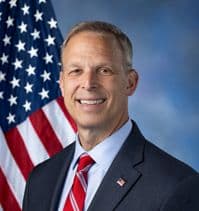
- Introduced
- 3/27/2026
- Last activity
- 3/30/2026 — Referred to the Subcommittee on Transportation and Maritime Security.
- Sponsored by
- Scott Perry
- Cosponsors
- - 4 - 0
- Introduced
- In Committee
What this bill would do
The Expanding Private Airport Security Screening Act aims to amend title 49 of the United States Code. It allows airport operators to contract with qualified private screening companies to handle the screening of passengers and property. To be qualified, these companies must meet specific requirements, including employment standards and ownership criteria. The bill requires the TSA Administrator to maintain a public list of these qualified companies. Additionally, it establishes a system for federal supervision and mandatory reporting to Congress.
Yes· 3 of 7
Does this make what the government does easier for the public to see?+4
The bill requires the TSA to maintain a public list of qualified companies and publish annual performance and cost reports online.
Is this likely to create jobs?+3
The bill allows airport operators to contract with private screening companies, which could lead to new private sector jobs in airport security.
Would business owners be better off under this?+3
The bill provides liability protections for airport operators against claims related to the actions of contracted private screening companies.
The opposite
Does this give the federal government more power?-1
The bill shifts some security functions from federal employees to private entities, though federal oversight remains high.
Who it would affect, and how
Potential Positive Impacts for People
-
Standardized Security Requirements: Qualified private screening companies must employ individuals who meet the same requirements as Federal Government personnel (Section 2(b)(3)(A)). This ensures that even with private contractors, the staff meets high standards.
-
Maintained Security Levels: Companies must demonstrate they can provide passenger and property screening and protection at the same level provided by Federal Government personnel (Section 2(b)(3)(B)).
-
Federal Oversight: The TSA Administrator is required to provide Federal Government supervisors to oversee all screening and undertake covert testing and remedial training support (Section 2(d)).
-
Transparency through Reporting: The Administrator must submit an annual report to Congress comparing the performance and costs of private companies versus Federal Government services (Section 2(f)(1)). This report must also be published on a TSA website (Section 2(f)(3)).
Potential Negative Impacts for People
-
Liability Limitations for Airport Operators: Under this bill, airport operators cannot be held liable for claims for damages related to acts of negligence, gross negligence, or intentional wrongdoing by a qualified private screening company or Federal Government supervisors (Section 2(e)(1)).
-
Requirement for Ownership Restrictions: To be included on the qualified list, a company must be owned and controlled by a citizen of the United States, provided the Administrator determines such companies exist (Section 2(b)(3)(C)).
Groups and Interests Ranking
Every group the model scored this bill for, from -10 to +10. Hover a score for the reason it gave.
- Economy And Finance
- Increases Job Creation+3Improves Small Business Support+2Reduces Government Spending+2
- Demographic And Interest Groups
- Good For Business Owners+3Good For Urban Residents+1
- Governance And Ideology
- Improves Government Transparency+4Increases Federal Power-1
- Environment Energy And Infrastructure
- Improves Public Transit+2
- 4/9/2026
- 1 Cosponsor added.
- 3/30/2026
- Referred to the Subcommittee on Transportation and Maritime Security.
- 3/27/2026
- Referred to the House Committee on Homeland Security.
- 3 Cosponsors added.
- Introduced in House
 Eric Burlison
Republican · Missouri
 Andrew Clyde
Republican · Georgia
 Andy Harris
Republican · Maryland
 Chip Roy
Republican · Texas