Bill · H.R. 8124· House(119-HR-8124)
STOP Suicide Act
- Introduced
- 3/26/2026
- Last activity
- 3/26/2026 — Referred to the House Committee on Energy and Commerce.
- Sponsored by
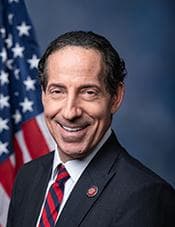
- Jamie Raskin
- Cosponsors
- - 2 - 3
- Introduced
- In Committee
What this bill would do
This bill, known as the "STOP Suicide Act," proposes to amend the Public Health Service Act. It aims to create a grant program to support models that provide stabilization services to people experiencing serious thoughts of suicide. The Assistant Secretary would award these grants on a competitive basis to various eligible entities. These services are intended to be suicide-specific, evidence-based, and provided in the least-restrictive setting possible. The grant program includes provisions for various forms of care, such as outpatient, virtual, or peer support services. Finally, the bill authorizes $30,000,000 for each fiscal year from 2027 through 2031 to carry out these efforts.
Yes· 3 of 7
Does this make mental health care easier to get?+8
The bill establishes a grant program to provide suicide-specific stabilization services through various care models.
Would Native Americans be better off under this?+7
The bill explicitly includes Indian tribes and tribal organizations as eligible entities for these health grants.
Would people in their twenties and thirties be better off under this?+6
The bill enables funding for campus-based health centers to support students.
The opposite
Does this reduce what the federal government spends?-1
The bill authorizes $30,000,000 in new annual spending for the grant program.
Does this make college cost less?-1
The bill targets campus-based health centers for mental health services rather than lowering tuition costs.
Is this likely to lift people out of poverty?-1
The bill focuses on mental health stabilization rather than direct poverty relief measures.
Who it would affect, and how
Potential Positive Impacts for People
-
Access to stabilization services: The bill provides funding for clinical interventions designed to reduce acute emotional crises, eliminate imminent suicide risk, or help patients establish behavioral control (Section 2(f)(2)).
-
Diverse care options: Services may include outpatient care, virtual care, technology-related innovations, and peer support services (Section 2(c)(2)).
-
Flexible service settings: The bill ensures services are provided in the least-restrictive setting appropriate for the individual's needs (Section 2(c)(1)(C)).
-
Support for various community providers: A wide range of entities can apply for these grants, including school-based centers, campus-based centers, community health centers, rural health clinics, crisis centers, and tribal organizations (Section 2(f)(1)).
Potential Negative Impacts for People
-
Lack of long-term funding certainty: Grant terms are limited to a maximum of 5 years and are not renewable (Section 2(d)).
-
Requirement for future financing plans: To be eligible, entities must include a plan explaining how they will continue to fund these services once the grant period ends (Section 2(b)(2)).
Groups and Interests Ranking
Every group the model scored this bill for, from -10 to +10. Hover a score for the reason it gave.
- Demographic And Interest Groups
- Good For Native Americans+7Good For Rural Residents+6Good For Young Adults+6Good For Children+5Good For Low Income Households+5
- Healthcare
- Improves Mental Health Access+8Improves Healthcare Access+6
- Economy And Finance
- Reduces Government Spending-1
- Education And Technology
- Improves College Affordability-1
- Social Issues And Justice
- Improves Poverty Reduction-1
- 7/16/2026
- 2 Cosponsors added.
- 5/19/2026
- 2 Cosponsors added.
- 3/26/2026
- Referred to the House Committee on Energy and Commerce.
- 1 Cosponsor added.
- Introduced in House
 Don Bacon
Republican · Nebraska
 Ryan Mackenzie
Republican · Pennsylvania
 Eleanor Norton
Democrat · District of Columbia
 Zachary Nunn
Republican · Iowa
 Eugene Vindman
Democrat · Virginia