
A Democratic bill with 1 Republican cosponsor · See all 11 cosponsors
Last activity — Referred to the House Committee on Science, Space, and Technology.
In committee
Introduced and handed to a committee in the chamber it started in.
The committee holds it, and most bills are never heard from again. A hearing or a committee vote would be news; silence is the usual outcome, and it kills the bill without anyone voting against it.
Its path through Congress
- Introduced
- In Committee
What this bill would do
The MAKERS Act directs the Director of the National Science Foundation to award competitive grants for research and the development of makerspaces. These makerspaces are intended to help build a STEM-capable workforce by engaging populations in community colleges and community environments. The bill aims to promote technical, problem-solving, and collaborative skills. Grants can be used for research on makerspace effectiveness, equipment, and other appropriate activities. Priority is given to partnerships involving workforce development components, high-need education agencies, or minority-serving institutions.
Yes· 3 of 13
- Scored +5
Would students be better off under this?
The bill provides resources for STEM learning and workforce preparedness through community colleges and makerspaces.
- Scored +5
Does this put more money into scientific research?
The bill directs the NSF to award competitive grants for research on makerspace effectiveness and development.
- Scored +4
Would people in their twenties and thirties be better off under this?
The bill supports workforce training and community college engagement which benefits young adults.
The opposite
No question was scored the opposite.
Who it would affect, and how
Potential Positive Impacts for People
-
Workforce Preparation: The Act aims to develop a STEM-capable workforce by promoting desirable technical and soft skills like problem-solving and teamwork (Section 3).
-
Engagement in STEM: Makerspaces can engage and motivate both children and adults in science, technology, engineering, and mathematics (Section 2).
-
Support for Underrepresented Populations: The bill notes that underrepresented populations often find better success in informal and out-of-school STEM programs (Section 2).
-
Access to Resources: Makerspaces provide access to tools, technology, and knowledge for learners and entrepreneurs (Section 4).
-
Economic and Personal Growth: Makerspaces support the development of educational opportunities for personal growth, workforce training, and early stage business ventures (Section 4).
Potential Negative Impacts for People
- Construction Limitations: Funds from the grants may not be used for the construction of a physical building or facility to hold a makerspace, unless the Director determines it is necessary for safety or equipment use (Section 5(d)).
Groups and Interests Ranking
Every group the model scored this bill for, from -10 to +10. Tap or hover a score for the reason it gave.
- Demographic And Interest Groups
- Would students be better off under this? — The bill provides resources for STEM learning and workforce preparedness through community colleges and makerspaces. Would Black Americans be better off under this? — The bill prioritizes funding for historically Black colleges and universities. Would people in their twenties and thirties be better off under this? — The bill supports workforce training and community college engagement which benefits young adults. Would children be better off under this? — The bill finds that makerspaces engage and motivate children in STEM disciplines. Would Hispanic Americans be better off under this? — The bill prioritizes minority-serving institutions which often serve Hispanic populations. Would households on low incomes be better off under this? — The bill targets high-need education agencies and community colleges to provide skill development. Would people in rural areas be better off under this? — The bill provides priority for entities operating within rural communities.
- Education And Technology
- Does this put more money into scientific research? — The bill directs the NSF to award competitive grants for research on makerspace effectiveness and development. Does this put more money into public schools? — The bill provides grant opportunities for high-need local education agencies through partnerships.
- Economy And Finance
- Does this make it easier to run a small business? — Makerspaces are defined as providing access to tools and technology for early stage business ventures. Is this likely to create jobs? — The bill aims to build a STEM-capable workforce through the development of makerspaces.
- Social Issues And Justice
- Does this narrow racial gaps in how people are treated? — The bill gives priority to partnerships involving minority-serving institutions and historically Black colleges or universities.
- Environment Energy And Infrastructure
- Does this invest in rural communities? — The bill prioritizes applicants that operate within rural communities.
- 3/19/2026
- 1 Cosponsor added.
- 4/7/2025
- 1 Cosponsor added.
- 2/4/2025
- 1 Cosponsor added.
- 1/28/2025
- Referred to the House Committee on Science, Space, and Technology.
- 8 Cosponsors added.
- Introduced in House
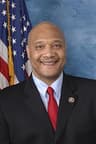 André Carson
Democrat · Indiana
 Suzan DelBene
Democrat · Washington
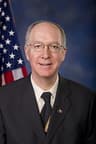 Bill Foster
Democrat · Illinois
 Brian Fitzpatrick
Republican · Pennsylvania
 Valerie Foushee
Democrat · North Carolina
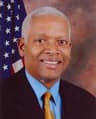 Henry Johnson
Democrat · Georgia
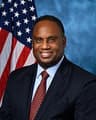 Jonathan Jackson
Democrat · Illinois
 Deborah Ross
Democrat · North Carolina
 Mark Takano
Democrat · California
 Shri Thanedar
Democrat · Michigan
 Nydia Velázquez
Democrat · New York