Bill · H.R. 8078· House(119-HR-8078)
Voter Empowerment Act of 2026
- Introduced
- 3/25/2026
- Last activity
- 3/25/2026 — Referred to the Committee on House Administration, and in addition to the Committees on the Judiciary, Oversight and Government Reform, Science, Space, and Technology, Education and Workforce, and Energy and Commerce, for a period to be subsequently determined by the Speaker, in each case for consideration of such provisions as fall within the jurisdiction of the committee concerned.
- Sponsored by
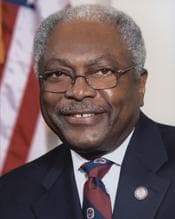
- James Clyburn
- Cosponsors
- - 3 - 0
- Introduced
- In Committee
What this bill would do
The Voter Empowerment Act of 2026 aims to modernize voter registration and increase voting access, particularly for individuals with disabilities. It mandates online registration services, automatic voter registration through government agencies, and same-day registration for Federal elections. The legislation introduces strict prohibitions against voter caging and deceptive practices while restoring voting rights to citizens with criminal convictions who are not serving felony sentences in correctional facilities. Additionally, the bill implements new standards for early voting, mail-in voting, and the use of voter-verified paper ballots. It also establishes protections for voters on Indian lands and requires institutions of higher education to assist with student registration. Finally, the act focuses on improving election security through updated standards and disaster preparedness contingency plans.
Yes· 3 of 30
Would people with disabilities be better off under this?+10
The bill contains an entire title dedicated to promoting and ensuring voting access for individuals with disabilities.
Does this protect the right to vote?+10
The bill substantially expands voting access through automatic registration, same-day registration, and mail-in options.
Does this make casting a ballot easier in practice?+10
The bill removes numerous barriers to registration and voting across multiple platforms.
The opposite· 3 of 5
Does this leave more decisions to the states?-7
The bill overrides various state-level registration and voting procedures with federal requirements.
Does this reduce what the federal government spends?-5
The bill increases government spending through the authorization of hundreds of millions of dollars in grants.
Does this protect people from being watched or searched?-3
The bill mandates the electronic transfer of personal data between government agencies.
Who it would affect, and how
Potential Positive Impacts for People
-
Improved Access to Registration: States must provide online application services, including assistance with signatures, to make registering easier (Section 101).
-
Automatic Voter Registration: Eligible citizens will be automatically registered through participating government agencies unless they choose to decline (Section 112).
-
Easier Information Updates: Registered voters can use the internet to update their personal information, such as their address, directly on official websites (Section 102).
-
Enhanced Communication: Election officials can provide essential voting information to voters via electronic mail (Section 103).
-
Streamlined Registration for Minors: The bill allows for the acceptance of voter registration applications from individuals as young as 16 (Section 194).
-
Improved Accessibility for Disabilities: States are required to establish accessible election websites and provide procedures for individuals with disabilities to request and receive absentee ballots electronically (Sections 201 and 202). Additionally, the bill mandates making absentee voting and polling places more accessible, including paths of travel and voting areas (Sec. 205(a)). It also establishes pilot programs for private and independent registration and ballot requesting at home (Sec. 207).
-
Protections for Vulnerable Voters: Individuals subject to guardianship cannot be deemed unable to vote unless a court finds by clear and convincing evidence that they cannot communicate a desire to vote (Section 204).
-
Increased Convenience via Same-Day Registration: Eligible individuals can register to vote and cast a ballot on the same day during Federal elections (Section 131).
-
Restoration of Voting Rights: Citizens with criminal convictions would regain the right to vote in Federal elections unless they are currently serving a felony sentence in a correctional institution (Sec. 503).
-
Increased Protection Against Deceptive Practices: The law prohibits communicating materially false information regarding election times, places, or voter eligibility with the intent to impede voting (Sec. 402(a)(2)). It also prohibits hindering or interfering with a person's attempt to vote or register (Sec. 402(a)(4)).
-
Prevention of Voter Caging: The bill prohibits election officials from using "voter caging" documents or unverified match lists to prevent individuals from registering or voting (Sec. 301(b)).
-
Improved Ballot Security and Verification: The legislation requires the use of durable, voter-verified paper ballots that allow for manual audits and recounts (Sec. 602(a)).
-
Expanded Early Voting Opportunities: States would be required to provide a consecutive early voting period of at least 15 days leading up to an election, with polling places open for at least 10 hours a day (Sec. 310(a)-(b)).
-
Streamlined Mail-in Voting: The bill prohibits states from requiring identification, notarization, or witness signatures as conditions for obtaining an absentee ballot (Sec. 901(a)(2)). It also requires states to provide a "cure" process for signature discrepancies (Sec. 901(b)(2)).
-
Enhanced Voter Rights and Recourse: Individuals aggrieved by violations of title III can file written, notarized complaints with the Attorney General and may also pursue a private right of action under 42 U.S.C. 1983 (Section 401(b) and (c)).
-
Increased Student Voter Engagement: Institutions of higher education are tasked with making reasonable efforts to distribute registration applications, provide guidance on residency and registration updates, and share nonpartisan resources (Section 1401(b)).
-
Improved Polling Place Information: States must notify voters of changes to their assigned polling places at least 7 days before an election via mail, telephone, and potentially text or email (Section 1402(a)(1)).
-
Flexible Identification Options: Individuals can meet voter identification requirements by presenting a sworn written statement signed under penalty of perjury or a student identification card (Section 1403(a)(1)).
-
Support for Voters on Indian Lands: Tribal lands may designate specific buildings for ballot pickup and collection at no cost to the Tribe, and voters may use these locations as residential or mailing addresses (Section 1404(a)(1) and (3)).
-
Reduced Waiting Times: States are required to provide sufficient resources to ensure no individual has to wait longer than 30 minutes to cast a ballot (Section 1405(a)(1)).
-
Increased Convenience via Drop Boxes: Every election jurisdiction must provide secured, clearly labeled drop boxes for absentee ballots, which must be accessible to individuals with disabilities and those with limited English proficiency (Section s 1406(a) and (c)).
-
Access to Curbside Voting: The bill prohibits states from restricting or excluding individuals from using curbside voting (Section 1407(a)).
-
Disaster Preparedness: States must establish and maintain contingency plans for elections during natural disasters or public health/national emergencies to ensure individuals can still vote (Section 1411(a)).
Potential Negative Impacts for People
-
Requirements for Information Accuracy: While intended to help, the bill requires specific documentation and information for interstate cross-checks to prevent incorrect removals from voter lists (Section 141).
-
Automated Registration Concerns: Under the automatic system, individuals will be registered unless they affirmatively decline, which requires constant attention to notification and choice (Section 112).
-
Financial Burdens on States/Local Governments: The bill imposes several new mandates on states, such as requirements for early voting (Sec. 310), specific paper ballot standards (Sec. 602), and absentee ballot tracking programs (Sec. 312), which may require significant administrative and financial adjustments.
-
Potential Litigation Burdens: The expansion of private rights of action for various violations—such as deceptive practices (Sec. 402(b)) and voting rights restoration (Sec. 504)—could lead to an increase in civil litigation.
-
Stringent Penalties for Election Officials and Individuals: Individuals found guilty of violating prohibitions against deceptive practices or interfering with voting could face fines of up to $100,000 and imprisonment for up to 5 years (Sec. 402(c)). Additionally, those who violate voter caging prohibitions face fines or up to 1 year in prison (Sec. 301(d)).
-
Restrictions on Election Officials: Chief state election administration officials are prohibited from taking an active part in political management or campaigns, which includes holding positions in candidate committees or soliciting contributions (Section 1301(a) and (c)).
-
Administrative Burden on Higher Education Institutions: Institutions of higher education are given specific responsibilities regarding voter registration distribution, providing guidance, and appointing a Campus Vote Coordinator (Section 1401(b)).
-
Strict Deadlines for Polling Place Changes: If a state assigns a new polling place fewer than 7 days before an election, it must make "every reasonable effort" to enable the individual to vote (Section 1402(a)(1)(B)).
Groups and Interests Ranking
Every group the model scored this bill for, from -10 to +10. Hover a score for the reason it gave.
- Demographic And Interest Groups
- Good For People With Disabilities+10Good For Students+9Good For Young Adults+9Good For African Americans+8Good For Asian Americans+8Good For Hispanic Americans+8Good For Native Americans+8Good For Low Income Households+7Good For Retirees+7Good For Rural Residents+7Good For Seniors+7Good For Veterans+7Good For Middle Aged+6Good For Middle Class Households+6Good For Urban Residents+6Good For White Americans+6Good For High Income Households+5Good For Immigrants+4
- Social Issues And Justice
- Improves Voting Access+10Improves Voting Rights+10Improves Disability Rights+9Improves Racial Equity+7
- Governance And Ideology
- Improves Electoral Process+8Increases Federal Power+7Improves Due Process+5Improves Government Transparency+4Increase States Rights-7Improves Privacy Rights-3
- Economy And Finance
- Reduces Government Spending-5Improves Fiscal Responsibility-2Reduces National Debt-2
- Education And Technology
- Improves Data Privacy+3Increases Public School Funding+2
- National Security And Foreign Policy
- Improves Cybersecurity Defense+4
- Environment Energy And Infrastructure
- Improves Disaster Relief And F E M A+3
- 8/31/2026
- 1 Cosponsor added.
- 4/14/2026
- 1 Cosponsor added.
- 3/26/2026
- 1 Cosponsor added.
- 3/25/2026
- Referred to the Committee on House Administration, and in addition to the Committees on the Judiciary, Oversight and Government Reform, Science, Space, and Technology, Education and Workforce, and Energy and Commerce, for a period to be subsequently determined by the Speaker, in each case for consideration of such provisions as fall within the jurisdiction of the committee concerned.
- Introduced in House
One bill Congress.gov lists as related to this one — companions in the other chamber, earlier versions, and bills this one absorbed or was folded into.
 Gabe Amo
Democrat · Rhode Island
 Troy Carter
Democrat · Louisiana
 Bonnie Watson Coleman
Democrat · New Jersey