Bill · H.R. 7998· House(119-HR-7998)
BRIDGE Act
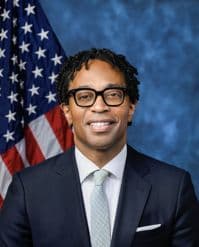
- Introduced
- 3/19/2026
- Last activity
- 3/19/2026 — Referred to the House Committee on Ways and Means.
- Sponsored by
- Wesley Bell
- Cosponsors
- - 1 - 0
- Introduced
- In Committee
What this bill would do
The BRIDGE Act aims to amend the Internal Revenue Code of 1986 to extend and expand the work opportunity tax credit. It extends the expiration of the credit from December 31, 2025, to December 31, 2030. The bill expands the credit by introducing a new category for qualified criminal justice-impacted individuals. It also adds a new category for qualified opportunity youth. Finally, the bill includes provisions for administrative studies and regulations to carry out these changes.
Yes· 3 of 9
Would people in their twenties and thirties be better off under this?+4
The bill creates a new tax credit category specifically for qualified opportunity youth.
Would households on low incomes be better off under this?+3
The bill targets job opportunities for justice-impacted individuals and out-of-school youth who often face economic hardship.
Is this likely to create jobs?+3
The bill extends and expands the work opportunity tax credit to incentivize hiring specific groups.
The opposite
No question was scored the opposite.
Who it would affect, and how
Potential Positive Impacts for People
-
Extension of existing tax credits: The bill extends the work opportunity tax credit through December 31, 2030, rather than letting it expire at the end of 2025 (Section 2(a)).
-
Support for justice-impacted individuals: The expansion includes a new category for "qualified criminal justice-impacted individuals," which covers those convicted of a felony or those incarcerated/on probation for at least 90 days (Section 2(b)(1)).
-
Support for out-of-school youth: The bill creates a new "qualified opportunity youth" category for individuals certified as out-of-school youth (Section 2(b)(2)).
-
Improved administrative efficiency: The bill directs the Comptroller General to study and recommend ways to improve the efficiency of the administrative process, including simplifying requirements for employers (Section 2(e)(2)).
Potential Negative Impacts for People
- No specific negative impacts are explicitly mentioned in the provided text.
Groups and Interests Ranking
Every group the model scored this bill for, from -10 to +10. Hover a score for the reason it gave.
- Demographic And Interest Groups
- Good For Young Adults+4Good For Low Income Households+3Good For Union Workers+1
- Economy And Finance
- Increases Job Creation+3Improves Economic Growth+2
- Social Issues And Justice
- Improves Poverty Reduction+3Improves Criminal Sentencing Reform+2
- Education And Technology
- Improves Student Loan Relief+1
- Governance And Ideology
- Improves Government Transparency+1
- 7/9/2026
- 1 Cosponsor added.
- 3/19/2026
- Referred to the House Committee on Ways and Means.
- Introduced in House
 Eleanor Norton
Democrat · District of Columbia