
Jeff Hurd (R-CO)
Don Young Doug LaMalfa Indian Buffalo Management Act
A Republican bill with 7 Democratic cosponsors · See all 15 cosponsors
Last activity — Received in the Senate.
Passed one chamber, waiting for the other to take it up
Passed one chamber, and the other has not yet sent it to a committee or put it on its calendar.
The other chamber will hand it to a committee, place it on its calendar, or leave it where it is. Nothing has been decided, and a bill can sit here indefinitely.
Its path through Congress
- Introduced
- Passed House voice vote
- Awaiting Senate
The House by voice vote (members called out yes or no together): no member's position on it was recorded.
What this bill would do
This bill is called the Don Young Doug LaMalfa Indian Buffalo Management Act. It directs the Secretary of the Interior to work with Indian Tribes and Tribal organizations to help them manage buffalo and buffalo habitat. The bill authorizes contracts, cooperative agreements, and grants for Tribes to plan buffalo restoration, run commercial activities, and use mobile meat processing facilities. It also requires the Secretary to consult with Tribes on Department initiatives affecting buffalo and allows the Secretary to give surplus buffalo from Federal land to Tribes. The authority provided by this act expires seven years after its enactment.
Yes· 3 of 10
- Scored +8
Would Native Americans be better off under this?
The bill significantly empowers Native American tribes through resource management, economic, and cultural support.
- Scored +6
Does this narrow racial gaps in how people are treated?
The bill empowers Native American tribes through resource management and cultural preservation.
- Scored +5
Does this better protect air, water and wildlife?
The bill focuses on the conservation and enhancement of buffalo and their habitats.
The opposite
No question was scored the opposite.
Who it would affect, and how
Potential Positive Impacts for People
-
Funding and Support: Section 4(b)(1) allows the Secretary to enter into contracts, cooperative agreements, and award grants to Indian Tribes and Tribal organizations to help them plan or implement buffalo restoration programs, run commercial activities, and support mobile meat processing facilities. This provides direct financial and logistical backing to help Tribes build up their buffalo herds and economies.
-
Getting Surplus Buffalo: Section 7(a) and Section 7(c) allow the Secretary to enter into agreements to send surplus buffalo from Federal land to Indian land and can waive charges and fees for those buffalo. This makes it easier and cheaper for Tribes to reestablish buffalo on their lands.
-
Protecting Sensitive Information: Section 6 stops the Secretary from disclosing information that an Indian Tribe or Tribal organization identifies as culturally sensitive, proprietary, or confidential. This keeps private tribal knowledge safe from being made public.
Potential Negative Impacts for People
- No Negative Impacts Identified: Based strictly on the provided text, there are no specific provisions that create negative consequences or burdens for individuals or groups of people in the United States.
Groups and Interests Ranking
Every group the model scored this bill for, from -10 to +10. Tap or hover a score for the reason it gave.
- Environment Energy And Infrastructure
- Does this better protect air, water and wildlife? — The bill focuses on the conservation and enhancement of buffalo and their habitats. Does this better protect public land such as parks and forests? — The bill enhances the management of federal lands through buffalo transfer to tribes. Does this invest in rural communities? — Supporting buffalo management on Indian lands contributes to rural resource development.
- Demographic And Interest Groups
- Would Native Americans be better off under this? — The bill significantly empowers Native American tribes through resource management, economic, and cultural support.
- Social Issues And Justice
- Does this narrow racial gaps in how people are treated? — The bill empowers Native American tribes through resource management and cultural preservation. Is this likely to lift people out of poverty? — Economic development opportunities provided by buffalo management may assist in poverty reduction.
- Economy And Finance
- Is this likely to create jobs? — The bill supports economic development and commercial activities related to buffalo production. Is this likely to grow the economy? — By fostering tribal commercial activities, the bill contributes to local economic growth.
- Governance And Ideology
- Does this protect people from being watched or searched? — The bill includes provisions to protect culturally sensitive or proprietary information provided by Tribes.
- Healthcare
- Does this make health care easier to get in general? — The reintroduction of buffalo into diets can support nutritional health for tribal members.
The version one chamber actually passed
What changed from Reported in House: No change to the wording. Only the printed details that record the bill’s progress, such as the heading and dates, are different.
A committee approved it and sent it to the floor
What changed from Introduced in House: No change to the wording. Only the printed details that record the bill’s progress, such as the heading and dates, are different.
- 11/18/2026
- Received in the Senate.
- 11/17/2026
- Motion to reconsider laid on the table Agreed to without objection.
- Passed/agreed to in House: On motion to suspend the rules and pass the bill Agreed to by voice vote. (text: CR H6236-6237)
- On motion to suspend the rules and pass the bill Agreed to by voice vote. (text: CR H6236-6237)
- DEBATE - The House proceeded with forty minutes of debate on H.R. 7954.
- Considered under suspension of the rules. (consideration: CR H6236-6238)
- Mr. Westerman moved to suspend the rules and pass the bill.
- 10/29/2026
- Reported by the Committee on Natural Resources. H. Rept. 119-856.
- Placed on the Union Calendar, Calendar No. 753.
- 9/15/2026
- Subcommittee on Indian and Insular Affairs Discharged
- Committee Consideration and Mark-up Session Held
- Ordered to be Reported by Unanimous Consent.
- 8/3/2026
- 3 Cosponsors added.
- 6/23/2026
- 2 Cosponsors added.
- 5/29/2026
- 2 Cosponsors added.
- 5/21/2026
- Subcommittee Hearings Held
- 5/15/2026
- 1 Cosponsor added.
- 5/12/2026
- Referred to the Subcommittee on Indian and Insular Affairs.
- 4/16/2026
- 2 Cosponsors added.
- 4/14/2026
- 1 Cosponsor added.
- 3/24/2026
- 1 Cosponsor added.
- 3/17/2026
- Referred to the House Committee on Natural Resources.
- 3 Cosponsors added.
- Introduced in House
3 bills Congress.gov lists as related to this one — companions in the other chamber, earlier versions, and bills this one absorbed or was folded into.
 Stephanie Bice
Republican · Oklahoma
 Nicholas Begich
Republican · Alaska
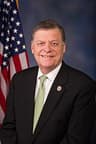 Tom Cole
Republican · Oklahoma
 Angie Craig
Democrat · Minnesota
 Sharice Davids
Democrat · Kansas
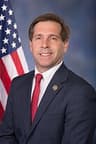 Charles Fleischmann
Republican · Tennessee
 Julie Fedorchak
Republican · North Dakota
 Jahana Hayes
Democrat · Connecticut
 Teresa Leger Fernandez
Democrat · New Mexico
 Zoe Lofgren
Democrat · California
 Dan Newhouse
Republican · Washington
 Mike Thompson
Democrat · California
 Gabe Vasquez
Democrat · New Mexico
 Tony Wied
Republican · Wisconsin
 Ryan Zinke
Republican · Montana