Bill · H.R. 7937· House(119-HR-7937)
Working Americans’ Tax Cut Act
- Introduced
- 3/16/2026
- Last activity
- 3/16/2026 — Referred to the House Committee on Ways and Means.
- Sponsored by
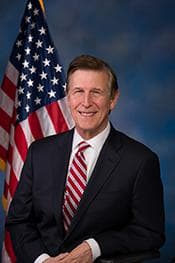
- Donald Beyer
- Cosponsors
- - 13 - 0
- Introduced
- In Committee
What this bill would do
The Working Americans' Tax Cut Act aims to modify the Internal Revenue Code of 1986 regarding income taxation. The bill introduces an alternative maximum tax for qualified low- and middle-income individuals. This new tax cap is set at 25.5 percent of modified adjusted gross income above a cost-of-living exemption. Additionally, the bill implements a new surcharge on high-income individuals. This surcharge includes rates of 5 percent, 10 percent, and 12 percent based on specific income thresholds. Both major provisions are set to apply to taxable years beginning after December 31, 2025.
Yes· 3 of 6
Would households on low incomes be better off under this?+6
The bill provides a specific tax cap for individuals with modified adjusted gross income below 175 percent of the cost-of-living exemption.
Would middle-income households be better off under this?+5
The bill introduces an alternative maximum tax of 25.5 percent for qualified individuals within certain income thresholds.
Does this cut taxes for middle-income families?+5
The bill implements an alternative maximum tax of 25.5 percent for qualified low- and middle-income individuals.
The opposite
Would people with substantial wealth be better off under this?-8
The bill applies increasing surcharge rates of 5, 10, and 12 percent on very high annual incomes.
Does this raise taxes on the highest earners?-8
The bill imposes a new surcharge of up to 12 percent on high-income individuals earning over $5,000,000.
Would high-income households be better off under this?-7
The bill imposes a tiered surcharge on income exceeding $1,000,000.
Who it would affect, and how
Potential Positive Impacts for People
-
Tax Cap for Low- and Middle-Income Individuals: Under Section 2, a "qualified individual" (someone with modified adjusted gross income less than 175 percent of the cost-of-living exemption) will have their tax capped at 25.5 percent of their income above the cost-of-living exemption. This provides a specific tax limit for these individuals (Section 2(a)).
-
Adjustable Cost-of-Living Standards: The bill uses an "annualized cost of living wage" which is tied to the Consumer Price Index (CPI-U) to determine exemptions (Section 2(c)). This ensures the cost-of-living exemption can be adjusted based on economic changes reported by the Bureau of Labor Statistics.
-
Increased Thresholds for Joint Filers: For those subject to the high-income surcharge, the dollar amounts used to calculate the tax are increased by 50 percent for taxpayers making a joint return (Section 3(c)).
Potential Negative Impacts for People
-
New Surcharge for High-Income Earners: High-income individuals will face an additional tax. This includes a 5 percent tax on income between $1,000,000 and $2,000,000, a 10 percent tax on income between $2,000,000 and $5,000,000, and a 12 percent tax on income exceeding $5,000,000 (Section 3(a)).
-
Income Threshold Limitations for Qualified Individuals: An individual only qualifies for the alternative maximum tax if their modified adjusted gross income remains below 175 percent of the cost-of-living exemption (Section 2(b)).
Groups and Interests Ranking
Every group the model scored this bill for, from -10 to +10. Hover a score for the reason it gave.
- Demographic And Interest Groups
- Good For Low Income Households+6Good For Middle Class Households+5Good For Retirees+4Good For Seniors+4Good For High Net Worth Individuals-8Good For High Income Households-7
- Economy And Finance
- Reduces Middle Class Taxes+5Improves Fiscal Responsibility+3Increases Wealthy Taxes-8
- 8/3/2026
- 1 Cosponsor added.
- 6/10/2026
- 1 Cosponsor added.
- 5/21/2026
- 1 Cosponsor added.
- 5/12/2026
- 1 Cosponsor added.
- 4/14/2026
- 2 Cosponsors added.
- 3/26/2026
- 1 Cosponsor added.
- 3/16/2026
- Referred to the House Committee on Ways and Means.
- 6 Cosponsors added.
- Introduced in House
One bill Congress.gov lists as related to this one — companions in the other chamber, earlier versions, and bills this one absorbed or was folded into.
 Angie Craig
Democrat · Minnesota
 Danny Davis
Democrat · Illinois
 Christopher Deluzio
Democrat · Pennsylvania
 Maxine Dexter
Democrat · Oregon
 Bill Foster
Democrat · Illinois
 John Larson
Democrat · Connecticut
 George Latimer
Democrat · New York
 John Mannion
Democrat · New York
 Sarah McBride
Democrat · Delaware
 Emily Randall
Democrat · Washington
 Shri Thanedar
Democrat · Michigan
 Gabe Vasquez
Democrat · New Mexico
 Maxine Waters
Democrat · California