Bill · H.R. 7910· House(119-HR-7910)
ACTION for National Service Act
- Introduced
- 3/12/2026
- Last activity
- 3/12/2026 — Referred to the Committee on Education and Workforce, and in addition to the Committee on Ways and Means, for a period to be subsequently determined by the Speaker, in each case for consideration of such provisions as fall within the jurisdiction of the committee concerned.
- Sponsored by
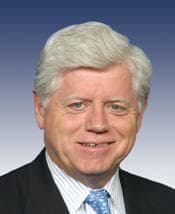
- John Larson
- Cosponsors
- - 17 - 0
- Introduced
- In Committee
What this bill would do
This bill turns the Corporation for National and Community Service into an Executive department known as the AmeriCorps Administration. It sets up an outreach program to contact individuals around their seventeenth birthday about national service opportunities and application processes. The legislation increases the calculation amount for national service educational awards to equal twice the national average of yearly in-state tuition at public four-year colleges. It also raises limits on living allowances and grant amounts per full-time equivalent position for participating individuals. Furthermore, the bill creates the National Service Foundation to accept private gifts and property to support the Administration's mission. Finally, it excludes national service educational awards and living allowances from gross income for federal income tax purposes.
Yes· 3 of 17
Would students be better off under this?+10
Directly benefits students via massive increases in educational awards and student loan debt discharge.
Would people in their twenties and thirties be better off under this?+9
Provides substantial education funding, living stipends, and proactive outreach for those 17-30.
Would households on low incomes be better off under this?+8
Provides significant financial support for education and living expenses.
The opposite
Does this reduce what the federal government spends?-3
Increases funding for living allowances, educational awards, and creates a new Executive department.
Does this reduce what the federal government owes?-2
Authorizes additional appropriations to reach the goal of 1 million participants.
Who it would affect, and how
Potential Positive Impacts for People
-
Section 6 increases the national service educational award so that it equals twice the national average of the yearly cost for in-state tuition and fees at public, four-year institutions of higher education, which gives participants significantly more financial support for their schooling.
-
Section 9 establishes the 21st Century American service outreach program, which contacts individuals starting at age 17 to inform them about available national service programs, how to apply, and ensures a long-term strategy to offer at least one service position to every eligible applicant.
-
Section 10 increases the maximum limits for living allowances and stipends for volunteers, as well as the maximum grant amounts per full-time equivalent position, allowing participants to receive higher financial support during their service.
-
Sections 13 and 14 amend the Internal Revenue Code to exclude national service educational awards, student loan debt discharges from those awards, and participant living allowances from gross income, meaning individuals will not have to pay federal income taxes on these funds.
Potential Negative Impacts for People
- Section 10 explicitly limits the payment increases for stipends, living allowances, and grants by making them dependent on appropriations, stating that allowances shall not be increased unless appropriated funds are sufficient to maintain at least the same number of participants serving as the previous fiscal year.
Groups and Interests Ranking
Every group the model scored this bill for, from -10 to +10. Hover a score for the reason it gave.
- Demographic And Interest Groups
- Good For Students+10Good For Young Adults+9Good For Low Income Households+8Good For Middle Class Households+5Good For African Americans+3Good For Hispanic Americans+3Good For Native Americans+3Good For Seniors+3Good For Retirees+2
- Education And Technology
- Improves College Affordability+7Improves Student Loan Relief+6
- Social Issues And Justice
- Improves Poverty Reduction+3Improves Racial Equity+2
- Economy And Finance
- Increases Job Creation+5Improves Economic Growth+2Reduces Middle Class Taxes+2Reduces Government Spending-3Reduces National Debt-2
- Governance And Ideology
- Increases Federal Power+3
- 9/28/2026
- 1 Cosponsor added.
- 3/12/2026
- Referred to the Committee on Education and Workforce, and in addition to the Committee on Ways and Means, for a period to be subsequently determined by the Speaker, in each case for consideration of such provisions as fall within the jurisdiction of the committee concerned.
- 16 Cosponsors added.
- Introduced in House
One bill Congress.gov lists as related to this one — companions in the other chamber, earlier versions, and bills this one absorbed or was folded into.
 Joe Courtney
Democrat · Connecticut
 Judy Chu
Democrat · California
 Salud Carbajal
Democrat · California
 Sean Casten
Democrat · Illinois
 Diana DeGette
Democrat · Colorado
 Suzan DelBene
Democrat · Washington
 Veronica Escobar
Democrat · Texas
 John Garamendi
Democrat · California
 Josh Gottheimer
Democrat · New Jersey
 Raja Krishnamoorthi
Democrat · Illinois
 Stephen Lynch
Democrat · Massachusetts
 Greg Landsman
Democrat · Ohio
 Gwen Moore
Democrat · Wisconsin
 Seth Moulton
Democrat · Massachusetts
 Eleanor Norton
Democrat · District of Columbia
 Mike Quigley
Democrat · Illinois
 Lateefah Simon
Democrat · California