Bill · H.R. 7892· House(119-HR-7892)
No Aid for Ghost Students Act of 2026
- Introduced
- 3/12/2026
- Last activity
- 6/11/2026 — Received in the Senate and Read twice and referred to the Committee on Health, Education, Labor, and Pensions.
- Sponsored by
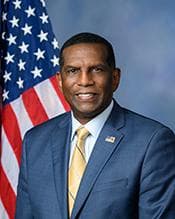
- Burgess Owens
- Cosponsors
- - 3 - 0
- Introduced
- Passed House
- In Senate committee
What this bill would do
This bill, known as the "No Aid for Ghost Students Act of 2026," directs the Secretary of Education to implement an identity fraud detection system for FAFSA applications. Starting October 1, 2026, the system will screen applications to identify those presenting a reasonable suspicion of identity fraud. If suspicion is found, the applicant and their chosen institutions will be notified, and the student must undergo additional identity verification. Institutions are prohibited from disbursing federal financial aid to these applicants until their identity is confirmed through specific methods. Additionally, the bill establishes a priority category for program reviews for institutions that show a pattern of disbursing aid to such students without following verification requirements.
Yes
Does this make what the government does easier for the public to see?+2
The bill requires the Secretary to submit annual reports and descriptions of the identity fraud detection system to Congress.
Does this give people more control over their personal data?+1
The bill implements advanced identity verification standards to protect the integrity of student data and prevent fraud.
The opposite· 3 of 4
Would households on low incomes be better off under this?-3
The requirement for intensive, potentially in-person or live audiovisual verification may create additional barriers for low-income students seeking financial aid.
Would people in their twenties and thirties be better off under this?-2
Young adults applying for financial aid may face increased bureaucratic burdens and delays in receiving funds due to new verification mandates.
Would students be better off under this?-2
The bill imposes mandatory and potentially intrusive identity verification processes that could delay the disbursement of financial aid to students.
What Congress actually voted on
One recorded vote has been taken on this bill.
- The House: the vote on whether to pass the billPassed 249–172
This is the real decision in this chamber. Passing here sends the bill to the other chamber, which must pass it too before it can go to the President.
06/10/2026 · Roll call 217 · recorded as “On Passage”
Who it would affect, and how
Potential Positive Impacts for People
-
Identity Fraud Prevention: The Secretary shall use an identity fraud detection system to screen and assess applications to determine if they present a reasonable suspicion of identity fraud (Section 2(a)(1)(A)).
-
Enhanced Identity Verification: Applicants flagged with a reasonable suspicion of identity fraud must undergo rigorous verification processes, such as in-person or live, synchronous audiovisual verification, to confirm their identity (Section 2(b)(1)(B)(i)(I)).
-
Institutional Accountability: The bill creates a program review priority for institutions that demonstrate a pattern of disbursing aid to students with suspicious applications without complying with verification requirements (Section 3).
Potential Negative Impacts for People
-
Additional Burdens for Flagged Applicants: Applicants identified with a reasonable suspicion of identity fraud are subject to additional identity verification requirements (Section 2(a)(2)(A)(iii)).
-
Mandatory Verification Methods: To receive aid, flagged applicants may be required to undergo specific, more intensive verification methods such as in-person identity verification or live, synchronous audiovisual identity verification (Section 2(b)(1)(B)(i)(I)(aa)-(cc)).
-
Withholding of Financial Aid: Institutions are prohibited from disbursing Federal financial aid to applicants with a reasonable suspicion of identity fraud until the institution has determined that the suspicion is not present through specific verification procedures (Section 2(b)(1)(B)).
Groups and Interests Ranking
Every group the model scored this bill for, from -10 to +10. Hover a score for the reason it gave.
- Demographic And Interest Groups
- Good For Low Income Households-3Good For Students-2Good For Young Adults-2
- Governance And Ideology
- Improves Government Transparency+2
- Education And Technology
- Improves Data Privacy+1Improves College Affordability-2
| Updated | Bill | Title | Policy Area |
|---|---|---|---|
| 4 months ago | On agreeing to the Rules amendment (A001) Agreed to without objection. |
- 6/11/2026
- Received in the Senate and Read twice and referred to the Committee on Health, Education, Labor, and Pensions.
- 6/10/2026
- Motion to reconsider laid on the table Agreed to without objection.
- Passed/agreed to in House: On passage Passed by the Yeas and Nays: 249 - 172 (Roll no. 217).
- On passage Passed by the Yeas and Nays: 249 - 172 (Roll no. 217).
- Considered as unfinished business. (consideration: CR H4076-4077)
- 6/9/2026
- POSTPONED PROCEEDINGS - At the conclusion of debate on H.R. 7892, the Chair put the question on passage of the bill and by voice vote, announced the ayes had prevailed. Mr. Scott (VA) demanded the yeas and nays and the Chair postponed further proceedings until a time to be announced.
- The previous question was ordered pursuant to the rule.
- DEBATE - The House proceeded with one hour of debate on H.R. 7892.
- Rule provides for consideration of H.R. 8646, H.R. 7726, H.R. 7892 and H.R. 8872. The resolution provides for consideration of H.R. 8646 under a structured rule and H.R. 7726, H.R. 7892, and H.R. 8872 under a closed rule, with one hour of general debate on each bill. The resolution provides for one motion to recommit on each bill.
- Considered under the provisions of rule H. Res. 1333. (consideration: CR H4037-4044; text of amendment in the nature of a substitute: CR H4037-4038)
- 6/3/2026
- Rules Committee Resolution H. Res. 1333 Reported to House. Rule provides for consideration of H.R. 8646, H.R. 7726, H.R. 7892 and H.R. 8872. The resolution provides for consideration of H.R. 8646 under a structured rule and H.R. 7726, H.R. 7892, and H.R. 8872 under a closed rule, with one hour of general debate on each bill. The resolution provides for one motion to recommit on each bill.
- 5/26/2026
- Reported (Amended) by the Committee on Education and Workforce. H. Rept. 119-669.
- Placed on the Union Calendar, Calendar No. 583.
- 4/27/2026
- 1 Cosponsor added.
- 3/18/2026
- 1 Cosponsor added.
- 3/17/2026
- Committee Consideration and Mark-up Session Held
- Ordered to be Reported (Amended) by the Yeas and Nays: 30 - 3.
- 2 Cosponsors added.
- 3/12/2026
- Referred to the House Committee on Education and Workforce.
- Introduced in House
2 bills Congress.gov lists as related to this one — companions in the other chamber, earlier versions, and bills this one absorbed or was folded into.
- 119-S-4428: No Aid for Ghost Students Act of 2026
- 119-HRES-1333: Providing for consideration of the bill (H.R. 8646) making appropriations for Agriculture, Rural Development, Food and Drug Administration, and Related Agencies programs for the fiscal year ending September 30, 2027, and for other purposes; providing for consideration of the bill (H.R. 7726) to amend the Child Care and Development Block Grant Act of 1990 to withhold funds from noncompliant States under such Act; providing for consideration of the bill (H.R. 7892) to amend the Higher Education Act of 1965 to require to the Secretary of Education to use an identity fraud detection system to review each FAFSA to determine whether the FAFSA presents a reasonable suspicion of identity fraud; and providing for consideration of the bill (H.R. 8872) to amend part A of title IV of the Social Security Act to target funds to low-income families, strengthen program integrity guardrails for State expenditure of funds, require measurement of improper payments, and establish goals for eliminating fraud and improper payments under the program of block grants to States for temporary assistance for needy families, and for other purposes.
 Virginia Foxx
Republican · North Carolina
 Glenn Grothman
Republican · Wisconsin
 Kevin Kiley
Independent · California
 Jay Obernolte
Republican · California