Bill · H.R. 7858· House(119-HR-7858)
Data Center Community Impact Act
- Introduced
- 3/5/2026
- Last activity
- 3/5/2026 — Referred to the House Committee on Energy and Commerce.
- Sponsored by
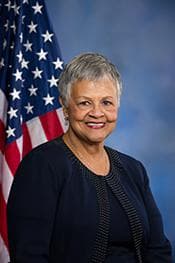
- Bonnie Watson Coleman
- Cosponsors
- - 16 - 0
- Introduced
- In Committee
What this bill would do
The Data Center Community Impact Act requires the Secretary of Energy to conduct a comprehensive study regarding the effects of data centers on low-income communities and communities of color. The Secretary must coordinate with various agencies, including the EPA and the Secretary of Commerce, to examine issues like water and energy consumption, air quality, and the electric grid. This study will also look into impacts on local jobs, tax revenues, property values, and public health. The Secretary is required to consult with local government entities and Indian Tribes during this process. Finally, a report must be provided to Congress within 18 months of enactment, including a map of data center locations relative to specific communities and recommendations for mitigating potential harms.
Yes· 3 of 22
Would households on low incomes be better off under this?+7
The bill is specifically designed to study and mitigate the negative impacts of data centers on low-income communities.
Would Black Americans be better off under this?+7
The bill focuses on protecting communities of color from disproportionate environmental burdens.
Would Hispanic Americans be better off under this?+7
The bill focuses on protecting communities of color from disproportionate environmental burdens.
The opposite
Would business owners be better off under this?-2
The bill may lead to more stringent guidelines and regulations for data center operators.
Who it would affect, and how
Potential Positive Impacts for People
-
Mitigation of Environmental and Health Risks: The study aims to assess how data centers affect air quality, water supplies, and public health risks like summer heat and heat island effects (Section 3(b)(1), 3(b)(3), 3(b)(10)). This could help protect vulnerable populations from pollution and resource stress.
-
Economic Oversight: By studying the creation or displacement of jobs and the impact on local tax revenues and property values, the bill seeks to understand the full economic footprint of these facilities on their surrounding areas (Section 3(b)(7), 3(b)(8), 3(b)(9)).
-
Protection of Utility Costs: The study will examine the effect of data center energy consumption on the electric grid and whether it leads to increased electricity rates for residents (Section 3(b)(2), 3(b)(5)).
-
Development of Best Practices: The final report is intended to provide recommendations for Federal coordination and proposed guidelines that States and local governments can adopt to mitigate potential harms caused by data centers (Section 3(d)(2), 3(d)(3)).
Potential Negative Impacts for People
-
Increased Environmental Burdens: The text notes that data centers involve significant energy and water consumption, which may impact local water supplies, drought-prone regions, and air quality via diesel generator emissions (Section 3(b)(1), 3(b)(3)).
-
Disproportionate Impacts on Vulnerable Groups: The bill identifies that communities of color, low-income communities, and Indian Tribes may face disproportionate burdens from environmental hazards and energy-related issues caused by the siting and operation of these facilities (Section 2(3), 2(4), 2(5)).
Groups and Interests Ranking
Every group the model scored this bill for, from -10 to +10. Hover a score for the reason it gave.
- Demographic And Interest Groups
- Good For African Americans+7Good For Asian Americans+7Good For Hispanic Americans+7Good For Low Income Households+7Good For Native Americans+7Good For Farmers+4Good For Children+3Good For People With Disabilities+3Good For Rural Residents+3Good For Seniors+3Good For Urban Residents+3Good For Business Owners-2
- Environment Energy And Infrastructure
- Improves Environmental Protections+7Improves Public Land Management+3Improves Rural Development+3Reduces Carbon Emissions+3
- Social Issues And Justice
- Improves Racial Equity+6Improves Disability Rights+2Improves Poverty Reduction+2
- Governance And Ideology
- Improves Government Transparency+4Increases Federal Power+2
- Education And Technology
- Increases Big Tech Regulation+3
- Healthcare
- Improves Healthcare Access+2
- 9/14/2026
- 1 Cosponsor added.
- 8/10/2026
- 1 Cosponsor added.
- 5/21/2026
- 1 Cosponsor added.
- 4/23/2026
- 1 Cosponsor added.
- 4/15/2026
- 1 Cosponsor added.
- 3/26/2026
- 1 Cosponsor added.
- 3/17/2026
- 1 Cosponsor added.
- 3/12/2026
- 1 Cosponsor added.
- 3/5/2026
- Referred to the House Committee on Energy and Commerce.
- 8 Cosponsors added.
- Introduced in House
 Steve Cohen
Democrat · Tennessee
 Veronica Escobar
Democrat · Texas
 Valerie Foushee
Democrat · North Carolina
 Daniel Goldman
Democrat · New York
 Adelita Grijalva
Democrat · Arizona
 Pramila Jayapal
Democrat · Washington
 Mike Levin
Democrat · California
 Summer Lee
Democrat · Pennsylvania
 Betty McCollum
Democrat · Minnesota
 Robert Menendez
Democrat · New Jersey
 Eleanor Norton
Democrat · District of Columbia
 Ilhan Omar
Democrat · Minnesota
 Lateefah Simon
Democrat · California
 Rashida Tlaib
Democrat · Michigan
 Shri Thanedar
Democrat · Michigan
 Debbie Wasserman Schultz
Democrat · Florida