Bill · H.R. 7843· House(119-HR-7843)
No Free Rides Act of 2026
- Introduced
- 3/5/2026
- Last activity
- 3/5/2026 — Referred to the House Committee on Transportation and Infrastructure.
- Sponsored by
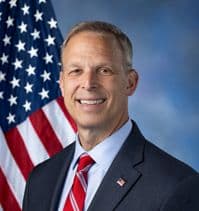
- Scott Perry
- Cosponsors
- - 6 - 0
- Introduced
- In Committee
What this bill would do
The ``No Free Rides Act of 2026'' aims to amend title 49 of the United States Code. It specifically seeks to prohibit recipients of assistance from implementing universal free fare policies on public transportation. This would prevent services from allowing all users to ride without paying a fare. However, the bill allows for targeted fare policies for specific groups. The Secretary of Transportation also has the authority to grant waivers under certain conditions.
Yes· 3 of 4
Does this reduce what the federal government spends?+2
The bill prevents the use of federal assistance to fund universal free transit, effectively limiting federal financial exposure to these policies.
Would people over 65 be better off under this?+1
The bill ensures that seniors can still be included in targeted free or reduced fare programs.
Would households on low incomes be better off under this?+1
The bill preserves the ability for low-income riders to receive targeted free or reduced fare assistance.
The opposite
Does this improve buses, trains and other public transport?-3
The prohibition on universal free fares may reduce transit ridership and accessibility for the general public.
Is this likely to lift people out of poverty?-2
By prohibiting universal free transit, the bill may increase the overall cost of living and movement for those not qualifying for targeted exceptions.
Who it would affect, and how
Potential Positive Impacts for People
-
Targeted Support for Vulnerable Groups: The bill allows for specific groups to still receive free or reduced charges, which can help those in need. This includes seniors, low-income riders, and students (Section 2, paragraph 2).
-
Employer-Based Transportation: Certain groups can still ride for free if there is an agreement between an employer or organization and the transportation recipient (Section 2, paragraph 2, subparagraph D).
-
Flexibility via Waivers: If a recipient can find a dedicated, non-Federal source of revenue to cover the costs, the Secretary of Transportation can waive the prohibition (Section 2, paragraph 3).
Potential Negative Impacts for People
- Loss of Universal Free Access: Recipients of assistance are prohibited from providing a policy that allows all users to use the public transportation service without paying a fare (Section 2, paragraph 1).
Groups and Interests Ranking
Every group the model scored this bill for, from -10 to +10. Hover a score for the reason it gave.
- Demographic And Interest Groups
- Good For Low Income Households+1Good For Seniors+1Good For Students+1
- Environment Energy And Infrastructure
- Improves Public Transit-3
- Economy And Finance
- Reduces Government Spending+2
- Social Issues And Justice
- Improves Poverty Reduction-2
- 3/5/2026
- Referred to the House Committee on Transportation and Infrastructure.
- 6 Cosponsors added.
- Introduced in House
 Brandon Gill
Republican · Texas
 Clay Higgins
Republican · Louisiana
 Mark Harris
Republican · North Carolina
 Barry Moore
Republican · Alabama
 Chip Roy
Republican · Texas
 Bryan Steil
Republican · Wisconsin