Bill · H.R. 7785· House(119-HR-7785)
Protecting Our Communities Act
- Introduced
- 3/4/2026
- Last activity
- 3/5/2026 — Referred to the Subcommittee on Border Security and Enforcement.
- Sponsored by
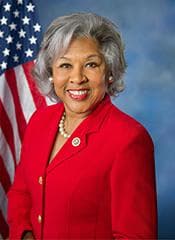
- Joyce Beatty
- Cosponsors
- None
- Introduced
- In Committee
What this bill would do
The Protecting Our Communities Act aims to improve accountability and training for Immigration and Customs Enforcement. It mandates the use of body-worn cameras and dashboard cameras for all Federal immigration enforcement personnel and vehicles. The bill requires officers to display official insignia or uniforms and prohibits face coverings during detentions or arrests. Additionally, the act establishes deescalation and alternatives to use of force training. It also requires Federal immigration enforcement to notify local law enforcement of impending operations. Finally, the bill establishes various reporting requirements to Congress regarding the use of force and officer identification.
Yes· 3 of 6
Does this make what the government does easier for the public to see?+8
The requirement for body cameras and regular reports to Congress significantly increases the transparency of federal immigration enforcement activities.
Does this change how police departments operate?+7
The bill implements significant police reform through mandatory body cameras, de-escalation training, and requirements for visible officer identification.
Would immigrants be better off under this?+6
The bill protects immigrants by requiring video recording of interactions and mandating that officers provide clear identification and de-escalation tactics.
The opposite
No question was scored the opposite.
Who it would affect, and how
Potential Positive Impacts for People
-
Increased Transparency through Video: The requirement for body-worn cameras and dashboard cameras ensures that video and audio of enforcement operations are recorded (Sec. 2). This provides a record of activities for various parties, including the subjects of the footage, their legal counsel, or their next of kin (Sec. 2).
-
Improved Accountability for Force: By requiring the recording of all enforcement operations, the bill allows for the inspection of footage by subjects, their families, or defense counsel to check for exculpatory evidence (Sec. 2). Furthermore, the Secretary must report on instances where nondeadly force was used or improperly administered (Sec. 6).
-
Clearer Identification of Officers: Officers must provide identification of their specific department and wear visible official insignia or uniforms during detentions or arrests (Sec. 3). This prevents officers from concealing their identity with face coverings (Sec. 3).
-
Enhanced Safety Skills: The bill mandates the development of training curricula focused on deescalation tactics and alternatives to the use of force (Sec. 4). This includes scenario-based exercises and assessments to ensure personnel gain these skills (Sec. 4).
-
Local Coordination: Requiring Federal immigration enforcement to notify local law enforcement of impending operations in their jurisdiction can improve coordination between different levels of law enforcement (Sec. 5).
Potential Negative Impacts for People
-
Restrictions on Surveillance Technology: The bill explicitly prohibits the use of body cameras for gathering intelligence based on First Amendment protected speech, associations, or religion, and prohibits the use of facial recognition technologies (Sec. 2).
-
Data Deletion: Body camera and dashboard camera footage is subject to permanent deletion one year after it is recorded (Sec. 2).
Groups and Interests Ranking
Every group the model scored this bill for, from -10 to +10. Hover a score for the reason it gave.
- Social Issues And Justice
- Improves Policing Reform+7Improves Racial Equity+5Improves Border Security+3
- Demographic And Interest Groups
- Good For Immigrants+6Good For Hispanic Americans+5
- Governance And Ideology
- Improves Government Transparency+8
- 3/5/2026
- Referred to the Subcommittee on Border Security and Enforcement.
- 3/4/2026
- Referred to the Committee on the Judiciary, and in addition to the Committee on Homeland Security, for a period to be subsequently determined by the Speaker, in each case for consideration of such provisions as fall within the jurisdiction of the committee concerned.
- Introduced in House
One bill Congress.gov lists as related to this one — companions in the other chamber, earlier versions, and bills this one absorbed or was folded into.