Bill · H.R. 7766· House(119-HR-7766)
Stop Militarizing Law Enforcement Act
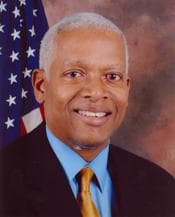
- Introduced
- 3/3/2026
- Last activity
- 3/3/2026 — Referred to the House Committee on Armed Services.
- Sponsored by
- Henry Johnson
- Cosponsors
- - 22 - 0
- Introduced
- In Committee
What this bill would do
This bill, known as the "Stop Militarizing Law Enforcement Act," seeks to amend the laws regarding how the Department of Defense transfers personal property to Federal and State agencies. It establishes significant limitations on the types of military-grade equipment, such as certain vehicles, firearms, and aircraft, that can be transferred to law enforcement. The legislation introduces strict requirements for local community notification, local government approval, and detailed documentation of how property will be used. It also mandates rigorous annual certifications and in-person inventories to ensure all transferred items are fully accounted for. Additionally, it creates a mechanism to require the return of property if an agency is investigated for civil liberties violations.
Yes
Does this change how police departments operate?+7
The bill increases oversight, transparency, and limitations on military-grade equipment used by law enforcement.
Does this make what the government does easier for the public to see?+6
The bill mandates public notices, annual reports to Congress, and detailed documentation to increase transparency.
The opposite· 3 of 4
Does this give the federal government more power?-3
The bill imposes stricter federal oversight and reporting requirements on how state and local agencies acquire equipment.
Does this improve help for people hit by a disaster?-2
The bill restricts the transfer of certain vehicles and equipment that could be used in disaster response unless specific certifications are met.
Does this give the government more power to monitor people inside the country?-2
By limiting the transfer of surveillance-capable equipment like drones and acoustic devices, it may reduce domestic surveillance capacity.
Who it would affect, and how
Potential Positive Impacts for People
-
Increased Community Transparency: Non-Federal agencies would be required to notify their local community of property requests through public website notices and prominent physical postings for at least 30 days before a transfer occurs. (Section 3(b)(9))
-
Local Government Oversight: The bill requires that a recipient obtain approval from a city council or other local governing body before acquiring personal property. (Section 3(b)(10))
-
Protection of Civil Liberties: The Secretary is required to ensure that property is returned within 30 days if an agency is under investigation by the Department of Justice regarding civil liberties violations or is found to have a pattern of such abuses. (Section s 3(f)(7))
-
Enhanced Accountability for Equipment: The bill mandates annual certifications, in-person inventories, and quarterly reports to ensure that 100 percent of transferred controlled property is accounted for, aiming to prevent the loss of equipment. (Sections 3(d), 3(g))
Potential Negative Impacts for People
-
Restrictions on Law Enforcement Capabilities: The bill prohibits the transfer of several types of equipment, including certain controlled vehicles, firearms, ammunition, and drones, which may limit the tools available to law enforcement agencies. (Section 3(f)(1))
-
Increased Administrative Burdens: Law enforcement agencies must comply with new requirements, such as submitting descriptions of intended use, certifying specific needs for certain items, and undergoing rigorous inventory processes. (Sections 3(b)(7), 3(f)(3))
-
Limitations on Use of Specialized Equipment: Certain transfers, such as for firearms or vehicles, are restricted to specific public safety, disaster, or emergency purposes and cannot be used for routine patrol activities without specific certification. (Section 3(f)(3))
Groups and Interests Ranking
Every group the model scored this bill for, from -10 to +10. Hover a score for the reason it gave.
- Social Issues And Justice
- Improves Policing Reform+7
- Environment Energy And Infrastructure
- Improves Disaster Relief And F E M A-2
- National Security And Foreign Policy
- Increases Domestic Surveillance-2
- Governance And Ideology
- Improves Government Transparency+6Increases Federal Power-3Increase States Rights-2
- 6/2/2026
- 1 Cosponsor added.
- 3/5/2026
- 1 Cosponsor added.
- 3/4/2026
- 1 Cosponsor added.
- 3/3/2026
- Referred to the House Committee on Armed Services.
- 19 Cosponsors added.
- Introduced in House
 André Carson
Democrat · Indiana
 Danny Davis
Democrat · Illinois
 Diana DeGette
Democrat · Colorado
 Lloyd Doggett
Democrat · Texas
 Dwight Evans
Democrat · Pennsylvania
 Sarah Elfreth
Democrat · Maryland
 Maxwell Frost
Democrat · Florida
 Sylvia Garcia
Democrat · Texas
 Robin Kelly
Democrat · Illinois
 Ro Khanna
Democrat · California
 Summer Lee
Democrat · Pennsylvania
 Seth Moulton
Democrat · Massachusetts
 LaMonica McIver
Democrat · New Jersey
 Eleanor Norton
Democrat · District of Columbia
 Ilhan Omar
Democrat · Minnesota
 Robert Scott
Democrat · Virginia
 Janice Schakowsky
Democrat · Illinois
 David Scott
Democrat · Georgia
 Lateefah Simon
Democrat · California
 Rashida Tlaib
Democrat · Michigan
 Shri Thanedar
Democrat · Michigan
 Frederica Wilson
Democrat · Florida