Bill · H.R. 7738· House(119-HR-7738)
Government Surveillance Transparency Act of 2026
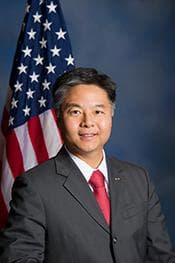
- Introduced
- 2/26/2026
- Last activity
- 2/26/2026 — Referred to the House Committee on the Judiciary.
- Sponsored by
- Ted Lieu
- Cosponsors
- - 0 - 1
- Introduced
- In Committee
What this bill would do
The Government Surveillance Transparency Act of 2026 seeks to amend title 18 of the United States Code regarding criminal surveillance. It establishes requirements for providing notice to individuals who are targets of surveillance orders. The bill also introduces reforms for non-disclosure orders and prohibits the indefinite sealing of criminal surveillance orders. Additionally, it mandates certain docketing and publication standards for surveillance records. The Act aims to increase transparency through specific reporting requirements and technical mechanisms for unsealing documents.
Yes· 3 of 6
Does this make what the government does easier for the public to see?+8
The bill requires annual public reports and mandates that criminal surveillance docket records be made available as an open government data asset.
Does this protect people from being watched or searched?+7
The bill provides individuals with the right to eventually receive notice of surveillance and the ability to challenge the sealing of such orders.
Does this give people more control over their personal data?+6
The bill strengthens individual privacy by establishing procedures for notifying people when their communications have been surveilled.
The opposite
No question was scored the opposite.
Who it would affect, and how
Potential Positive Impacts for People
-
Increased Transparency for Individuals: The bill requires that notice of criminal surveillance orders be eventually provided to targets, which helps individuals understand when they have been under investigation (Sec. 2, Section 3132(a); Sec. 4).
-
Limits on Sealing of Records: A court may not seal a criminal surveillance order, application, or inventory for a period that extends after the order is executed or the authorized surveillance ends, unless specific exceptions apply (Sec. 2, Section 3132(a)(1)).
-
Ability to Challenge Sealing: Any person seeking to unseal a surveillance order, application, or inventory may challenge the certification of an adverse result or specific extension requirements (Sec. 2, Section 3132(a)(2)(E)).
-
Recouping Legal Costs: If a person substantially prevails in a challenge to unseal a surveillance order, the court shall order the applicant to pay the person's litigation costs, including reasonable attorney's fees (Sec. 2, Section 3132(a)(2)(E)(iii)).
-
Improved Public Access to Records: The bill mandates that public docket records for criminal surveillance cases be made available as an open Government data asset (Sec. 2, Section 3132(b)(1)(A)).
-
Enhanced Reporting and Oversight: The Act requires annual reports from judges regarding the issuance of orders and warrants, providing a detailed summary and analysis of the data (Sec. 5; Sec. 7).
Potential Negative Impacts for People
-
Potential Risk to Investigations: The bill allows for the sealing of orders if the applicant certifies that failure to do so would result in adverse consequences, such as endangering lives, causing flight from prosecution, destruction of evidence, or intimidation of witnesses (Sec. 2, Section 3132(a)(2)(B)).
-
Delayed Notification: The government may apply for orders delaying required notice to a person, and these orders may be granted for specific periods (Sec. 5, Section 2705(a)).
Groups and Interests Ranking
Every group the model scored this bill for, from -10 to +10. Hover a score for the reason it gave.
- Governance And Ideology
- Improves Government Transparency+8Improves Privacy Rights+7
- Education And Technology
- Improves Data Privacy+6
- Demographic And Interest Groups
- Good For Low Income Households+3Good For Urban Residents+2
- Social Issues And Justice
- Improves Policing Reform+5
- 2/26/2026
- Referred to the House Committee on the Judiciary.
- 1 Cosponsor added.
- Introduced in House
One bill Congress.gov lists as related to this one — companions in the other chamber, earlier versions, and bills this one absorbed or was folded into.
 Warren Davidson
Republican · Ohio