Bill · H.R. 7694· House(119-HR-7694)
Gwenn’s Law
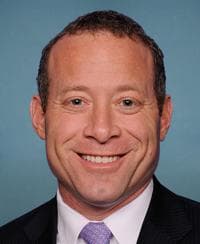
- Introduced
- 2/25/2026
- Last activity
- 2/25/2026 — Referred to the House Committee on Energy and Commerce.
- Sponsored by
- Josh Gottheimer
- Cosponsors
- - 1 - 2
- Introduced
- In Committee
What this bill would do
This bill, known as "Gwenn's Law," directs the Secretary of Health and Human Services to implement public awareness campaigns to increase women's participation in NIH-supported clinical trials. It specifically emphasizes outreach to increase participation in research involving the development of products for rare diseases and conditions. Additionally, a campaign is required to increase women's participation in programs focused on bleeding and clotting disorders, such as hemophilia. The bill also establishes a permanent Interagency Task Force on Advancing Treatments for Rare Diseases to assess federal activities and coordinate research incentives. Finally, the Secretary must create an action plan to coordinate efforts regarding rare diseases and conditions that disproportionately impact women.
Yes· 3 of 8
Would women be better off under this?+8
The bill focuses heavily on increasing women's participation in clinical trials and addressing rare diseases that disproportionately affect them.
Does this make health care easier to get in general?+7
The bill increases access to clinical trials and research specifically for women and those with rare diseases through targeted public awareness and outreach.
Does this narrow the gap between how men and women are treated?+7
By specifically targeting the underrepresentation of women in clinical trials and rare disease research, the bill promotes gender-based health equity.
The opposite
No question was scored the opposite.
Who it would affect, and how
Potential Positive Impacts for People
-
Increased participation in clinical trials: The Secretary will carry out a campaign to increase women's participation in clinical trials conducted or supported by the NIH (Section 2(a)).
-
Targeted outreach for better access: The campaign includes increasing outreach at locations such as hospitals, physicians' offices, and health centers (Section 2(b)).
-
Focus on rare diseases: Priority will be given to increasing women's participation in clinical trials involving research and development for products to prevent, diagnose, or treat rare diseases and conditions (Section 2(c)).
-
Improved awareness of specific disorders: A campaign will be conducted to increase the number of women participating in research, surveillance, and prevention programs for bleeding and clotting disorders, including hemophilia (Section 3(a)).
-
Coordinated research efforts: The creation of a permanent Interagency Task Force aims to coordinate Department of Health and Human Services efforts to incentivize the research, development, and treatment of products for rare diseases and conditions (Section 4(c)).
Potential Negative Impacts for People
- No specific negative impacts or burdens are explicitly mentioned in the provided text.
Groups and Interests Ranking
Every group the model scored this bill for, from -10 to +10. Hover a score for the reason it gave.
- Healthcare
- Improves Healthcare Access+7Increases Research Funding+6
- Demographic And Interest Groups
- Good For Women+8Good For People With Disabilities+4
- Social Issues And Justice
- Improves Gender Equality+7
- Education And Technology
- Increases Scientific Research Funding+6
- Governance And Ideology
- Improves Government Transparency+3Increases Federal Power+1
- 3/3/2026
- 1 Cosponsor added.
- 2/25/2026
- Referred to the House Committee on Energy and Commerce.
- 2 Cosponsors added.
- Introduced in House
 Brian Fitzpatrick
Republican · Pennsylvania
 Michael Lawler
Republican · New York
 Brittany Pettersen
Democrat · Colorado