Bill · H.R. 7638· House(119-HR-7638)
FAIR Act of 2026
- Introduced
- 2/20/2026
- Last activity
- 2/20/2026 — Referred to the Committee on the Judiciary, and in addition to the Committees on Energy and Commerce, Ways and Means, and Financial Services, for a period to be subsequently determined by the Speaker, in each case for consideration of such provisions as fall within the jurisdiction of the committee concerned.
- Sponsored by
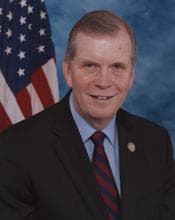
- Tim Walberg
- Cosponsors
- - 1 - 2
- Introduced
- In Committee
What this bill would do
The FAIR Act of 2026 aims to restore the integrity of the Fifth Amendment by reforming civil and nonjudicial forfeiture laws. The bill prohibits Federal seizing agencies from conducting nonjudicial forfeitures, requiring all such actions to go through a judicial process and a United States district court. It raises the evidentiary standard for the government in forfeiture proceedings from a preponderance of the evidence to clear and convincing evidence. Additionally, the bill introduces new requirements for notice and legal representation for those facing property seizure. It also mandates specific hearings regarding property seized due to monetary instrument transactions.
Yes· 3 of 7
Does this protect the right to fair treatment by the courts?+8
The bill strengthens due process by requiring judicial oversight for all forfeitures and raising the burden of proof for the government.
Would households on low incomes be better off under this?+5
The bill allows courts to appoint counsel for individuals who are financially unable to afford legal representation in forfeiture cases.
Does this make what the government does easier for the public to see?+3
The bill mandates more specific reporting of forfeiture funds by type, including criminal and civil categories.
The opposite
Does this reduce what the federal government spends?-2
By requiring judicial processes for forfeitures, it may increase administrative costs for the federal government.
Who it would affect, and how
Potential Positive Impacts for People
-
Increased Legal Protections: The bill changes the standard of proof the government must meet from a "prepreponderance of the evidence" to "clear and convincing evidence" in several forfeiture proceedings (Section 2, subsection (c)).
-
Access to Legal Representation: For individuals who are financially unable to afford a lawyer or where the cost of a lawyer exceeds the value of the seized property, a court may now authorize or appoint counsel (Section 2, subsection (b)).
-
Expanded Judicial Oversight: The bill mandates that no property can be subject to forfeiture except through a judicial process, and no order of forfeiture can be entered except by a United States district court (Section 2, subsection (k)).
-
Mandatory Hearings for Seized Funds: In cases involving property seized due to suspected violations of structuring transactions, a court of competent jurisdiction must conduct a hearing within 14 days to determine if there is probable cause to keep the property (Section 5, subsection (b)).
-
Consideration of Hardship: When making forfeiture determinations, courts are now required to consider the hardship to the property owner and their dependents (Section 2, subsection (g)).
Potential Negative Impacts for People
-
Criminalization of Transactions: The bill adds the requirement that a person must "knowingly" engage in certain actions to be subject to penalties regarding structuring transactions (Section 5, subsection (a)).
-
Strict Timeframes for Legal Action: Under the new rules for certain proceedings, an action must be commenced within 6 months of the entry of an order (Section 2, subsection (e)).
Groups and Interests Ranking
Every group the model scored this bill for, from -10 to +10. Hover a score for the reason it gave.
- Governance And Ideology
- Improves Due Process+8Improves Government Transparency+3Improves Privacy Rights+3
- Demographic And Interest Groups
- Good For Low Income Households+5Good For Middle Class Households+3
- Social Issues And Justice
- Improves Criminal Sentencing Reform+3Improves Poverty Reduction+2
- Economy And Finance
- Reduces Government Spending-2
- 2/20/2026
- Referred to the Committee on the Judiciary, and in addition to the Committees on Energy and Commerce, Ways and Means, and Financial Services, for a period to be subsequently determined by the Speaker, in each case for consideration of such provisions as fall within the jurisdiction of the committee concerned.
- 3 Cosponsors added.
- Introduced in House
One bill Congress.gov lists as related to this one — companions in the other chamber, earlier versions, and bills this one absorbed or was folded into.
 Tom McClintock
Republican · California
 Jamie Raskin
Democrat · Maryland
 Mary Gay Scanlon
Democrat · Pennsylvania