Bill · H.R. 7583· House(119-HR-7583)
BE HEARD in the Workplace Act
- Introduced
- 2/13/2026
- Last activity
- 2/13/2026 — Referred to the Committee on Education and Workforce, and in addition to the Committees on the Judiciary, House Administration, Oversight and Government Reform, and Veterans' Affairs, for a period to be subsequently determined by the Speaker, in each case for consideration of such provisions as fall within the jurisdiction of the committee concerned.
- Sponsored by
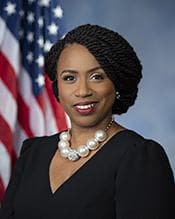
- Ayanna Pressley
- Cosponsors
- - 22 - 0
- Introduced
- In Committee
What this bill would do
The BE HEARD in the Workplace Act aims to prevent and reduce discrimination and harassment in employment through research, training, and legal updates. It mandates that employers with 15 or more employees adopt comprehensive nondiscrimination policies and provides resources for small businesses. The bill clarifies that sexual orientation and gender identity discrimination are unlawful forms of sex discrimination while expanding protections to include independent contractors, interns, fellows, volunteers, and trainees. It also implements strict requirements for the validity of nondisparagement, nondisclosure, and arbitration agreements to ensure workers can report issues. Additionally, the Act establishes a framework to prohibit mandatory predispute arbitration and includes provisions for wage adjustments for tipped employees. Finally, the legislation provides for nationwide grants and state-based advocacy to address workplace discrimination.
Yes· 3 of 23
Would LGBTQ people be better off under this?+8
The bill explicitly protects sexual orientation and gender identity in the workplace.
Does this expand the rights of LGBTQ people?+8
The bill explicitly clarifies that sexual orientation and gender identity discrimination are unlawful forms of sex discrimination.
Would women be better off under this?+7
The bill provides enhanced protections for pregnancy, childbirth, and sex-based discrimination.
The opposite
Would business owners be better off under this?-4
The bill imposes stricter compliance requirements and reduces the enforceability of certain arbitration and non-disclosure agreements.
Who it would affect, and how
Potential Positive Impacts for People
-
Mandatory Nondiscrimination Policies: Employers with 15 or more employees must adopt and maintain comprehensive policies that define prohibited discrimination and describe reporting methods, which provides employees with clear procedures for addressing issues (Section 101).
-
Nondiscrimination Training: The bill allows for required training for all employees and specific training for supervisors to help prevent and respond to harassment (Section 102).
-
Clarification of Sex Discrimination: The Act clarifies that sexual orientation and gender identity discrimination are considered unlawful sex discrimination, providing clearer protections for these groups (Section 201).
-
Expanded Protections for Various Workers: Protections are extended to include independent contractors, interns, fellows, volunteers, and trainees (Section 301).
-
Improved Access to Legal Resources: The bill includes provisions for grants to assist low-income workers with civil legal needs related to employment discrimination (Section 422) and to help educate workers on their rights and assist in bringing complaints (Section 412(b)).
-
Wage Adjustments for Tipped Employees: The Act establishes a schedule for increasing the cash wage for tipped employees toward the standard minimum wage (Section 121).
-
Increased Statute of Limitations: The bill extends the time periods during which individuals can file charges or complaints regarding discrimination (Section 207).
-
Protections for Workers' Rights to Report: The bill ensures that nondisclosure or nondisparagement clauses cannot stop a worker from filing a charge with the Commission or other agencies, or from testifying in legal proceedings (Section 2(A)(vi)).
-
Ensuring Meaningful Consent: To make agreements "knowing and voluntary," the bill requires that workers be advised in writing to consult an attorney, be given at least 21 days to consider a proposal, and have a 7-day period to revoke their agreement (Section 2(C)(iv-vi)).
-
Limiting Financial Burdens of Breach: The bill stipulates that a worker cannot be required to pay damages for breaching a clause that exceeds the actual value provided to them in the agreement (Section 2(G)).
-
Restoring Rights to Legal Forums: By prohibiting many predispute arbitration agreements, the bill allows workers to pursue work disputes in appropriate legal forums rather than being forced into arbitration (Section 302(a)(1)).
-
Increased Transparency for Federal Contractors: Federal contractors are required to disclose whether they have had recent legal judgments or administrative determinations against them regarding labor or civil rights violations (Section 304(b)(1)(A)).
Potential Negative Impacts for People
-
Fines for Non-compliance: Employers who fail to adopt required nondiscrimination policies may face fines of up to $1,000 per offense, or at least $5,000 for repeated or willful violations (Section 101).
-
Workplace Survey Requirements: While the bill provides resources for employment climate assessments, it specifies that employers may not compel employees to participate in these surveys (Section 106).
-
Limitations on Nondisclosure of Financial Terms: While financial terms can be kept private for a limited time, they are no longer subject to permanent or indefinite nondisclosure through certain clauses (Section 2(E)).
-
Restrictions on Employer Autonomy in Agreements: Employers are prohibited from unilaterally including clauses that solely benefit the establishment in a separation or settlement agreement (Section 2(B)).
-
Compliance Burdens for Federal Contractors: Contractors and subcontractors must provide regular updates regarding their legal and labor compliance history, which includes a requirement to report information every 6 months (Section 304(b)(1) and (c)(1)).
-
Administrative Requirements for State Systems: States must establish and maintain a specific "lead entity" and a system of advocacy that meets various federal requirements to receive allotments (Section 434).
Groups and Interests Ranking
Every group the model scored this bill for, from -10 to +10. Hover a score for the reason it gave.
- Demographic And Interest Groups
- Good For L G B T Q Community+8Good For People With Disabilities+7Good For Women+7Good For Low Income Households+6Good For African Americans+5Good For Asian Americans+5Good For Hispanic Americans+5Good For Immigrants+5Good For Union Workers+5Good For Seniors+4Good For Native Americans+3Good For Students+3Good For Business Owners-4
- Social Issues And Justice
- Improves L G B T Q Rights+8Improves Disability Rights+7Improves Gender Equality+7Improves Racial Equity+5Improves Poverty Reduction+4
- Governance And Ideology
- Improves Due Process+6Improves Government Transparency+4Increases Federal Power+3
- Economy And Finance
- Improves Union Protections+5Increases Minimum Wage+5Improves Small Business Support+2
- 6/3/2026
- 1 Cosponsor added.
- 3/5/2026
- 1 Cosponsor added.
- 2/25/2026
- 1 Cosponsor added.
- 2/24/2026
- 2 Cosponsors added.
- 2/20/2026
- 2 Cosponsors added.
- 2/13/2026
- Referred to the Committee on Education and Workforce, and in addition to the Committees on the Judiciary, House Administration, Oversight and Government Reform, and Veterans' Affairs, for a period to be subsequently determined by the Speaker, in each case for consideration of such provisions as fall within the jurisdiction of the committee concerned.
- 15 Cosponsors added.
- Introduced in House
One bill Congress.gov lists as related to this one — companions in the other chamber, earlier versions, and bills this one absorbed or was folded into.
 Julia Brownley
Democrat · California
 Nanette Barragán
Democrat · California
 Yvette Clarke
Democrat · New York
 André Carson
Democrat · Indiana
 Judy Chu
Democrat · California
 Mark DeSaulnier
Democrat · California
 Sylvia Garcia
Democrat · Texas
 Henry Johnson
Democrat · Georgia
 Summer Lee
Democrat · Pennsylvania
 James McGovern
Democrat · Massachusetts
 Eleanor Norton
Democrat · District of Columbia
 Ilhan Omar
Democrat · Minnesota
 Chellie Pingree
Democrat · Maine
 Delia Ramirez
Democrat · Illinois
 Emily Randall
Democrat · Washington
 Janice Schakowsky
Democrat · Illinois
 Marilyn Strickland
Democrat · Washington
 Mary Gay Scanlon
Democrat · Pennsylvania
 Lateefah Simon
Democrat · California
 Rashida Tlaib
Democrat · Michigan
 Shri Thanedar
Democrat · Michigan
 Debbie Wasserman Schultz
Democrat · Florida