Bill · H.R. 7576· House(119-HR-7576)
AI Workforce Training Act
- Introduced
- 2/13/2026
- Last activity
- 2/13/2026 — Referred to the House Committee on Ways and Means.
- Sponsored by
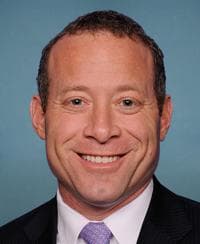
- Josh Gottheimer
- Cosponsors
- - 3 - 1
- Introduced
- In Committee
What this bill would do
The AI Workforce Training Act aims to amend the Internal Revenue Code of 1986. It seeks to establish a new tax credit specifically for workforce artificial intelligence training. This credit would allow taxpayers to claim 30 percent of qualified artificial intelligence training expenses. The credit is subject to a cap of $2,500 per employee, with adjustments for inflation after 2026. Additionally, the bill mandates a public outreach campaign by various government secretaries to promote this credit.
Yes· 3 of 8
Does this cut taxes for small businesses?+5
The bill establishes a new tax credit of 30 percent for artificial intelligence training expenses, which can be used by small businesses via small business development centers.
Does this make it easier to run a small business?+5
The bill specifically includes outreach through small business development centers to help small businesses access the training credit.
Would business owners be better off under this?+5
The tax credit provides a direct financial benefit to business owners for training their employees in AI.
The opposite
No question was scored the opposite.
Who it would affect, and how
Potential Positive Impacts for People
-
Financial assistance for employee training: The bill provides a tax credit equal to 30 percent of qualified artificial intelligence training expenses, which includes enrollment in accredited programs, workshops, certificate programs, and courses on topics like prompt engineering, data literacy, machine learning fundamentals, or artificial intelligence ethics (Section 2(a)(1)).
-
Support for wages during training: The credit can cover the wages of an employee while they are attending a training program, workshop, or course (Section 2(a)(1)(C)).
-
Support for internal training development: The credit can be applied to expenses related to developing or providing in-house artificial intelligence training for employees (Section 2(a)(1)(C)).
-
Increased accessibility through information: The Secretary of the Treasury, Secretary of Labor, and Secretary of Commerce are required to carry out a public outreach campaign that includes informational webinars and the distribution of multilingual informational materials through small business development centers, trade associations, and workforce boards (Section 3(a)).
Potential Negative Impacts for People
-
Limits on the amount of credit: The credit is capped at $2,500 for each employee for which expenses are paid or incurred (Section 2(a)(1)(b)).
-
Restrictions on combining benefits: To prevent double benefits, no other credit or deduction can be allowed for the same expenses used to claim this credit, and the basis of any property must be reduced by the amount of the credit if those expenses were used to determine the basis (Section 2(a)(1)(d)).
Groups and Interests Ranking
Every group the model scored this bill for, from -10 to +10. Hover a score for the reason it gave.
- Economy And Finance
- Improves Small Business Support+5Reduces Small Business Taxes+5Improves Economic Growth+4Increases Job Creation+3
- Demographic And Interest Groups
- Good For Business Owners+5Good For Union Workers+3
- Education And Technology
- Increases Scientific Research Funding+2
- Governance And Ideology
- Improves Government Transparency+2
- 7/20/2026
- 1 Cosponsor added.
- 5/21/2026
- 1 Cosponsor added.
- 3/17/2026
- 1 Cosponsor added.
- 2/13/2026
- Referred to the House Committee on Ways and Means.
- 1 Cosponsor added.
- Introduced in House
 Al Green
Democrat · Texas
 Michael Lawler
Republican · New York
 Shri Thanedar
Democrat · Michigan
 James Walkinshaw
Democrat · Virginia