Bill · H.R. 7522· House(119-HR-7522)
Improving Access to Nutrition Act of 2026
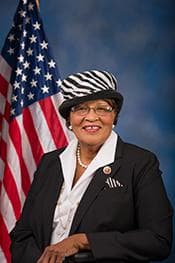
- Introduced
- 2/12/2026
- Last activity
- 3/20/2026 — Referred to the Subcommittee on Nutrition and Foreign Agriculture.
- Sponsored by
- Alma Adams
- Cosponsors
- - 15 - 0
- Introduced
- In Committee
What this bill would do
The "Improving Access to Nutrition Act of 2026" aims to amend the Food and Nutrition Act of 2008. Its primary purpose is to repeal the work requirement that disqualifies able-bodied adults from participating in the supplemental nutrition assistance program (SNAP). The bill includes various technical and conforming amendments to existing laws. These changes involve the Internal Revenue Code and the Workforce Innovation and Opportunity Act. The amendments are set to take effect 180 days after the act is enacted.
Yes· 3 of 11
Would households on low incomes be better off under this?+6
The bill increases food security for low-income households by removing work requirement barriers.
Would children be better off under this?+5
The bill protects the health and development of children in households receiving SNAP.
Would Black Americans be better off under this?+5
The bill helps Black Americans who are disproportionately affected by SNAP work requirements.
The opposite
No question was scored the opposite.
Who it would affect, and how
Potential Positive Impacts for People
-
Increased Food Assistance Access: By repealing the specific work requirement in Section 3(a), the bill seeks to prevent the disqualification of able-bodied adults from SNAP. This could benefit the approximately 6.1 million individuals currently subject to these requirements (Section 2).
-
Support for Families and Children: The bill aims to protect children in households where benefit reductions or terminations caused by work requirements could jeopardize their health and development (Section 2).
-
Economic Stimulus: The findings suggest that SNAP provides economic stimulus, noting that each $1 in benefits can generate between $1.50 and $1.80 in economic activity (Section 2).
-
Reduction of Administrative Burdens: The bill addresses findings that work requirements increase administrative bureaucracy, which can reduce SNAP participation (Section 2).
-
Protection for Vulnerable Groups: The bill notes that work requirements can disproportionately affect Black Americans and families experiencing homelessness (Section 2).
Potential Negative Impacts for People
- No negative impacts are explicitly stated in the provided text.
Groups and Interests Ranking
Every group the model scored this bill for, from -10 to +10. Hover a score for the reason it gave.
- Demographic And Interest Groups
- Good For Low Income Households+6Good For African Americans+5Good For Children+5Good For Urban Residents+1
- Social Issues And Justice
- Improves Poverty Reduction+4Improves Racial Equity+3Reduces Homelessness+3
- Economy And Finance
- Improves Economic Growth+2Increases Job Creation+1
- Healthcare
- Improves Healthcare Access+2
- Education And Technology
- Improves School Choice+1
- 5/29/2026
- 1 Cosponsor added.
- 4/27/2026
- 1 Cosponsor added.
- 3/20/2026
- Referred to the Subcommittee on Nutrition and Foreign Agriculture.
- 3/12/2026
- 2 Cosponsors added.
- 2/12/2026
- Referred to the House Committee on Agriculture.
- 11 Cosponsors added.
- Introduced in House
 J. Correa
Democrat · California
 Cleo Fields
Democrat · Louisiana
 Valerie Foushee
Democrat · North Carolina
 Jahana Hayes
Democrat · Connecticut
 William Keating
Democrat · Massachusetts
 Mike Levin
Democrat · California
 Summer Lee
Democrat · Pennsylvania
 James McGovern
Democrat · Massachusetts
 Seth Moulton
Democrat · Massachusetts
 April McClain Delaney
Democrat · Maryland
 Eleanor Norton
Democrat · District of Columbia
 Luz Rivas
Democrat · California
 Lateefah Simon
Democrat · California
 Shri Thanedar
Democrat · Michigan
 Frederica Wilson
Democrat · Florida