Bill · H.R. 7520· House(119-HR-7520)
Efficiency Adjustment Delay Act
- Introduced
- 2/12/2026
- Last activity
- 2/12/2026 — Referred to the Committee on Energy and Commerce, and in addition to the Committee on Ways and Means, for a period to be subsequently determined by the Speaker, in each case for consideration of such provisions as fall within the jurisdiction of the committee concerned.
- Sponsored by
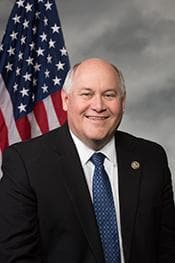
- Ron Estes
- Cosponsors
- - 7 - 7
- Introduced
- In Committee
What this bill would do
The Efficiency Adjustment Delay Act aims to amend title XVIII of the Social Security Act regarding Medicare physician fees. This bill seeks to delay the implementation of a specific efficiency adjustment to work relative value units that was established in a November 2025 final rule. Under this act, the Secretary is prohibited from implementing that efficiency adjustment before January 1, 2030. The bill also requires a report to Congress assessing the necessity of a one-time, across-the-board adjustment for certain services. Additionally, the legislation makes specific changes to the updates for the qualifying and nonqualifying APM conversion factors.
Yes
Would business owners be better off under this?+4
The bill provides financial relief to physician practices by delaying a downward efficiency adjustment to their work relative value units.
Does this put more money into Medicare, the health coverage for people over 65?+3
The bill increases the update percentages for qualifying and nonqualifying APM conversion factors, which helps maintain physician reimbursement levels.
Would people over 65 be better off under this?+1
By protecting physician reimbursement levels via delayed efficiency adjustments, the bill helps maintain the stability of Medicare-funded healthcare services for seniors.
The opposite
Does this reduce what the federal government spends?-2
By delaying efficiency adjustments that would likely lower physician payments, the bill maintains higher Medicare spending levels in the short term.
Who it would affect, and how
Potential Positive Impacts for People
-
Delayed Efficiency Adjustments: The bill prevents the Secretary from implementing the efficiency adjustment policy published on November 5, 2025, until at least January 1, 2030 (Section 2(a)(9)(A)).
-
Assessment of One-Time Adjustments: The Secretary must submit a report to specific House and Senate committees within two years to assess if a one-time, across-the-board adjustment is necessary for services not reviewed in the last 10 years (Section 2(a)(9)(B)).
-
Consultation Requirements: If the efficiency adjustment is implemented after 2030, the Secretary is required to consult with representatives of affected physician specialties (Section 2(a)(9)(C)(i)(I)).
-
Protected Calculation Methodology: The bill requires a methodology for the adjustment that does not rely on certain productivity factors unless specific inflation-related conditions are met (Section 2(a)(9)(C)(i)(III)).
-
Increased Conversion Factor Updates: The bill changes the update percentages for the qualifying and nonqualifying APM conversion factors (Section 2(b)).
Potential Negative Impacts for People
-
Implementation Restrictions: The Secretary is barred from implementing the efficiency adjustment policy established in the November 5, 2025 final rule until January 1, 2030 (Section 2(a)(9)(A)).
-
Limitations on Adjustment Scope: The efficiency adjustment cannot be applied to services that have been revalued or reviewed within the 10-year period preceding the adjustment (Section 2(a)(9)(C)(i)(II)).
-
One-Time Limit: The Secretary is prohibited from implementing the efficiency adjustment more than once (Section 2(a)(9)(C)(ii)).
Groups and Interests Ranking
Every group the model scored this bill for, from -10 to +10. Hover a score for the reason it gave.
- Demographic And Interest Groups
- Good For Business Owners+4Good For Seniors+1
- Healthcare
- Increases Medicare Funding+3
- Economy And Finance
- Reduces Government Spending-2
- 9/1/2026
- 2 Cosponsors added.
- 6/30/2026
- 1 Cosponsor added.
- 6/25/2026
- 2 Cosponsors added.
- 5/13/2026
- 4 Cosponsors added.
- 5/12/2026
- 4 Cosponsors added.
- 2/12/2026
- Referred to the Committee on Energy and Commerce, and in addition to the Committee on Ways and Means, for a period to be subsequently determined by the Speaker, in each case for consideration of such provisions as fall within the jurisdiction of the committee concerned.
- 1 Cosponsor added.
- Introduced in House
 Aaron Bean
Republican · Florida
 J. Correa
Democrat · California
 Donald Davis
Democrat · North Carolina
 Chuck Edwards
Republican · North Carolina
 Valerie Foushee
Democrat · North Carolina
 Tracey Mann
Republican · Kansas
 Gregory Murphy
Republican · North Carolina
 Eleanor Norton
Democrat · District of Columbia
 Mark Pocan
Democrat · Wisconsin
 David Rouzer
Republican · North Carolina
 Maria Salazar
Republican · Florida
 Thomas Suozzi
Democrat · New York
 Derek Schmidt
Republican · Kansas
 Shri Thanedar
Democrat · Michigan