Bill · H.R. 7507· House(119-HR-7507)
Fiscal Harms of Federal Firings Act
- Introduced
- 2/11/2026
- Last activity
- 2/11/2026 — Referred to the House Committee on Oversight and Government Reform.
- Sponsored by
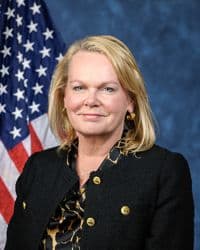
- April McClain Delaney
- Cosponsors
- - 13 - 0
- Introduced
- In Committee
What this bill would do
This bill, known as the "Fiscal Harms of Federal Firings Act," requires the Comptroller General of the United States to lead a study on how Federal reductions in force (RIFs) affect State and local governments. The study aims to look at changes in government expenditures, shifts in tax revenues, and regional economic effects. It also examines the administrative challenges faced by local governments and historical case studies from the last 20 years. The Comptroller General is directed to consult with various government officials and experts to gather data. Finally, a report containing findings, projected impacts, and policy options must be submitted to specific Congressional committees within 18 months.
Yes
Does this make what the government does easier for the public to see?+5
The bill requires the Comptroller General to make the study's findings publicly available on the GAO website.
The opposite· 3 of 9
Would households on low incomes be better off under this?-1
The bill notes that federal workforce reductions may increase the demand for social services like Medicaid and housing assistance.
Would middle-income households be better off under this?-1
The bill explores how federal job losses can impact regional income tax revenues and economic stability.
Would union members be better off under this?-1
The bill studies the impact of federal reductions in force on displaced workers and their economic stability.
Who it would affect, and how
Potential Positive Impacts for People
-
Identification of Support Strategies: The study seeks to find strategies used by governments to mitigate impacts and may include recommendations for statutory or administrative changes to support displaced employees and impacted governments (Section 3(b)(7); Section 3(d)(2)(A)(ii)).
-
Development of Policy Options: The report may provide Congress with policy options to consider, such as potential Federal assistance or coordination mechanisms to help those affected by RIFs (Section 3(d)(2)(D)).
-
Increased Transparency: By requiring the report to be made publicly available on the Government Accountability Office website, the findings regarding how workforce reductions affect local economies and services will be accessible to the public (Section 3(d)(3)).
Potential Negative Impacts for People
-
Increased Demand for Social Services: Federal reductions in force may lead to an increased demand for State-administered services such as unemployment insurance, Medicaid, workforce retraining, and housing assistance (Section 2(2)).
-
Economic and Tax Revenue Reductions: Workforce reductions can reduce economic activity and tax revenues—including income, sales, and property taxes—in regions that have a high concentration of Federal employees (Section 2(3); Section 3(b)(2)).
-
Fiscal Burden on Local Governments: There is a risk that States and local governments may struggle with the fiscal capacity to absorb the short- and long-term impacts of large-scale Federal workforce reductions (Section 2(4)).
Groups and Interests Ranking
Every group the model scored this bill for, from -10 to +10. Hover a score for the reason it gave.
- Governance And Ideology
- Improves Government Transparency+5
- Demographic And Interest Groups
- Good For Low Income Households-1Good For Middle Class Households-1Good For Union Workers-1
- Economy And Finance
- Improves Economic Growth-1Increases Job Creation-1Reduces Middle Class Taxes-1
- Social Issues And Justice
- Improves Affordable Housing-1Improves Poverty Reduction-1
- Healthcare
- Increases Medicaid Funding-1
- 3/24/2026
- 1 Cosponsor added.
- 3/9/2026
- 1 Cosponsor added.
- 2/24/2026
- 1 Cosponsor added.
- 2/20/2026
- 1 Cosponsor added.
- 2/11/2026
- Referred to the House Committee on Oversight and Government Reform.
- 9 Cosponsors added.
- Introduced in House
 Donald Beyer
Democrat · Virginia
 Sarah Elfreth
Democrat · Maryland
 Adelita Grijalva
Democrat · Arizona
 Val Hoyle
Democrat · Oregon
 Glenn Ivey
Democrat · Maryland
 Stephen Lynch
Democrat · Massachusetts
 Kweisi Mfume
Democrat · Maryland
 Seth Moulton
Democrat · Massachusetts
 Eleanor Norton
Democrat · District of Columbia
 Johnny Olszewski
Democrat · Maryland
 Suhas Subramanyam
Democrat · Virginia
 Eugene Vindman
Democrat · Virginia
 James Walkinshaw
Democrat · Virginia