Bill · H.R. 7478· House(119-HR-7478)
Patient Debt Relief Act
- Introduced
- 2/10/2026
- Last activity
- 2/10/2026 — Referred to the Committee on Energy and Commerce, and in addition to the Committee on Ways and Means, for a period to be subsequently determined by the Speaker, in each case for consideration of such provisions as fall within the jurisdiction of the committee concerned.
- Sponsored by
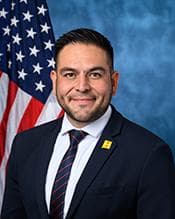
- Gabe Vasquez
- Cosponsors
- - 18 - 0
- Introduced
- In Committee
What this bill would do
The Patient Debt Relief Act aims to change how hospitals participating in Medicare handle financial assistance and medical debt collection. It requires hospitals to establish charity care policies, include specific information on bills, and follow strict debt collection rules. Hospitals that do not comply may face civil monetary penalties of up to $1,000,000. The bill also creates a medical debt relief grant program to help nonprofits acquire and discharge the medical debt of eligible individuals. This program would be funded by an authorized $100,000,000 for fiscal year 2027.
Yes· 3 of 7
Would households on low incomes be better off under this?+8
The bill protects low-income individuals from wage garnishment, home liens, and the sale of their medical debt.
Does this give people more protection from unfair business practices?+7
The bill implements strict debt collection limitations and requirements for hospitals to establish charity care policies.
Is this likely to lift people out of poverty?+6
The bill provides grants to discharge medical debt and prohibits interest and debt sales for low-income individuals.
The opposite
Does this reduce what the federal government spends?-1
The bill authorizes $100,000,000 in spending for a medical debt relief grant program.
Who it would affect, and how
Potential Positive Impacts for People
-
Standardized Financial Assistance: Hospitals must establish a charity care or financial assistance policy with minimum eligibility requirements that are publicly available (Section 2, subsection (l)(2)(A)).
-
Protection During Determination: Hospitals are prohibited from seeking payment until a determination is made regarding whether an individual is eligible for financial assistance (Section 2, subsection (l)(2)(B)(iii)).
-
Prevention of Home and Wage Loss: Hospitals are prohibited from placing liens or foreclosing on a person's home, or garnishing their wages, to collect medical debt (Section 2, subsection (l)(3)(A)-(B)).
-
Debt Sale Restrictions: Hospitals cannot sell or assign medical debt to a debt collector unless certain conditions are met, such as the debt being more than one year old and the availability of a specific repayment program (Section 2, subsection (l)(3)(C)).
-
Interest Rate and Debt Sale Protections for Low Income: If an individual's household income was not above 250 percent of the poverty line at the time services were provided, the hospital cannot charge annual interest or sell the debt to a collector (Section 2, subsection (l)(3)(D)).
-
Medical Debt Relief via Grants: A new grant program will allow nonprofit organizations to acquire and discharge the medical debt of eligible individuals (Section 3, subsection (a)-(c)).
Potential Negative Impacts for People
- Financial Penalties for Hospitals: Hospitals that fail to comply with new financial assistance and debt collection requirements can be hit with civil monetary penalties up to $1,000,000 (Section 2, subsection (b)(5)(B)).
Groups and Interests Ranking
Every group the model scored this bill for, from -10 to +10. Hover a score for the reason it gave.
- Demographic And Interest Groups
- Good For Low Income Households+8Good For Middle Class Households+3
- Healthcare
- Improves Healthcare Access+5Increases Medicare Funding+3
- Economy And Finance
- Improves Consumer Protection+7Reduces Government Spending-1
- Social Issues And Justice
- Improves Poverty Reduction+6
- Governance And Ideology
- Improves Government Transparency+4
- 2/23/2026
- 1 Cosponsor added.
- 2/10/2026
- Referred to the Committee on Energy and Commerce, and in addition to the Committee on Ways and Means, for a period to be subsequently determined by the Speaker, in each case for consideration of such provisions as fall within the jurisdiction of the committee concerned.
- 17 Cosponsors added.
- Introduced in House
 Nanette Barragán
Democrat · California
 Kathy Castor
Democrat · Florida
 Yvette Clarke
Democrat · New York
 Steve Cohen
Democrat · Tennessee
 Angie Craig
Democrat · Minnesota
 Suzan DelBene
Democrat · Washington
 Maxwell Frost
Democrat · Florida
 Jesús García
Democrat · Illinois
 Robert Garcia
Democrat · California
 Daniel Goldman
Democrat · New York
 Steven Horsford
Democrat · Nevada
 Greg Landsman
Democrat · Ohio
 Eleanor Norton
Democrat · District of Columbia
 Raul Ruiz
Democrat · California
 Kim Schrier
Democrat · Washington
 Melanie Stansbury
Democrat · New Mexico
 Lateefah Simon
Democrat · California
 Shri Thanedar
Democrat · Michigan