Bill · H.R. 7390· House(119-HR-7390)
SELF DRIVE Act of 2026
- Introduced
- 2/5/2026
- Last activity
- 2/10/2026 — Forwarded by Subcommittee to Full Committee by the Yeas and Nays: 12 - 11.
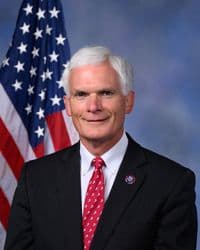
- Sponsored by
- Robert Latta
- Cosponsors
- - 15 - 0
- Introduced
- In Committee
What this bill would do
The SELF DRIVE Act of 2026 aims to amend federal law regarding the National Highway Traffic Safety Administration's authority over automated driving systems. The bill seeks to establish safety requirements, including a mandatory "safety case" for manufacturers to prove their technology is safe. It also creates a National Automated Vehicle Safety Data Repository to track information regarding specific types of crashes. Additionally, the act allows for limited commercial operations during vehicle testing and evaluation. The goal is to ensure U.S. leadership in the autonomous driving sector while improving road safety and creating jobs.
Yes· 3 of 9
Does this give the federal government more power?+6
The bill preempts state and local laws regarding the manufacturing and sale of automated driving systems if a safety case is met.
Would people with disabilities be better off under this?+5
The bill enhances accessibility and requires safety protections for individuals in wheelchairs.
Does this better protect the country from computer attacks?+5
The bill requires manufacturers to develop a cybersecurity plan to detect and respond to cyber attacks and unauthorized intrusions.
The opposite
Would business owners be better off under this?-3
Manufacturers face increased costs due to mandatory safety case development and crash reporting requirements.
Does this make it easier to run a small business?-2
The bill imposes significant regulatory and reporting requirements on manufacturers of automated driving systems.
Who it would affect, and how
Potential Positive Impacts for People
-
Improved Road Safety: The bill requires manufacturers to develop a "safety case" providing evidence that their automated driving system will not present an unreasonable risk of accidents, death, or injury (Section 30130(b)(3)).
-
Increased Accessibility and Mobility: The stated purpose of the act is to improve road safety, mobility, and accessibility (Section 2).
-
Enhanced Protection for Vulnerable Road Users: The bill defines "vulnerable road user" to include pedestrians, bicyclists, and individuals in wheelchairs, requiring automated systems to detect and respond appropriately to them (Section 30130(a)(1)(M) and Section 30130(b)(4)(B)).
-
Data-Driven Safety Monitoring: The establishment of a National Automated Vehicle Safety Data Repository allows for the collection and sharing of data regarding "covered crashes" to improve safety oversight (Section 30131(b)).
-
Job Creation: The act aims to create American jobs by establishing rules for the design, construction, and performance of automated driving vehicles (Section 2).
Potential Negative Impacts for People
-
Regulatory Burdens for Manufacturers: Manufacturers are required to develop a detailed safety case for each ADS version produced, which must include descriptions of hardware, software, and engineering methodologies (Section 30130(b)(1) and Section 30130(b)(3)).
-
Mandatory Reporting Requirements: Manufacturers must report specific information to the Secretary regarding "covered crashes" within strict timeframes (Section 30131(b)(2)).
-
Federal Preemption of State Laws: The bill prevents states or political subdivisions from maintaining laws or regulations that prohibit the manufacturing or sale of an automated driving system if a safety case has been developed (Section 30130(c)(3)(A)).
Groups and Interests Ranking
Every group the model scored this bill for, from -10 to +10. Hover a score for the reason it gave.
- Demographic And Interest Groups
- Good For People With Disabilities+5Good For Urban Residents+2Good For Young Adults+2Good For Business Owners-3
- Governance And Ideology
- Increases Federal Power+6
- National Security And Foreign Policy
- Improves Cybersecurity Defense+5
- Social Issues And Justice
- Improves Disability Rights+4
- Economy And Finance
- Increases Job Creation+5Improves Small Business Support-2
- Education And Technology
- Improves Data Privacy+3
- Environment Energy And Infrastructure
- Improves Public Transit+2
- 6/3/2026
- 1 Cosponsor added.
- 6/2/2026
- 1 Cosponsor added.
- 5/19/2026
- 1 Cosponsor added.
- 4/29/2026
- 1 Cosponsor added.
- 4/27/2026
- 1 Cosponsor added.
- 4/22/2026
- 2 Cosponsors added.
- 4/15/2026
- 1 Cosponsor added.
- 3/27/2026
- 1 Cosponsor added.
- 3/26/2026
- 1 Cosponsor added.
- 3/25/2026
- 1 Cosponsor added.
- 3/24/2026
- 1 Cosponsor added.
- 3/18/2026
- 1 Cosponsor added.
- 3/4/2026
- 1 Cosponsor added.
- 3/3/2026
- 1 Cosponsor added.
- 2/10/2026
- Subcommittee Consideration and Mark-up Session Held
- Forwarded by Subcommittee to Full Committee by the Yeas and Nays: 12 - 11.
- 2/5/2026
- Referred to the Committee on Energy and Commerce, and in addition to the Committee on Foreign Affairs, for a period to be subsequently determined by the Speaker, in each case for consideration of such provisions as fall within the jurisdiction of the committee concerned.
- Referred to the Subcommittee on Commerce, Manufacturing, and Trade.
- Introduced in House
 Gus Bilirakis
Republican · Florida
 Troy Balderson
Republican · Ohio
 Kat Cammack
Republican · Florida
 Earl Carter
Republican · Georgia
 Vince Fong
Republican · California
 Craig Goldman
Republican · Texas
 Richard Hudson
Republican · North Carolina
 Erin Houchin
Republican · Indiana
 Thomas Kean
Republican · New Jersey
 Laurel Lee
Republican · Florida
 Mariannette Miller-Meeks
Republican · Iowa
 Burgess Owens
Republican · Utah
 David Schweikert
Republican · Arizona
 Matt Van Epps
Republican · Tennessee
 Randy Weber
Republican · Texas