Bill · H.R. 7370· House(119-HR-7370)
REUSE Act of 2026
- Introduced
- 2/4/2026
- Last activity
- 2/4/2026 — Referred to the House Committee on Energy and Commerce.
- Sponsored by
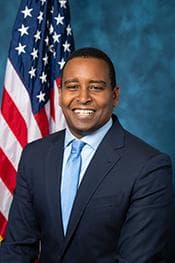
- Joe Neguse
- Cosponsors
- - 4 - 3
- Introduced
- In Committee
What this bill would do
This bill, known as the "REUSE Act of 2026," directs the Administrator of the Environmental Protection Agency to prepare a specific report. The report must focus on the feasibility and best practices of reuse and refill systems across various sectors. These systems involve mechanisms for refillable or reusable products and beverage containers that include necessary infrastructure for both producers and consumers. The Administrator is required to make this report publicly available within two years of the Act's enactment. The report must evaluate several objectives, including economic impacts and job creation.
Yes· 3 of 10
Is this likely to create jobs?+3
The bill mandates an evaluation of job creation opportunities resulting from the expansion of reuse and refill systems.
Does this better protect air, water and wildlife?+3
The bill focuses on the feasibility of reuse and refill systems to manage product lifecycles more sustainably.
Is this likely to grow the economy?+2
The bill seeks to identify economic benefits and opportunities within reuse and refill systems.
The opposite
No question was scored the opposite.
Who it would affect, and how
Potential Positive Impacts for People
-
Job Creation Opportunities: The report must include an evaluation of opportunities for creating jobs through the use or expansion of reuse and refill systems (Section 2(c)(3)).
-
Equitable Distribution: The Administrator is tasked with finding methods to ensure that these systems are distributed equitably across communities of different population sizes, where economically feasible (Section 2(c)(2)).
-
Economic Analysis: The report will look at the economic costs and benefits for businesses deploying these technologies and for those responsible for managing waste (Section 2(c)(4)).
-
Identification of Support Needs: The report aims to identify what types of local, State, and Federal support are required to expand these systems (Section 2(c)(5)).
Potential Negative Impacts for People
-
Economic Costs to Businesses: The report will evaluate the economic costs faced by businesses that deploy reuse and refill system technologies (Section 2(c)(4)(A)).
-
Economic Costs to Waste Management: The report will evaluate the economic costs associated with parties responsible for waste collection and management (Section 2(c)(4)(B)).
Groups and Interests Ranking
Every group the model scored this bill for, from -10 to +10. Hover a score for the reason it gave.
- Economy And Finance
- Increases Job Creation+3Improves Economic Growth+2Improves Small Business Support+1
- Demographic And Interest Groups
- Good For Low Income Households+1Good For Middle Class Households+1Good For Rural Residents+1Good For Urban Residents+1
- Environment Energy And Infrastructure
- Improves Environmental Protections+3
- Governance And Ideology
- Improves Government Transparency+2
- Social Issues And Justice
- Improves Racial Equity+1
- 8/3/2026
- 1 Cosponsor added.
- 7/13/2026
- 1 Cosponsor added.
- 4/30/2026
- 2 Cosponsors added.
- 4/9/2026
- 1 Cosponsor added.
- 2/4/2026
- Referred to the House Committee on Energy and Commerce.
- 2 Cosponsors added.
- Introduced in House
One bill Congress.gov lists as related to this one — companions in the other chamber, earlier versions, and bills this one absorbed or was folded into.
 Vern Buchanan
Republican · Florida
 Don Bacon
Republican · Nebraska
 J. Correa
Democrat · California
 Daniel Goldman
Democrat · New York
 Michael Lawler
Republican · New York
 George Latimer
Democrat · New York
 Seth Magaziner
Democrat · Rhode Island