Bill · H.R. 7329· House(119-HR-7329)
FREEDOM Act
- Introduced
- 2/3/2026
- Last activity
- 3/20/2026 — Referred to the Subcommittee on Commodity Markets, Digital Assets, and Rural Development.
- Sponsored by
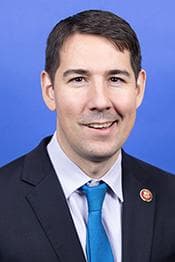
- Josh Harder
- Cosponsors
- - 2 - 3
- Introduced
- In Committee
What this bill would do
This bill, known as the "FREEDOM Act," aims to streamline the leasing and permitting processes for energy and mineral projects. It seeks to amend several existing laws, including the Energy Act of 2020 and the Geothermal Steam Act of 1970, to establish enforceable federal authorization timelines. The legislation introduces a de-risking compensation program to provide relief to project sponsors facing unrecoverable losses due to agency actions or delays. It also aims to clarify authorization requirements for projects on non-Federal land and limit federal actions that halt projects that are already fully permitted. Additionally, the bill establishes various funds to support permitting performance and compensation.
Yes· 3 of 8
Would business owners be better off under this?+6
The bill provides a de-risking compensation program to protect project sponsors from financial losses due to agency delays.
Is this likely to grow the economy?+5
The bill aims to reduce regulatory uncertainty to bolster energy security and economic competitiveness.
Does this put more money into wind, solar and other renewable power?+5
The bill includes provisions to improve geothermal leasing and simultaneous consideration of project phases.
The opposite· 3 of 4
Does this better protect air, water and wildlife?-3
The bill implements categorical exclusions for low-disturbance activities to expedite permitting.
Does this give the federal government more power?-2
The bill subjects federal agencies to strict new deadlines and potential civil penalties for failure to act.
Does this cut the pollution that drives climate change?-2
The bill prioritizes streamlining permits for traditional energy and mineral extraction projects.
Who it would affect, and how
Potential Positive Impacts for People
-
Reduction in Energy Costs: The bill finds that regulatory uncertainty and permitting delays increase the cost of building infrastructure, which in turn raises the cost of living and power prices for American families and businesses (Section 2).
-
Protection Against Financial Loss for Developers: The creation of the De-Risking Compensation Program aims to reduce regulatory risks for energy infrastructure developers and provide compensation if agency actions or delays cause a project to be cancelled or become unviable (Section 12202).
-
Faster Permitting for Low-Disturbance Activities: The bill directs agencies to adopt categorical exclusions for low-disturbance activities, such as maintenance of minor activities or preliminary geotechnical investigations, to facilitate timely permitting (Section 12101).
-
Increased Predictability for Energy Projects: By establishing enforceable Federal authorization timelines, the bill seeks to mitigate the catastrophic financial losses faced when agencies fail to adhere to deadlines (Section 2 and Section 12302).
-
Streamlined Geothermal Processes: The bill mandates annual leasing for geothermal resources instead of every two years and requires the Secretary of the Interior to establish a process for the simultaneous consideration of multiple project phases (Section 4).
Potential Negative Impacts for People
-
Costs to Project Sponsors: To participate in the De-Risking Compensation Program, project sponsors must pay an annual premium equal to 1.5 percent of their capital contribution to the project (Section 12203).
-
Requirements for Capital Contribution Minimums: Compensation through the de-risking program is only available to project sponsors who demonstrate a capital contribution of at least $5,000,000 (Section 12204).
-
Administrative Burdens for Agencies: Agencies are subject to new, strict deadlines for issuing final decisions on routine and complex authorizations, with failures potentially resulting in civil penalties of up to $100,000 per day (Section 12302 and Section 12404).
Groups and Interests Ranking
Every group the model scored this bill for, from -10 to +10. Hover a score for the reason it gave.
- Demographic And Interest Groups
- Good For Business Owners+6Good For Low Income Households+2Good For Middle Class Households+2
- Economy And Finance
- Improves Economic Growth+5Increases Job Creation+4
- Governance And Ideology
- Improves Government Transparency+3Increase States Rights+3Increases Federal Power-2
- Environment Energy And Infrastructure
- Increases Renewable Energy Investment+5Improves Environmental Protections-3Reduces Carbon Emissions-2Reduces Fossil Fuel Production-2
- 3/20/2026
- Referred to the Subcommittee on Commodity Markets, Digital Assets, and Rural Development.
- 2/4/2026
- Referred to the Subcommittee on Water Resources and Environment.
- 2/3/2026
- Referred to the Committee on Natural Resources, and in addition to the Committees on Agriculture, Energy and Commerce, Transportation and Infrastructure, Science, Space, and Technology, and the Judiciary, for a period to be subsequently determined by the Speaker, in each case for consideration of such provisions as fall within the jurisdiction of the committee concerned.
- 5 Cosponsors added.
- Introduced in House
 Don Bacon
Republican · Nebraska
 Chuck Edwards
Republican · North Carolina
 Adam Gray
Democrat · California
 Michael Lawler
Republican · New York
 Kristen McDonald Rivet
Democrat · Michigan