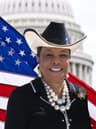
A Democratic bill with 1 Democratic cosponsor · See the cosponsor
Last activity — Referred to the House Committee on Education and Workforce.
In committee
Introduced and handed to a committee in the chamber it started in.
The committee holds it, and most bills are never heard from again. A hearing or a committee vote would be news; silence is the usual outcome, and it kills the bill without anyone voting against it.
Its path through Congress
- Introduced
- In Committee
What this bill would do
The Jobs Now Act of 2025 aims to amend the Workforce Innovation and Opportunity Act. It establishes a 2-year pilot program to award competitive grants to community-based organizations and units of general local government. These funds are intended to help retain, employ, or train workers providing public services. Specifically, at least 50 percent of the funds must be used to prevent layoffs caused by budget cuts. Remaining funds can be used for new positions or training. The bill authorizes up to $1,000,000,000 for fiscal years 2026 and 2027.
Yes· 3 of 9
- Scored +6
Is this likely to create jobs?
The bill authorizes $1 billion for a pilot program to create new public service positions and train workers.
- Scored +5
Would households on low incomes be better off under this?
The bill prioritizes grant awards to areas with high poverty rates to support workforce stability.
- Scored +5
Would veterans be better off under this, taking everything together?
The bill encourages the retention, employment, and training of veterans.
The opposite
No question was scored the opposite.
Who it would affect, and how
Potential Positive Impacts for People
-
Prevention of layoffs: Grant recipients must use at least 50 percent of funds to retain employees providing public services who would otherwise be laid off due to budget cuts (Section 2(a)(c)(1)(A)).
-
Job creation and training: After addressing potential layoffs, remaining funds can be used to employ individuals in new public service positions or train them for new roles (Section 2(a)(c)(2)(A)).
-
Support for specific groups: The program encourages the retention, employment, or training of veterans, individuals with disabilities, those receiving unemployment benefits, and dislocated workers (Section 2(a)(d)).
-
Community-based services: Community-based organizations can use funds to employ individuals in new positions providing public services or in the private sector (Section 2(a)(c)(2)(B)).
-
Targeted regional assistance: Priority is given to grants awarded to areas struggling with high unemployment, foreclosure, and poverty rates (Section 2(a)(e)).
Potential Negative Impacts for People
- No specific negative impacts are explicitly detailed in the provided text.
Groups and Interests Ranking
Every group the model scored this bill for, from -10 to +10. Tap or hover a score for the reason it gave.
- Demographic And Interest Groups
- Would households on low incomes be better off under this? — The bill prioritizes grant awards to areas with high poverty rates to support workforce stability. Would people with disabilities be better off under this? — The bill encourages grant recipients to prioritize the employment and training of individuals with disabilities. Would veterans be better off under this, taking everything together? — The bill encourages the retention, employment, and training of veterans. Would middle-income households be better off under this? — The bill aims to prevent layoffs of public service employees which can stabilize household incomes. Would people in rural areas be better off under this? — The bill provides funds that can be used by units of local government to support public service employment.
- Economy And Finance
- Is this likely to create jobs? — The bill authorizes $1 billion for a pilot program to create new public service positions and train workers. Is this likely to grow the economy? — The bill targets areas with high unemployment and poverty rates to support local economies through job retention and creation. Does this increase support for people who lose their jobs? — The bill encourages the employment and training of individuals currently receiving unemployment benefits.
- Social Issues And Justice
- Does this expand the rights of people with disabilities? — The bill encourages grant recipients to prioritize the employment and training of individuals with disabilities.
- 8/31/2026
- 1 Cosponsor added.
- 1/23/2025
- Referred to the House Committee on Education and Workforce.
- Introduced in House
 Janelle Bynum
Democrat · Oregon