Bill · H.R. 7110· House(119-HR-7110)
Eliminating Bias in Algorithmic Systems Act of 2026
- Introduced
- 1/15/2026
- Last activity
- 1/15/2026 — Referred to the House Committee on Oversight and Government Reform.
- Sponsored by
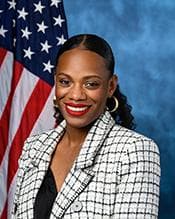
- Summer Lee
- Cosponsors
- - 16 - 0
- Introduced
- In Committee
What this bill would do
The Eliminating Bias in Algorithmic Systems Act of 2026 requires agencies that use, fund, or oversee algorithms to establish an office of civil rights. These offices must employ experts and technologists to focus on bias, discrimination, and other harms caused by covered algorithms. Agencies are required to submit reports every two years regarding the state of technology, risks of bias, and mitigation steps taken. The bill also mandates the creation of an interagency working group led by the Department of Justice. This group will include members from each newly established office of civil rights.
Yes· 3 of 15
Would Black Americans be better off under this?+6
The bill establishes protections against racial bias in algorithmic systems used by government agencies.
Would people with disabilities be better off under this?+6
The bill mandates that agencies address harms and bias affecting people with disabilities.
Does this narrow racial gaps in how people are treated?+6
The bill mandates offices of civil rights to monitor and mitigate algorithmic bias based on race and ethnicity.
The opposite
No question was scored the opposite.
Who it would affect, and how
Potential Positive Impacts for People
-
Establishment of Civil Rights Offices: The bill requires covered agencies to create offices of civil rights that employ experts and technologists to focus on bias, discrimination, and other harms (Section 3(a)). This could help protect individuals or groups from being subjected to bias based on protected characteristics.
-
Regular Reporting on Algorithmic Risks: Offices of civil rights must submit reports every two years detailing the state of technology and risks related to bias or discrimination (Section 3(b)(1)). This ensures that the risks posed by covered algorithms are documented and shared with congressional committees.
-
Stakeholder Engagement: The bill requires agencies to report on actions taken to engage with stakeholders, including civil rights advocates, consumer protection organizations, and affected populations (Section 3(b)(3)). This could provide a way for people to have their concerns addressed regarding algorithmic harms.
-
Mitigation and Recommendations: Agencies must report on steps taken to mitigate harms and provide recommendations for legislation or administrative action (Section 3(b)(2) and 3(b)(4)). This could lead to proactive measures to reduce discrimination.
Potential Negative Impacts for People
- No specific negative impacts are explicitly detailed in the provided text.
Groups and Interests Ranking
Every group the model scored this bill for, from -10 to +10. Hover a score for the reason it gave.
- Demographic And Interest Groups
- Good For African Americans+6Good For People With Disabilities+6Good For Hispanic Americans+5Good For Women+5Good For Low Income Households+4Good For Veterans+4Good For Middle Class Households+3Good For Seniors+3Good For Young Adults+3
- Social Issues And Justice
- Improves Racial Equity+6Improves Disability Rights+5Improves Pathway To Citizenship+2
- Governance And Ideology
- Improves Government Transparency+6
- Economy And Finance
- Improves Consumer Protection+5
- Education And Technology
- Increases Big Tech Regulation+5
- 9/2/2026
- 1 Cosponsor added.
- 1/27/2026
- 1 Cosponsor added.
- 1/22/2026
- 2 Cosponsors added.
- 1/16/2026
- 1 Cosponsor added.
- 1/15/2026
- Referred to the House Committee on Oversight and Government Reform.
- 11 Cosponsors added.
- Introduced in House
One bill Congress.gov lists as related to this one — companions in the other chamber, earlier versions, and bills this one absorbed or was folded into.
 Suzanne Bonamici
Democrat · Oregon
 André Carson
Democrat · Indiana
 Greg Casar
Democrat · Texas
 Dwight Evans
Democrat · Pennsylvania
 Valerie Foushee
Democrat · North Carolina
 Al Green
Democrat · Texas
 Jesús García
Democrat · Illinois
 Jahana Hayes
Democrat · Connecticut
 Henry Johnson
Democrat · Georgia
 Eleanor Norton
Democrat · District of Columbia
 Delia Ramirez
Democrat · Illinois
 Bennie Thompson
Democrat · Mississippi
 Rashida Tlaib
Democrat · Michigan
 Shri Thanedar
Democrat · Michigan
 Frederica Wilson
Democrat · Florida
 Bonnie Watson Coleman
Democrat · New Jersey